


TL;DR:
- Vaping is the heating of a liquid in an e-cigarette without burning tobacco, and it is considered a less harmful alternative to smoking. The aerosol contains nicotine, flavorings, and chemicals that can be harmful to health, but it is less harmful than tobacco smoke. Vaping is not recommended for non-smokers or young people, while it can help smokers switch to reduce their exposure to harmful substances.
Vaping refers to heating a liquid in an electronic cigarette, creating an aerosol that the user inhales. Depending on the product, this aerosol contains nicotine, flavorings, and base liquids such as propylene glycol and vegetable glycerin. Unlike conventional smoking, no tobacco combustion takes place. It is precisely this difference that makes vaping interesting for many smokers looking for a less harmful alternative. Devices such as the Elfbar, Vozol, or classic pod systems have turned vaping into a mass phenomenon in recent years that goes far beyond niche circles.
What does vaping mean exactly and how does it work?
Vaping works on a simple physical principle: a heating element, also called a coil, heats the liquid in the device to a temperature between 150 and 250 degrees Celsius without burning it. The resulting aerosol is inhaled and delivers nicotine and flavorings to the respiratory tract. The decisive difference compared to a cigarette is that no combustion products like tar or carbon monoxide are produced.
There are three main categories of vaping devices on the market:
- Disposable vapes: Pre-charged, inexpensive, no recharging required. Brands like Elfbar and Vozol dominate this segment.
- Pod systems: Reusable devices with replaceable liquid pods. Compact and suitable for everyday use.
- Mod systems: Powerful devices with adjustable wattage and large tanks, popular with experienced vapers.
The composition of a liquid typically consists of propylene glycol (PG), vegetable glycerin (VG), flavorings, and optionally nicotine. The ratio of PG to VG affects both the flavor and the amount of visible vapor. A higher VG content produces more vapor, while PG carries flavor more intensely.
Pro Tip: Those starting with vaping should begin with a pod system and a liquid with a medium nicotine content (10 to 20 mg/ml). This reduces initial frustration and allows for better control over nicotine intake.
Tobacco heaters like IQOS differ from classic vaping because they heat real tobacco instead of a liquid. They are considered a separate product category and are not classified as e-cigarettes. For beginners, this distinction is important in order to choose the right product.
Vaping and health: Assessing risks clearly
Vaping is not harmless water inhalation. The WHO describes e-cigarettes as devices that heat liquids into aerosols, whereby additives and chemicals can be harmful to health. This means that anyone who vapes is consuming a chemically complex mixture that enters the bloodstream through the lungs.
According to the DocMorris medical guide, the aerosol contains not only nicotine but also aldehydes and metal particles that can originate from the heating element. These substances are not harmless per se, even if their concentration is significantly lower than in tobacco smoke. Common complaints among vapers include coughing, throat irritation, and dry mouth.
The following points are particularly relevant for risk assessment:
- Cancer risk: According to the Science Media Center, nicotine-containing e-cigarettes are likely carcinogenic. Biomarkers and animal studies point to potential lung and oral cancer risks, although long-term epidemiological data are still missing.
- Respiratory diseases: Studies show an increased risk of respiratory complaints compared to non-smokers, but a lower burden than for smokers.
- Nicotine addiction: Nicotine is addictive, regardless of whether it is smoked or vaped. The importance of nicotine content should be understood before purchasing.
- Long-term effects: The long-term effects of vaping have not yet been conclusively clarified scientifically, as the phenomenon has only existed for about 15 years.
"The potential cancer risk of e-cigarettes is lower than that of tobacco smoke, but that does not mean they are harmless." German Cancer Research Center, cited in a 2026 DW report
For non-smokers and young people, the recommendation is clear: vaping is not a sensible option. Anyone who has never smoked should not start vaping. For smokers, however, a complete switch to vaping can reduce the burden of harmful substances, provided that tobacco cigarettes are completely abandoned. Snustrend explains more about the risks of vaping in a dedicated guide.
How is vaping perceived by society?
The social acceptance of vaping has changed significantly in recent years. Vapes are perceived by consumers as less smelly, which facilitates their integration into everyday life. This factor explains why vaping is considered less intrusive in homes, offices, and social situations than smoking a cigarette.
The cultural classification of vaping follows a clear pattern:
- Lifestyle product: Vaping is considered a modern recreational product, especially among younger adults. Colorful disposable vapes with fruit flavors specifically target a young audience.
- Addiction prevention and youth protection: Vapes are increasingly popular among young people aged 12 to 17, which worries experts due to nicotine addiction and health effects. Calls for flavor bans and stricter age checks are becoming louder.
- Regulation: In its 2026 policy framework, the WHO emphasizes preventive measures and the control of nicotine consumption, especially to protect minors.
- Social divide: While smokers often see vapes as a cessation aid, non-smokers and health experts view vaping with skepticism. This tension shapes public debate.
- Legal framework: Specific rules for the sale and use of vapes apply in Switzerland. The regulation of vapes in Switzerland includes age limits, maximum nicotine levels, and labeling requirements.
Vaping has evolved from a niche phenomenon into a cultural one that triggers social debates about addiction, freedom, and health responsibility. These debates are not yet finished and will continue to be shaped by new scientific findings and regulatory decisions.
Vaping vs. Smoking: What is the difference?
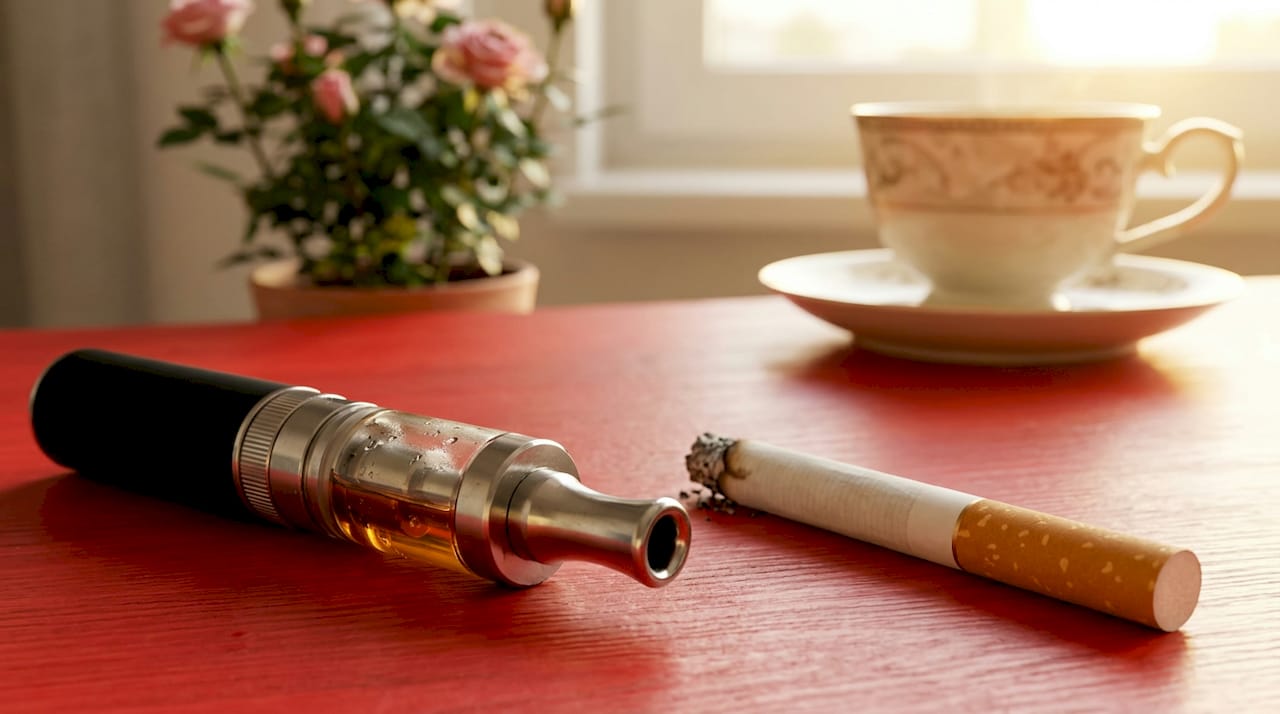
The most important difference between vaping and smoking lies in the combustion process. When smoking, tobacco burns at over 800 degrees Celsius and generates more than 7,000 chemical compounds, including tar, carbon monoxide, and benzene. When vaping, no combustion product is created because the liquid is only heated. This significantly reduces exposure to harmful substances, but does not eliminate it completely.
| Feature | Vaping | Smoking |
|---|---|---|
| Combustion products | None | Tar, carbon monoxide, benzene |
| Nicotine content | Adjustable (0 to 20+ mg/ml) | Fixed, depending on brand |
| Smell | Low, fruity, or neutral | Strong, lingering |
| Cancer risk | Likely lower, not zero | Clearly increased |
| Long-term data | Missing | Extensive |
| Costs | Medium to high (device) | High (ongoing) |
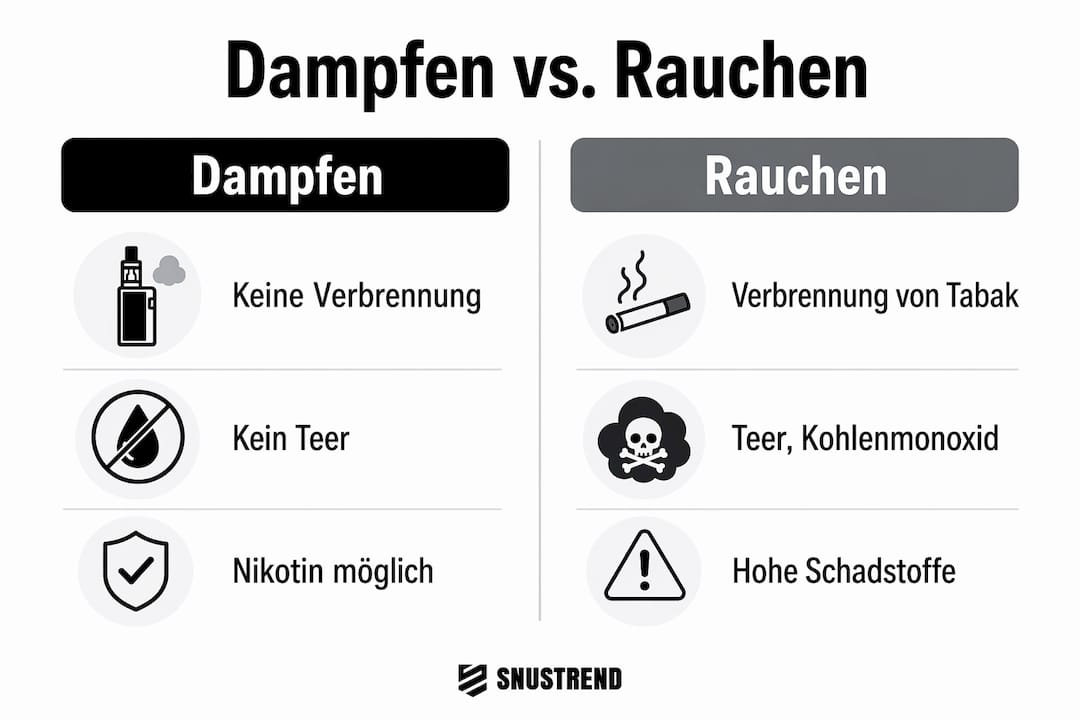
A complete switch from smoking to vaping can reduce the burden of harmful substances. However, those who use both products in parallel, known as "dual use," barely benefit from the health advantages of vaping. Health experts therefore recommend a consistent switch without falling back on tobacco cigarettes.
The potential for addiction remains comparable for both products as long as nicotine-containing liquids are used. Those who wish to reduce nicotine consumption can gradually lower the nicotine content when vaping. This is not possible with smoking, as the nicotine content of a cigarette is not individually adjustable. Snustrend explains nicotine-free alternatives in the article on nicotine-free vaping.
Pro Tip: Those wanting to switch from smoking to vaping should first adjust the nicotine content of the liquid to their previous tobacco consumption. A person who smokes 20 cigarettes a day typically starts with 18 to 20 mg/ml and gradually reduces the content over weeks.
The social advantages of vaping are noticeable in everyday life. No lingering odor on clothing and hair, no ashtray, no fire hazard. These practical differences explain why many smokers experience the switch as an improvement in quality of life, even if the health risk does not drop to zero. Those who want to delve deeper into the differences between vaping and smoking can find a detailed comparison at Snustrend.
Key insights
Vaping is a technologically different, but not risk-free alternative to smoking, which only makes sense for smokers aiming to switch.
| Point | Details |
|---|---|
| Definition of vaping | Vaping is the inhalation of heated liquid aerosol from e-cigarettes without combustion. |
| Health risk remains | The aerosol contains nicotine, aldehydes, and metals with proven risk potential. |
| Cancer risk lower, not zero | E-cigarettes are likely carcinogenic, but less so than tobacco smoke according to current research. |
| Avoid dual use | Only a complete switch from smoking to vaping noticeably reduces the burden of harmful substances. |
| Young people and non-smokers | There is no health justification for these groups to start vaping. |
My assessment of the importance of vaping
For years, I have observed how the debate around vaping oscillates between two extremes: complete trivialization on one side and blanket demonization on the other. Neither position does justice to reality.
Science is clear: vaping is not harmless, but for smokers, it is likely less harmful than continuing to smoke. This is not a free pass, but a sober risk assessment. As a smoker, switching consistently is likely to do your body some good. As a non-smoker, starting to vape is done without any health justification.
What worries me personally is the normalization of vaping among young people. Colorful devices with candy flavors are not a coincidence, but targeted marketing. The social discussion about youth protection and regulation is overdue and must be conducted more consistently.
For adults who want to decide on an informed basis: read the facts, choose products consciously, and set a clear goal. Vaping as a long-term solution is not a good idea. Vaping as a bridge to stopping smoking can make sense if implemented consistently.
— Lukas
Products for beginners and switchers at Snustrend

As a Swiss platform, Snustrend offers a wide selection of vapes, snus, and snuff products for beginners and experienced users. Anyone looking for a smoke-free alternative will find devices from brands like Elfbar and Vozol as well as a selection of liquids with different nicotine levels. For those who want to try more traditional tobacco alternatives alongside vaping, Snustrend offers Pöschl Schmalzler Südfrucht snuff in a 100g pack as well as the 25g version for beginners. Both products are suitable as a smoke-free option for adults who want to enjoy tobacco without combustion.
FAQ
What is the meaning of "dampfen" in German?
Vaping (dampfen) refers to inhaling a heated aerosol from an electronic cigarette or vape device. The aerosol is produced by heating a liquid without burning tobacco.
Is vaping safer than smoking?
Vaping does not produce combustion products like tar or carbon monoxide, which reduces exposure to harmful substances compared to smoking. However, the risk is not zero, as the aerosol contains nicotine, aldehydes, and metal particles.
Can vaping help with stopping smoking?
A complete switch from smoking to vaping can reduce the burden of harmful substances, as health experts confirm. Dual use, or the parallel use of cigarettes and vapes, however, yields hardly any health benefits.
Are young people in Switzerland allowed to vape?
No. In Switzerland, there is a minimum age for the purchase of vapes and nicotine-containing products. Swiss regulations mandate age limits and maximum nicotine levels.
What ingredients does a liquid contain?
A liquid typically consists of propylene glycol, vegetable glycerin, flavorings, and optionally nicotine. The chemical composition of the aerosol additionally contains aldehydes and metal traces from the heating element.
Recommendation
- Vape terminology made easy: Overview, trends, and practical knowledge – Snustrend - Snus, Vapes & Snuff
- Vape safety 2026: Understanding risks and vaping safely – Snustrend - Snus, Vapes & Snuff
- Vaping tips: Vaping safely and enjoying flavors – Snustrend - Snus, Vapes & Snuff
- Flavors in vaping: Understanding enjoyment, effect, and regulation – Snustrend - Snus, Vapes & Snuff






Share:
What is oral tobacco? Effects, risks, and alternatives
Why vaping is so popular: reasons and risks