


Many consumers believe that low-nicotine products are automatically safer. This widespread assumption leads to dangerous misconceptions about addiction potential and health risks. The nicotine content in snus, vapes, and snuff products influences not only the intensity of the effect but also cardiovascular effects and the speed at which addiction develops. This article explains why nicotine content is critical, how different methods of consumption alter the effect, and which legal regulations apply in Switzerland in 2026. You will learn how to make informed decisions about nicotine products.
Table of Contents
- Key insights on the importance of nicotine content
- Nicotine: What is it and how does it affect the body?
- Nicotine content in snus, vapes, and snuff: Comparison and effects
- Health risk aspects of nicotine content in tobacco products
- Legal regulations and youth protection for nicotine products in Switzerland 2026
- Discover nicotine products with transparent information at Snustrend
- Frequently asked questions about the importance of nicotine content
Key insights on the importance of nicotine content
| Point | Details |
|---|---|
| Addiction potential | Nicotine content is a key determinant in the speed and intensity of addiction development. |
| Health risks | Nicotine itself causes acute cardiovascular effects, while other tobacco toxins increase cancer risk. |
| Absorption speed | Vapes deliver nicotine faster than snus, which increases addiction potential. |
| Low dose | Products with low nicotine content can still lead to addiction. |
| Legal regulations | The 2026 Tobacco Products Act protects youth through nationwide minimum age regulations. |
Nicotine: What is it and how does it affect the body?
Nicotine is a highly potent alkaloid that occurs naturally in tobacco plants and acts directly on the central nervous system as a psychoactive substance. After absorption, it reaches the brain within seconds and binds to nicotinic receptors, triggering the release of dopamine. This dopamine release produces the characteristic feeling of reward, which leads to rapid addiction development.
The pharmacological effect of nicotine is complex and affects several bodily systems simultaneously. It stimulates the autonomic nervous system, leading to measurable physiological changes. Heart rate and blood pressure increase within minutes of absorption. The oxygen demand of the heart muscle increases, while blood flow can be impaired at the same time.
The addictive potential of nicotine is often underestimated. The addictive effect is comparable to heroin or cocaine, which explains the difficulty of quitting. This extreme addictive power stems from its rapid effect and short half-life, which leads to frequent repeat consumption. Regular users develop a physical and psychological dependency within a few weeks.
Important acute effects of nicotine include:
- Increase in heart rate by 10 to 20 beats per minute
- Rise in systolic blood pressure by 5 to 10 mmHg
- Constriction of peripheral blood vessels
- Stimulation of adrenaline release
- Increased energy expenditure and appetite suppression
A critical point is often overlooked: while nicotine itself causes the addiction, the most severe health damage from smoking is caused by other toxins such as tar, carbon monoxide, and carcinogenic substances. This distinction is fundamental to understanding different nicotine products. While nicotine poses cardiovascular risks, the deadly consequences of smoking are primarily attributed to combustion products.
Pro tip: The effects of nicotine pouches set in more slowly than those of vapes, leading to a more consistent nicotine level and avoiding spikes that increase addiction potential.
Individual reaction to nicotine varies significantly due to genetic factors and tolerance development. New users often experience dizziness, nausea, and headaches, while experienced consumers require higher doses to achieve the same effect. This tolerance formation is a hallmark of physical dependency and continually drives consumption upward.
Nicotine content in snus, vapes, and snuff: Comparison and effects
Nicotine content varies dramatically between different product categories, and even more important is how quickly and efficiently the nicotine is absorbed. Nicotine absorption and absorption speed largely determine the addiction potential and the experienced intensity. A vape with 20 mg/ml of nicotine acts completely differently than snus with the same content because inhalation allows for immediate absorption through the lungs.

Snus is placed under the upper lip, where nicotine is slowly absorbed through the oral mucosa. This process takes 15 to 30 minutes to reach maximum nicotine levels in the blood. The delayed absorption leads to a stable, long-lasting nicotine level without extreme spikes. Typical snus products contain 8 to 20 mg of nicotine per portion, although only a portion of this is actually absorbed.
Vapes deliver nicotine directly into the lungs through inhalation, where it enters the blood within seconds. This speed is similar to smoking cigarettes and creates a rapid kick that stimulates the reward system to the maximum. E-liquids typically contain 3 to 50 mg/ml of nicotine, with nicotine salts enabling even more efficient absorption. The immediate effect significantly increases the potential for addiction.
Snuff tobacco is taken nasally, with the nasal mucosa serving as the absorption surface. The absorption speed is between that of snus and vapes, with a noticeable effect after 5 to 10 minutes. Snuff contains 1 to 3 mg of nicotine per pinch, but frequent use can lead to significant daily doses.
| Product | Nicotine content | Absorption method | Onset of effect | Addiction potential |
|---|---|---|---|---|
| Snus | 8-20 mg/portion | Oral mucosa | 15-30 minutes | Medium to high |
| Vapes | 3-50 mg/ml | Lungs (inhalation) | 5-10 seconds | Very high |
| Snuff | 1-3 mg/pinch | Nasal mucosa | 5-10 minutes | Medium |
| Cigarettes | 10-12 mg/piece | Lungs (combustion) | 7-10 seconds | Very high |
A common misconception concerns products with low nicotine content. Many consumers deliberately choose weaker varieties in the belief that they are minimizing their risk of addiction. In reality, users often compensate through more frequent consumption or deeper inhalation, meaning the total nicotine intake remains the same or even increases. The comparison between snus and vapes shows that product choice says more about personal preferences than safety.
Bioavailability—the proportion of nicotine that actually reaches the body—also differs. For snus, it is about 30 to 40 percent, while vapes can reach up to 60 percent. This efficiency explains why some users have difficulty finding the right dosage when switching from one product category to another.
Pro tip: Beginners should start with moderate nicotine alternatives and observe the effects over several days before adjusting the dose. A gradual approach prevents overdosing and unpleasant side effects.
The subjective effect also depends on individual factors. Body weight, metabolic rate, and previous nicotine exposure influence how intensely a product is experienced. Two people may perceive the same product completely differently, which is why general recommendations are difficult. Conscious choice based on personal reaction is more important than theoretical nicotine values.
Health risk aspects of nicotine content in tobacco products
The health effects of nicotine are often confused with the overall risks of smoking. While the harmful effects of smoking are caused not by nicotine, but by combustion products, nicotine still poses independent health risks. This distinction is fundamental for evaluating smoke-free nicotine products such as snus or vapes.
Nicotine itself is primarily responsible for addiction, not for cancer or chronic lung disease. The deadly consequences of cigarette smoking are caused by tar, polycyclic aromatic hydrocarbons, and over 70 known carcinogens. Nevertheless, nicotine is by no means harmless. It directly affects the cardiovascular system and can worsen existing conditions.
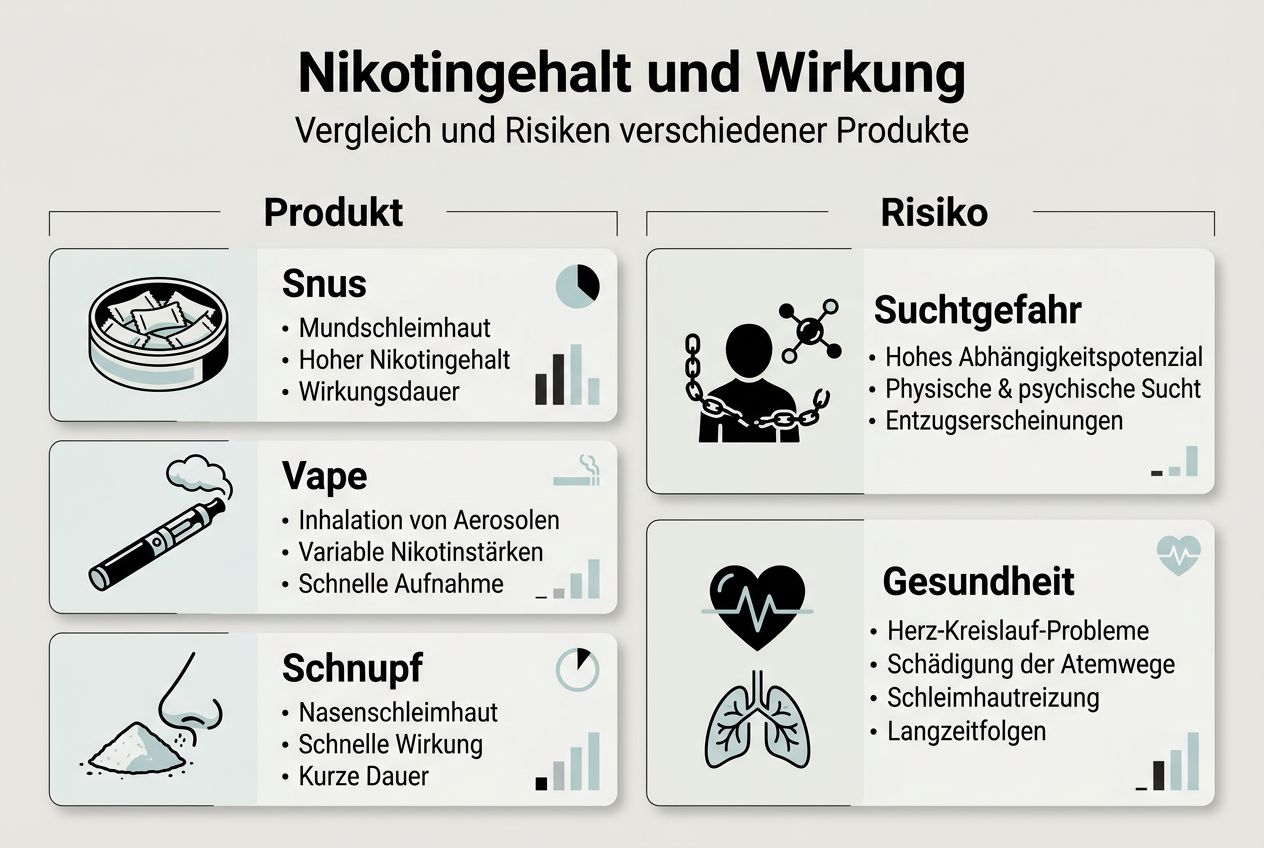
Current research is intensively investigating how nicotine contributes to vascular damage, independently of other tobacco toxins. Studies show that nicotine impairs endothelial function, the inner lining of blood vessels. This damage can contribute to arteriosclerosis and increase the risk of heart attack and stroke. The long-term effects of pure nicotine exposure are not yet fully understood, but evidence points to measurable cardiovascular risks.
Important health aspects of nicotine consumption:
- Increased risk of high blood pressure and cardiac arrhythmias
- Accelerated arteriosclerosis due to endothelial damage
- Negative effects on wound healing
- Possible impairment of insulin sensitivity
- Risks during pregnancy for fetal development
Nicotine consumption is particularly problematic for people with pre-existing cardiovascular diseases. The acute increase in heart rate and blood pressure can be dangerous for those with unstable angina pectoris or following a heart attack. Medical guidelines strongly advise these patients against any nicotine consumption, regardless of the delivery method.
“The cardiovascular risks of nicotine require a nuanced view. While nicotine is significantly less harmful than tobacco smoke, it is by no means risk-free, especially for people with heart disease.”
Swiss health authorities have responded to these findings. The 2024 Tobacco Products Act establishes nationwide standards for youth protection and product information. The minimum age for purchasing all tobacco and nicotine products is now 18 years, with no cantonal exceptions. This regulation aims to reduce nicotine addiction among young people, whose brains are particularly susceptible to the development of addiction.
Long-term nicotine addiction also brings psychosocial consequences. The need to regularly supply nicotine limits quality of life and causes significant financial burdens. Many addicted consumers report stress and anxiety when they do not have access to nicotine. This psychological dependency is often more difficult to overcome than the physical component.
The role of nicotine in the development of cancer remains controversial. While nicotine itself is not considered a direct carcinogen, some studies suggest that it could promote tumor growth and metastasis. This research is still in its early stages, but it underscores the need not to regard nicotine as entirely harmless.
Legal regulations and youth protection for nicotine products in Switzerland 2026
The legal framework for nicotine products in Switzerland has fundamentally changed. The Tobacco Products Act, which came into force in 2024, harmonizes national standards for sales, advertising, and youth protection for the first time. This legislation ends the previous situation in which each canton had its own rules, leading to confusion and loopholes.
The central element is the nationwide minimum age regulation of 18 years for all tobacco and nicotine products. Previously, the minimum age in some cantons was 16, which facilitated access for minors. The new regulation applies without exception to cigarettes, snus, vapes, snuff, and all other nicotine-containing products. Retailers must consistently verify age, and violations are punished with severe fines.
Other important changes concern advertising and sponsorship. Tobacco advertising that is aimed at or could reach minors is now prohibited. This includes billboard advertising, cinema advertising before 8:00 PM, and sponsorship of events with a predominantly young audience. Online advertising is subject to stricter age checks. These measures aim to reduce the attractiveness of nicotine products for young people.
The most important legal regulations for consumers:
- Minimum age of 18 for the purchase and possession of all nicotine products
- Ban on sales to minors with fines up to 10,000 francs
- Restricted advertising, especially no youth marketing
- Expanded regulations on passive smoking in public spaces
- Mandatory health warnings on all packaging
- Ban on free samples and vending machines without age verification
The law also addresses the growing popularity of e-cigarettes and vapes among young people. Nicotine-containing e-liquids are subject to the same restrictions as traditional tobacco products. Swiss authorities are thus responding to international trends showing that vapes often serve as a gateway product for nicotine consumption. Attractive flavors and a modern image make these products particularly appealing to young people.
Protection against passive smoke has also been strengthened. The law expands smoke-free zones in public buildings, workplaces, and public transport. Cantons can enact additional restrictions, for example, for outdoor areas of restaurants or playgrounds. These measures protect non-smokers from involuntary nicotine exposure and reduce the normalization of smoking in public spaces.
For online retailers like Snustrend, the law means stricter age verification obligations. The shipping of nicotine products requires reliable mechanisms for age verification, typically through ID checks upon delivery. The legal overview of the legal situation shows how reputable retailers implement these requirements while simultaneously offering customer-friendly service.
The long-term effects of this legislation will become visible in the coming years. International experience shows that combined measures consisting of age restrictions, advertising bans, and education can measurably reduce the entry into nicotine consumption among youth. Switzerland is thus following a global trend toward stricter regulations, which is also supported by the World Health Organization.
Discover nicotine products with transparent information at Snustrend
Now that you understand the importance of nicotine content and its effects, you can make informed decisions. At Snustrend, you will find a comprehensive selection of snus, vapes, and snuff products with clear, detailed nicotine information for every product. This transparency allows you to choose products that suit your individual preferences and desired nicotine intake.

Our range extends from mild options for beginners to intense varieties for experienced users. For example, the OS Tobacco Vape 750 Bliss offers a balanced nicotine dose for those switching products, while traditional items like Pöschl’s Schmalzler snuff tobacco represent a classic alternative. Each product page contains precise information on nicotine content, flavor, and recommended use. We support responsible consumption through comprehensive product information and strictly adhere to legal age restrictions. Discover the variety and find the product that is right for you.
Frequently Asked Questions About the Importance of Nicotine Content
How does nicotine content influence the risk of addiction?
Nicotine content directly determines the intensity of dopamine release in the brain, which activates the reward system and leads to dependence. Higher nicotine doses and faster delivery methods like vapes significantly amplify this effect. The speed at which nicotine reaches the brain is often more important than the absolute amount, which is why inhalation products have the highest potential for addiction.
Are products with low nicotine content safer?
Not necessarily, as consumers often compensate by using them more frequently or more intensively. Total nicotine intake may remain the same or even increase as a result. Furthermore, the potential for addiction remains, even if individual doses are lower. Safety depends more on overall consumption behavior than on the nicotine content of individual products.
How do snus, vapes, and snuff differ in terms of nicotine absorption?
Vapes deliver nicotine within seconds via the lungs, snus releases it slowly through the oral mucosa, and snuff falls in between with nasal absorption. The speed of absorption affects the addiction potential more strongly than the absolute nicotine content. Vapes produce the most intense kick due to their speed, while snus offers a more stable, longer-lasting nicotine level.
What does the new Tobacco Products Act change for consumers?
The law establishes a nationwide minimum age of 18 for all nicotine products and tightens advertising rules. Consumers must prove their age when purchasing, and online retailers conduct strict age verification checks. The expanded bans on passive smoking mean more smoke-free zones in public areas. These changes are aimed at better youth protection and reduced nicotine exposure among the population.
How do you choose a product with an appropriate nicotine content?
Start with moderate nicotine levels and observe your reaction over several days. Watch for side effects such as dizziness, nausea, or a racing heart, which indicate doses that are too high. Consider the method of absorption: beginners should prefer slowly absorbing products like snus. Learn about nicotine pouches and their effects to find the right balance between impact and tolerance.
Can nicotine cause health problems without other tobacco toxins?
Yes, nicotine alone has measurable cardiovascular effects, including increased blood pressure and heart rate. Current research shows that it can contribute to vascular damage, regardless of combustion products. People with heart conditions should also avoid smoke-free nicotine products. While nicotine is significantly less harmful than tobacco smoke, it is by no means risk-free, especially with long-term use.
Recommendation
- Nicotine Pouches: Benefits, Effects, and Usage 2026 – Snustrend - Snus, Vapes & Snuff
- Understanding Hybrid Nicotine: Gentle Enjoyment with a Strong Effect – Snustrend - Snus, Vapes & Snuff
- Choosing Nicotine Alternatives: 70% of Beginners Use Moderate Levels – Snustrend - Snus, Vapes & Snuff
- Yellow Fingers from Smoking: Causes and Solutions 2026 – Snustrend - Snus, Vapes & Snuff






Share:
Snus Legal Status Switzerland 2026: Legal Overview
THC Legalization Switzerland 2026: Your Concise Guide