

TL;DR:
- Zero-nicotine does not automatically mean free of harmful substances, as traces of nicotine and synthetic analogues may be present.
- Despite fewer toxins compared to cigarettes, risks exist due to heavy metals, irritants, and inadequate labeling.
- In Switzerland, zero-nicotine vapes are permitted for those aged 18 and over, though regional restrictions may vary.
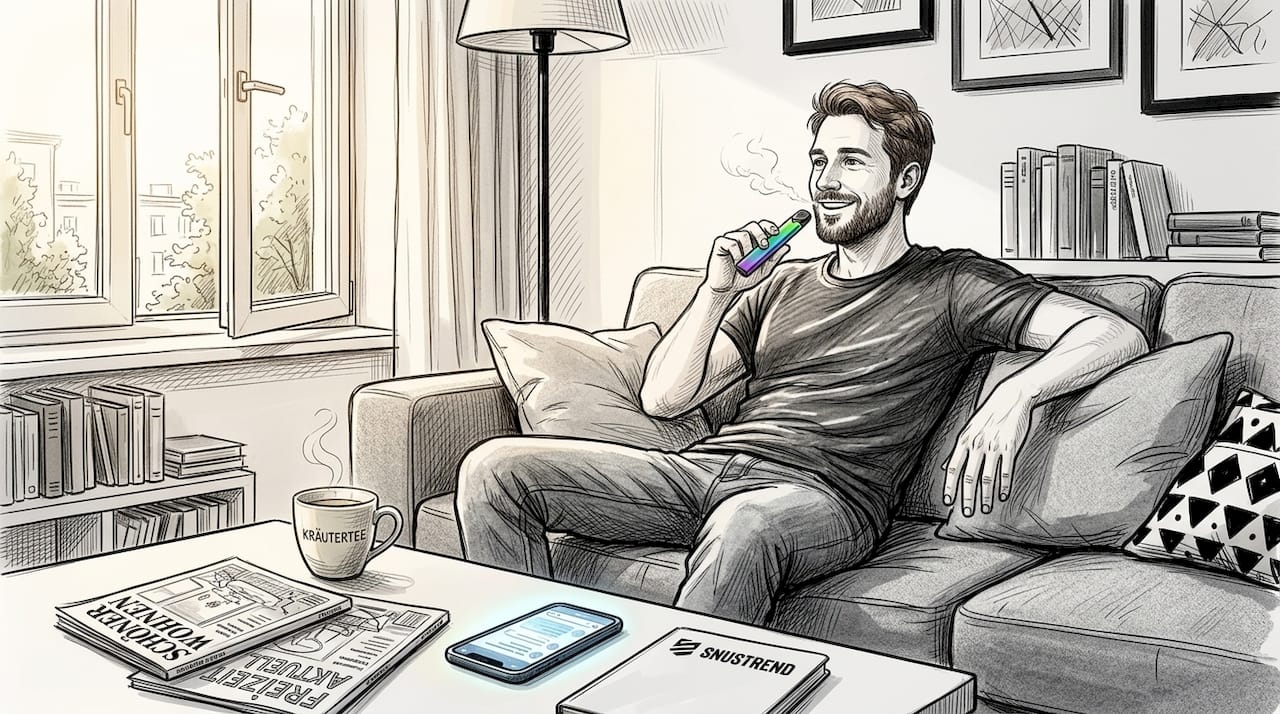
Many people turn to zero-nicotine vapes in the firm belief that they are vaping completely free of harmful substances. This assumption is understandable, but unfortunately not entirely correct. Nicotine-free does not automatically mean risk-free. Especially in Switzerland, the range of nicotine-free vapes is growing rapidly, while awareness regarding ingredients, regulation, and potential risks is often lacking. In this article, you will learn what "zero nicotine" really means, what ingredients are actually contained, what the legal situation in Switzerland looks like, and what you should pay attention to when buying to ensure your vaping experience remains as safe and enjoyable as possible.
Table of Contents
- What does a zero-nicotine vape really mean?
- Are zero-nicotine vapes really free of harmful substances?
- Legal situation and regulatory specifics in Switzerland
- Who are zero-nicotine vapes suitable for, and what should you look for when buying?
- Our assessment: More education instead of hype
- Trying out a zero-nicotine vape: Choosing enjoyable and safe options
- Frequently asked questions about zero-nicotine vapes
Key Takeaways
| Point | Details |
|---|---|
| Zero nicotine is rarely completely absent | Zero-nicotine vapes are usually not entirely nicotine-free and may contain residual amounts or substitutes. |
| Fewer toxins than tobacco | Zero-nicotine vapes have fewer harmful substances than traditional cigarettes but are not risk-free. |
| Observe legal regulations | Legal in Switzerland from age 18, though cantonal differences apply, especially regarding disposable vapes. |
| Look for certified products | Pay attention to labeling, ingredients, and origin to vape more safely. |
What does a zero-nicotine vape really mean?
The term "zero nicotine" sounds clear. No nicotine, no problem. However, reality is more complicated than what is written on the packaging.
Officially, zero nicotine means that a liquid has no measurable nicotine content. In practice, however, laboratory analyses show that many products labeled as "nicotine-free" actually contain traces of nicotine between 0.1 and 0.4 mg/ml. That sounds like little, but it can be relevant for sensitive individuals or former smokers.
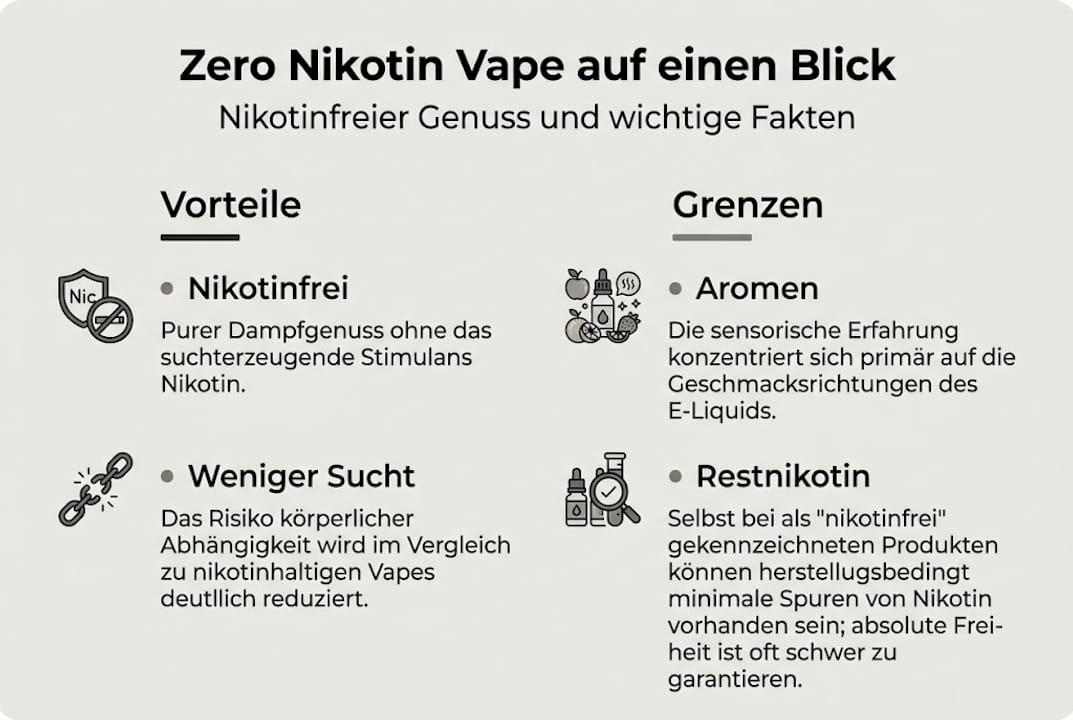
Even more interesting is the role of synthetic nicotine analogues. Some manufacturers use a substance called 6-methyl-nicotine, or 6-MN for short. This compound mimics the effects of nicotine but is not officially classified as nicotine in Switzerland. This means products with 6-MN can be legally marketed as "nicotine-free," even though they may have a pharmacologically similar effect.
The three main ingredients of a zero-nicotine liquid are:
- Propylene Glycol (PG): A colorless solvent that provides intensity to the vapor and carries flavors. It is approved in many food products but can cause respiratory irritation when vaped.
- Vegetable Glycerin (VG): Creates visible vapor clouds and provides a smooth mouthfeel. The higher the VG content, the denser the vapor.
- Flavors: This is one of the biggest unknowns. Food flavorings are approved for consumption, but not for inhalation. Some flavor compounds can form chemical compounds when heated that may be irritating or harmful.
Product pages of established brands, which provide transparent information about their composition, also offer a good overview of nicotine-free vapes. Those who shop informed can choose more selectively and avoid unnecessary risks.
In short: Zero nicotine is not a free pass. It only describes one aspect of the product—the declared nicotine content—but says nothing about all other ingredients.
Are zero-nicotine vapes really free of harmful substances?
After clarifying the term "zero nicotine," we now focus on the actual health aspects.
Compared to conventional tobacco cigarettes, zero-nicotine vapes perform significantly better. Cigarettes burn tobacco, creating tar, carbon monoxide, and hundreds of toxic combustion products. Vapes, on the other hand, heat a liquid without burning it. This makes a considerable difference: up to 98% fewer toxins compared to cigarettes have been measured in studies.
But "less harmful" is not the same as "harmless."
No tar, no carbon monoxide, but still a risk from flavors and heavy metals that consumers should be aware of.
The typical risks of zero-nicotine vapes can be divided into three categories:
- Inaccurate labeling: Many products, especially cheap disposable vapes from the Far East, are incorrectly labeled. Labeling errors are not uncommon; according to studies, they are a widespread problem.
- Heavy metals in vapor: The heating coil and other metal components in the device can release particles when heated. Lead, nickel, and chromium have been detected in vapor samples, particularly in cheaper devices.
- Irritation from PG, VG, and flavors: Even without nicotine, these base substances can irritate the respiratory tract with regular use. People with asthma or sensitive bronchi should be particularly cautious.
Furthermore, long-term research on vapes is still in its infancy. Modern-style vapes have existed for about 15 years. Long-term studies spanning 20 or 30 years simply do not yet exist. What we know today is based on short- and medium-term data.
Pro Tip: Those who use zero-nicotine vapes should stick to products with as few and as clearly declared flavors as possible. Less is truly more here, as every additional flavoring is another unknown variable.
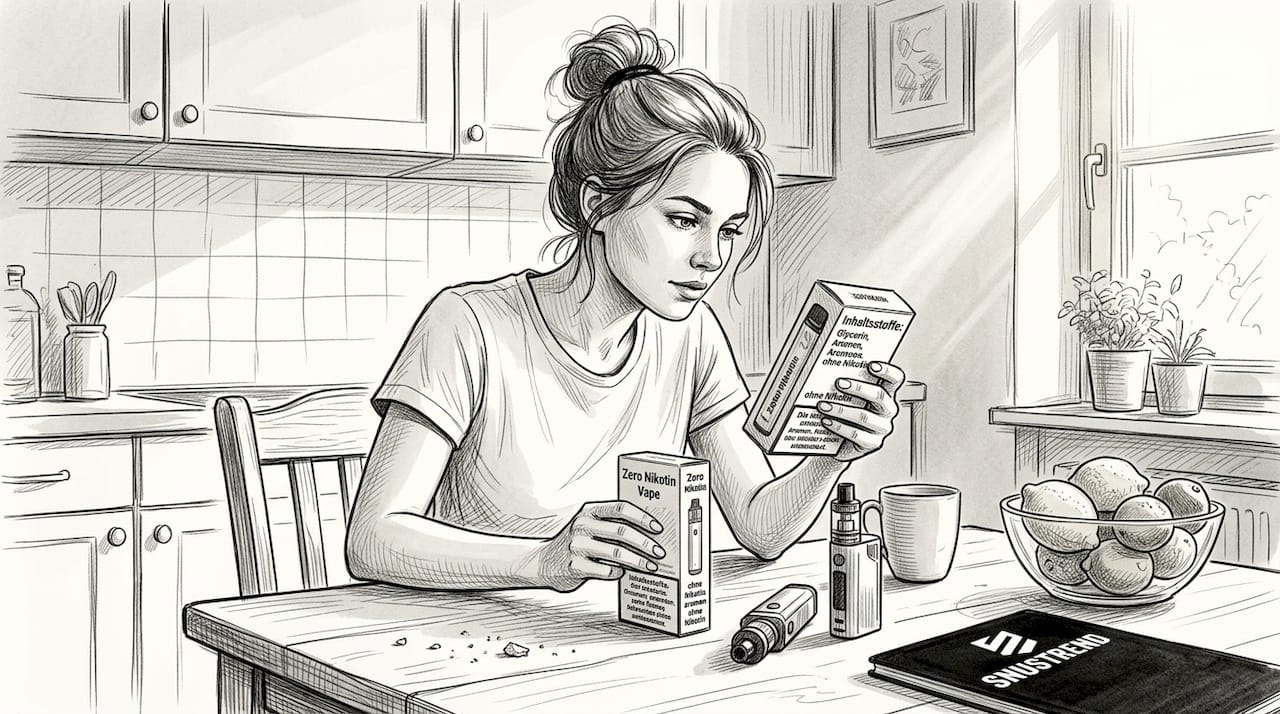
You can find more about concrete vape safety risks in our detailed safety article, which summarizes current study results for 2026.
Legal situation and regulatory specifics in Switzerland
Now that it is clear that health risks exist, let's look at the legal conditions in Switzerland.
In 2024, Switzerland introduced clear rules for vapes with the new Tobacco Products Act (TabPG). In principle: Zero-nicotine vapes are freely available to adults aged 18 and over. There is no prescription requirement and no general sales ban, as is being discussed in some other countries.
However, there are important regional differences. In Basel-Stadt and Valais, disposable vapes are partially banned or severely restricted. These cantonal regulations go beyond federal law and can change at any time. Anyone living in or traveling to these cantons should inform themselves in advance.
| Canton | Regulation for disposable vapes | Minimum age |
|---|---|---|
| Zurich | Permitted, age verification mandatory | 18 years |
| Basel-Stadt | Partially banned | 18 years |
| Valais | Restrictions in place | 18 years |
| Bern | Permitted, federal law applies | 18 years |
| Geneva | Permitted, federal law applies | 18 years |
The Federal Office of Public Health (FOPH) monitors the market and places high requirements on product labeling. Manufacturers and importers must fully disclose ingredients and adhere to pollutant limits. In practice, however, it turns out that these requirements are not always met, especially with cheap products from abroad.
Pro Tip: Buy zero-nicotine vapes only from reputable retailers who have had their products certified in Switzerland or the EU. A look at the product labeling and the presence of a batch number are good initial indicators of quality.
You can find a comprehensive overview of bans on disposable vapes in Switzerland as well as the current legal overview of vapes in our regularly updated blog articles.
The regulatory situation is evolving rapidly. What applies today may be obsolete in six months. Staying informed is therefore not a luxury, but a duty for anyone who vapes regularly.
Who are zero-nicotine vapes suitable for, and what should you look for when buying?
Now that the legal framework is clear, we provide practical tips for selection and careful use.
Zero-nicotine vapes appeal to three main groups. First, the health-conscious who want to enjoy the vaping experience without exposing themselves to the addictive potential of nicotine. Second, former smokers who want to gradually break free from nicotine and keep the habit of reaching for the device as a ritual. Third, recreational vapers who simply enjoy flavors and vapor clouds without wanting to make health compromises.
For all three groups, the following applies: flavors and PG/VG can cause irritation, even without nicotine. Zero nicotine is not a free pass for unlimited consumption.
When buying, you should check the following points:
- Ingredient list: Is it complete and understandable? If information is missing, that is a warning sign.
- Origin and certification: EU-certified or Swiss-approved products are subject to stricter controls.
- Nicotine content declaration: Does the packaging explicitly state "0 mg/ml"? Look for clear information.
- Brand reputation: Well-known brands with transparent communication are more reliable than no-name products.
- Price as a warning sign: Extremely cheap disposable vapes from unknown sources are more frequently mislabeled.
| Product type | Advantages | Disadvantages |
|---|---|---|
| Disposable vape (zero nic) | Convenient, no charging | More labeling errors, environmental impact |
| Refillable system | Controllable ingredients | Higher initial investment |
| Brand liquid (zero nic) | Transparent labeling | More expensive than no-name |
| No-name liquid | Cheap | Often poorer quality control |
Those wishing to learn about current tobacco alternatives or tracking the latest nicotine replacement trends in Switzerland will find regularly updated information and tested products at Snustrend.
The best decision is always the informed one. Those who know what is in their liquid can choose consciously and truly enjoy the vaping experience.
Our assessment: More education instead of hype
The marketing of zero-nicotine vapes is often temptingly simple: no nicotine, no problem, just enjoy. We see it differently. Not because vaping is fundamentally bad, but because this oversimplification harms consumers.
Labeling errors in up to 70% of tested products show that the market is still far from true transparency. The 6-MN loophole—the possibility of selling addiction-like substances as "nicotine-free"—is a regulatory problem that consumers are barely aware of. And the addictive potential of flavors and behavioral habits is systematically underestimated.
Our recommendation is clear: enjoyment is possible and legitimate. But only those who understand what they are vaping can truly make self-determined decisions. Informed consumers are the best answer to an unregulated market. Anyone wanting to learn more about hybrid-nicotine risks will find further critical insights there. Hype protects no one. Knowledge does.
Trying out a zero-nicotine vape: Choosing enjoyable and safe options
If you are now curious about a tested zero-nicotine product, you can find guidance in the Snustrend assortment. We have specifically selected products that are transparently labeled and offer a genuine vaping experience without nicotine.

Two particularly popular options in our range are the OS Tobacco Vape 750 Bliss with a fruity-sweet flavor and the OS Tobacco Vape 750 Disco with a vibrant taste profile. Both devices are compact, easy to use, and specifically designed for recreational vapers who value quality. The entire range of nicotine-free vapes at Snustrend is regularly checked and delivered with fast, discreet shipping throughout Switzerland.
Frequently asked questions about zero-nicotine vapes
Are zero-nicotine vapes really completely nicotine-free?
Zero-nicotine vapes are usually almost nicotine-free, but they may contain small traces or 6-MN between 0.1 and 0.4 mg/ml, which are not always stated on the packaging.
Are zero-nicotine vapes healthier than conventional cigarettes?
They contain 91 to 98% fewer toxins than cigarettes and produce neither tar nor carbon monoxide, but risks from flavors and PG/VG remain, and long-term data are still lacking.
At what age can I buy zero-nicotine vapes in Switzerland?
In Switzerland, zero-nicotine products are freely available for purchase from age 18, though individual cantons may have additional restrictions for disposable vapes.
What are the main dangers of zero-nicotine vapes?
The most common dangers are inaccurate labeling and heavy metals like lead in cheaper products, in addition to traces of nicotine or 6-MN as well as irritation from flavors and carrier substances.
Recommendation
- Understanding hybrid nicotine: gentle enjoyment with a strong effect – Snustrend - Snus, Vapes & Snuff
- Choosing nicotine alternatives: 70% of beginners use moderate levels – Snustrend - Snus, Vapes & Snuff
- Vape brand overview 2026: 15% more freedom of choice for vapers – Snustrend - Snus, Vapes & Snuff
- Nicotine pouches: benefits, effects, and application 2026 – Snustrend - Snus, Vapes & Snuff





Share:
Nicotine replacement trends in Switzerland: What will be important in 2026
Dabbing explained: How CBD consumption works for vapers