


TL;DR:
- Oral tobacco includes tobacco-containing and tobacco-free products that absorb nicotine through the oral or nasal mucosa. It causes local mucosal irritation, cardiovascular strain, and high addiction potential. Although supposedly smoke-free, these products are not risk-free and are not safe alternatives.
Oral tobacco refers to tobacco products consumed directly in the mouth without combustion or the inhalation of smoke. This includes products such as snus, snuff, and tobacco-free nicotine pouches, all of which allow nicotine to be absorbed via the oral or nasal mucosa. In Germany, this category is officially classified as "tobacco for oral use," whereby oral tobacco includes snus and snuff and is particularly common in Scandinavia. Anyone wanting to understand what oral tobacco is should know the differences between tobacco-containing and tobacco-free products, as these significantly determine both the effects and the health risks.
What is oral tobacco and how is it used?
Oral tobacco is the umbrella term for all tobacco products that are placed in the mouth or inhaled through the nose without being burned. The most well-known examples are snus, snuff, and chewing tobacco. Snus is placed as a small portion pouch between the gums and the upper lip, while snuff is finely ground tobacco that is inhaled through the nose. Chewing tobacco, on the other hand, is chewed directly in the mouth until the nicotine is released.
The application of snus is very simple: a pouch is placed in the mouth for 20 to 60 minutes without chewing or swallowing. The nicotine is slowly released from the tobacco and enters the bloodstream directly through the oral mucosa. This method of absorption is faster than many consumers expect, but slower than smoking. Snuff, by contrast, is placed in small amounts on the back of the hand or directly into the nose and inhaled.
Tobacco-free nicotine pouches like Velo or other brands function on the same principle as snus but do not contain tobacco. They consist of plant fibers, nicotine, and flavorings. Legally, these products fall into a different category than classic oral tobacco, but they are often discussed together because their use and effects are comparable. The distinction is important for consumers, as it entails different legal regulations and risk profiles.
Pro Tip: Anyone trying oral tobacco for the first time should start with a product with a low nicotine content and not leave the pouch in their mouth for longer than 20 minutes to avoid strong side effects like dizziness.
How does oral tobacco affect the body?
Nicotine from oral tobacco is absorbed directly into the bloodstream through the oral mucosa. This process begins within a few minutes of placing the pouch. The effect manifests as an increased heart rate, a rise in blood pressure, and a feeling of alertness or relaxation, depending on the individual reaction. Snus causes palpitations and increased blood pressure and can lead to addiction with regular use.

The local effects on the oral mucosa and gums are an often underestimated aspect. Regular users report gum recession, irritation of the oral mucosa, and altered taste sensations. These effects also occur with tobacco-free nicotine pouches, as the nicotine itself and the flavorings irritate the mucosa. Oral mucosal irritation as a side effect is a frequently ignored factor when switching between products.
The most important physical effects of oral tobacco at a glance:
- Short-term effect: Increased heart rate, rise in blood pressure, improved concentration, feeling of relaxation
- Local oral effects: Gum recession, mucosal irritation, altered oral flora
- Addiction: Nicotine binds to acetylcholine receptors in the brain and quickly creates an addictive pattern
- Withdrawal symptoms: Irritability, concentration problems, sleep disorders when stopping consumption
The speed at which addiction develops is underestimated by many beginners. Nicotine is highly addictive, especially with early consumption, which makes quitting considerably more difficult. Anyone who considers oral tobacco a "harmless alternative" to smoking overlooks the fact that the potential for addiction remains comparable.
What types of oral tobacco products are there?
The market for oral tobacco products is more diverse than many assume. The products differ in terms of ingredients, method of consumption, and legal status. Oral tobacco includes tobacco-containing and tobacco-free products, with the distinction being equally relevant for consumers and regulators.
| Product | Contains tobacco | Method of consumption | Nicotine content | Legal status in Germany |
|---|---|---|---|---|
| Snus | Yes | Oral mucosa | Medium to high | Sales ban for consumers |
| Snuff | Yes | Nasal mucosa | Low to medium | Legally available |
| Chewing tobacco | Yes | Oral mucosa | Medium | Legally available |
| Nicotine pouches (e.g., Velo) | No | Oral mucosa | Variable (up to 47.5 mg) | Regulation in progress |
| Nicotine toothpicks | No | Oral mucosa | Low | Legally unclear |
Snus is banned on the EU consumer market, with the exception of Sweden. In Switzerland, where the snus trend is focused, different regulations apply, which is why the product is legally available there. Tobacco-free nicotine pouches contain nicotine with an average value of 9.48 mg per pouch, with maximum values of up to 47.5 mg having been measured. This range shows how much the products can vary.
Snuff occupies a special position, as it is consumed through the nose and is therefore technically not "oral" tobacco in the strictest sense. However, it is regularly counted among the group of oral tobacco products in specialist literature and in retail. Well-known brands such as Pöschl Schmalzler offer flavored varieties that are traditionally popular, particularly in Bavaria and Austria.
The most important distinguishing features at a glance:
- Tobacco-containing products are subject to stricter EU regulations than tobacco-free alternatives
- Nicotine pouches without tobacco are not yet uniformly regulated in many countries
- The nicotine content varies significantly between product categories and directly influences the addictive potential
- Flavored products appeal particularly to younger target groups, which complicates prevention efforts
What risks are associated with oral tobacco?
Oral tobacco has a smoke-free image that systematically downplays health risks. Despite its smoke-free image, snus and nicotine pouches pose significant cardiovascular risks and are particularly problematic for pregnant women and heart patients. This assessment by the AOK makes it clear that "smoke-free" is not synonymous with "risk-free."
Health risks can be categorized into short-term and long-term:
Short-term risks:
- Increased blood pressure and elevated heart rate after every application
- Irritation of the oral mucosa and burning at the site of contact
- Dizziness and nausea upon overdose, especially in beginners
- Difficulty swallowing if tobacco juice is accidentally swallowed
Long-term risks:
- Gum recession and increased risk of oral mucosal changes
- Increased risk of heart attack due to sustained high blood pressure
- Nicotine addiction with pronounced withdrawal symptoms
- Possible interactions with medication in heart patients
“Nicotine is highly addictive, which is particularly problematic when consumed at an early age; early reinforcement makes quitting more difficult.” — Addiction specialist Andrea Rabenstein, quoted on tagesschau.de
The WHO issued a clear warning in 2024: the sales of nicotine pouches exceeded 23 billion units in 2024, with revenue of nearly 6 billion euros in 2025. These figures demonstrate that the market is growing rapidly, while regulation in many countries is not yet keeping pace. Of particular concern is the use of flavorings and social media marketing, which specifically target younger groups.
Pregnant women should avoid oral tobacco entirely, as nicotine crosses the placenta and impairs fetal development. Due to the regular rise in blood pressure, heart patients are at an increased risk of cardiovascular events. Anyone belonging to one of these risk groups should seek medical advice before any use.
Oral tobacco vs. smoking: What alternatives are there?
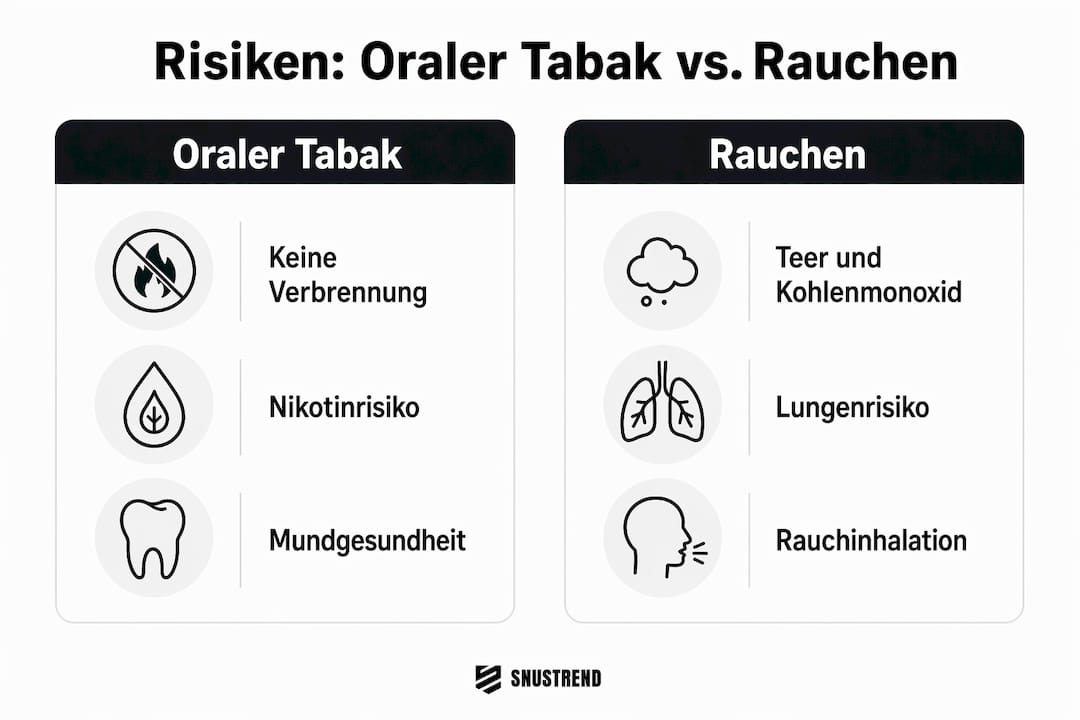
The comparison between oral tobacco and smoking shows clear differences but also shared risks. Smoking creates tar, carbon monoxide, and hundreds of other harmful substances through combustion, which directly damage the lungs and airways. Oral tobacco completely bypasses this combustion process but still delivers nicotine and, in the case of tobacco-containing products, includes other tobacco ingredients.
| Feature | Smoking | Oral tobacco (snus) | Nicotine pouches (tobacco-free) |
|---|---|---|---|
| Combustion products | Yes | No | No |
| Nicotine absorption | Rapid (lungs) | Medium (mucosa) | Medium (mucosa) |
| Lung damage | High | No direct effect | No direct effect |
| Oral mucosal risks | Medium | High | Medium |
| Addiction potential | High | High | High |
| Legality in Germany | Legal | Sales ban | Regulation in progress |
E-cigarettes and vapes represent another alternative that delivers nicotine via vapor rather than smoke or oral mucosa. They avoid tar and combustion products but are not risk-free. For information on the legality of snus in Germany, it is worth checking current legal regulations, as these change regularly.
Tobacco-free nicotine products like nicotine pouches are often marketed as a quit-smoking aid, but according to the WHO, they are not an effective smoking cessation tool. They transfer the addiction without ending it. Anyone who truly wants to stop using nicotine should rely on medically recognized methods such as nicotine replacement therapy with patches or chewing gum.
Pro Tip: Anyone wishing to switch between different nicotine products should know the nicotine content and its effect precisely to avoid unintentional overdosing.
Key takeaways
Oral tobacco includes tobacco-containing and tobacco-free nicotine products, all of which act through mucous membranes and possess a significant potential for addiction, regardless of their smoke-free image.
| Point | Details |
|---|---|
| Definition of oral tobacco | Tobacco products without combustion, consumed via mouth or nose, including snus and snuff. |
| Effect and absorption | Nicotine enters the bloodstream via the oral mucosa and causes palpitations and increased blood pressure. |
| Health risks | Oral mucosal irritation, gum recession, and cardiovascular strain are documented consequences. |
| Addiction potential | Nicotine addiction develops quickly; withdrawal symptoms make quitting difficult. |
| Alternatives and legality | Tobacco-free nicotine pouches are legal but are not an effective quit-smoking aid; snus is banned in the EU. |
My assessment of oral tobacco after years in the market
What bothers me most about the discussion around oral tobacco is the persistent misconception that "smoke-free" automatically means "safe." I see it again and again: consumers switch from cigarettes to snus or nicotine pouches and believe they have solved the problem. The addiction remains the same. Only the method of absorption changes.
What I believe is particularly underestimated is the effect on the oral mucosa. Most beginners report irritation after a few weeks that they did not expect. Tobacco-free nicotine pouches are no exception here, as nicotine irritates the mucosa regardless of whether tobacco is involved. Anyone who truly understands snus and its risks makes more conscious decisions.
My honest advice: anyone who uses oral tobacco or wants to try it should do so with eyes wide open. The products are legal (depending on the country), but they are not harmless recreational products. Informed use means knowing the nicotine content, observing your own reaction, and consistently excluding risk groups such as pregnant women or heart patients.
— Lukas
Discover oral tobacco and alternatives at Snustrend
Anyone interested in oral tobacco and wanting to start with a classic product will find a carefully curated selection at Snustrend. Snuff is one of the oldest forms of oral tobacco consumption and is well-suited for getting to know the category.

The Pöschl Schmalzler Südfrucht snuff (100g) is a flavored product with a fruity note, rooted in the tradition of snuff. Anyone who would rather start small will also find the 25g trial pack of the same product at Snustrend. Snustrend delivers quickly to Switzerland and, in addition to snuff, also offers snus, nicotine pouches, and vapes, ensuring that both beginners and experienced users will find what they are looking for.
FAQ
What exactly is oral tobacco?
Oral tobacco refers to tobacco products that are consumed in the mouth without being burned, including snus, snuff, and chewing tobacco. Nicotine is absorbed directly into the bloodstream through the oral or nasal mucosa.
How does snus differ from nicotine pouches?
Snus contains tobacco and is placed between the gum and lip, while tobacco-free nicotine pouches consist of plant fibers and contain no tobacco. Both products deliver nicotine via the oral mucosa and have a comparable addiction potential.
Is oral tobacco less harmful than smoking?
Oral tobacco avoids combustion products such as tar and carbon monoxide, but carries its own risks like oral mucosal irritation, gum recession, and cardiovascular strain. "Less harmful than smoking" does not mean risk-free.
Is snus legal in Germany?
Snus is prohibited for the consumer market in Germany and the entire EU, with the exception of Sweden. Different regulations apply in Switzerland, which is why snus is legally available there.
Can oral tobacco help with quitting smoking?
The WHO explicitly does not classify nicotine pouches as an effective smoking cessation aid. They shift nicotine dependence to another product but do not end it. Medically recognized methods such as nicotine patches or counseling programs are more effective.
Recommendation
- Snus vs. Cigarettes: Taste, Costs, and Risks – Snustrend - Snus, Vapes & Snuff
- Is Snus harmful? Risks, Side Effects, and Key Facts – Snustrend - Snus, Vapes & Snuff
- Risks of Nicotine Products: Facts and Safe Alternatives – Snustrend - Snus, Vapes & Snuff
- Tips for Tobacco Alternatives: High-Quality Options – Snustrend - Snus, Vapes & Snuff






Share:
Using snuff products: Benefits and risks 2026
The Meaning of Vaping: What Adults Should Know