


TL;DR:
- Vaping is considered a less harmful alternative to smoking, as it releases up to 95% fewer harmful substances. The diverse flavors and discreet design appeal particularly to young adults, while social debates call for better youth protection. For adults, vaping is a sensible reduction strategy, but the risk significantly increases for teenagers due to targeted marketing and high addiction potential.
Vaping is the modern alternative to smoking, gaining popularity among teenagers and adults worldwide for health, financial, and taste-related reasons. E-cigarettes and vapes vaporize a liquid instead of burning tobacco, which significantly reduces exposure to harmful substances. This is the core answer to why vaping is popular: fewer harmful substances, more flavor variety, and significantly lower costs than classic tobacco cigarettes. Brands like Elfbar and Vozol have tapped into an entirely new consumer group with colorful designs and flavors like watermelon or mango. At the same time, societal debates regarding addiction potential and youth protection are growing, requiring a balanced perspective.
Why is vaping popular? Health benefits in comparison
According to comparative studies, vaping releases up to 95% fewer harmful substances than smoking conventional cigarettes. This is because there is no combustion process involved in vaping. Instead, the device heats a liquid to a lower temperature, so no tar is produced and the amount of carbon monoxide drops drastically. Smoking produces over 7,000 chemicals, including 70 carcinogens. This figure alone explains why many smokers are seriously considering switching to vapes.
However, the health record is not without limitations. Long-term studies on the effects of vaping over decades are still largely missing, as vapes have only been widespread as a mass product since around 2010. Organizations like Public Health England have classified vaping as significantly less harmful than smoking, but emphasize that "less harmful" is not synonymous with "harmless." For adult smokers who cannot quit, vaping is nevertheless considered a sensible reduction strategy.
| Criterion | Cigarette | Vape |
|---|---|---|
| Combustion process | Yes, over 600°C | No, vaporization at approx. 200°C |
| Tar formation | Yes | No |
| Chemicals | Over 7,000 | Significantly fewer |
| Carbon monoxide | High | Very low |
| Long-term data | Available | Limited |
Pro Tip: According to experts, those wanting to switch from smoking to vaping should start with a nicotine strength of 12 to 20 mg/ml. Liquids with too low a dosage often lead to relapse because the body does not receive enough nicotine and the craving for cigarettes returns.
What role do taste, design, and variety play?
The variety of flavors is one of the strongest drivers behind the popularity of e-cigarettes. While a classic cigarette tastes like tobacco, vapes offer hundreds of flavors: from strawberry and mango to menthol and dessert flavors like vanilla ice cream or caramel. This variety significantly lowers the barrier for beginners and makes the switch from smoking more pleasant.

Then there is the design. Devices like the Elfbar 600 or Vozol models are compact, lightweight, and look more like a USB stick than a classic smoking utensil. This appeals especially to younger consumers who value aesthetics and discretion. Vapor dissipates faster than cigarette smoke and does not settle on walls or clothing, which makes vaping more attractive in social situations.
The technical variety ranges from simple disposable vapes to complex reusable systems with adjustable wattage and resistance values. Disposable devices are ideal for beginners because they require no maintenance. Experienced vapers prefer reusable systems where they can adjust the liquid, coil, and power themselves. This entry point without technical hurdles explains a large part of why vaping is so popular.
The following factors make vapes particularly attractive:
- Flavor variety: Fruit, menthol, dessert, and tobacco cover every taste.
- Compact design: Devices fit in any pocket and are barely noticeable.
- Low odor: Vapor smells significantly less intense than cigarette smoke.
- Easy operation: Disposable vapes require no prior knowledge.
- Technical customizability: Reusable systems allow for individual settings.
Pro Tip: Those wanting to choose the right device should first clarify whether disposable or reusable suits their lifestyle better. Disposable vapes are ideal for getting started, while reusable systems are financially and ecologically worthwhile in the long run.
Vaping vs. Smoking: How big is the cost difference really?
Switching to vapes can save up to 2,500 euros annually compared to cigarette consumption. This is not a trivial matter: at a pack price of around 8 to 10 euros and consumption of one pack per day, smokers quickly reach 3,000 euros or more per year. Vapes cost less to purchase, and the ongoing consumption of liquids or pods is significantly cheaper than tobacco.
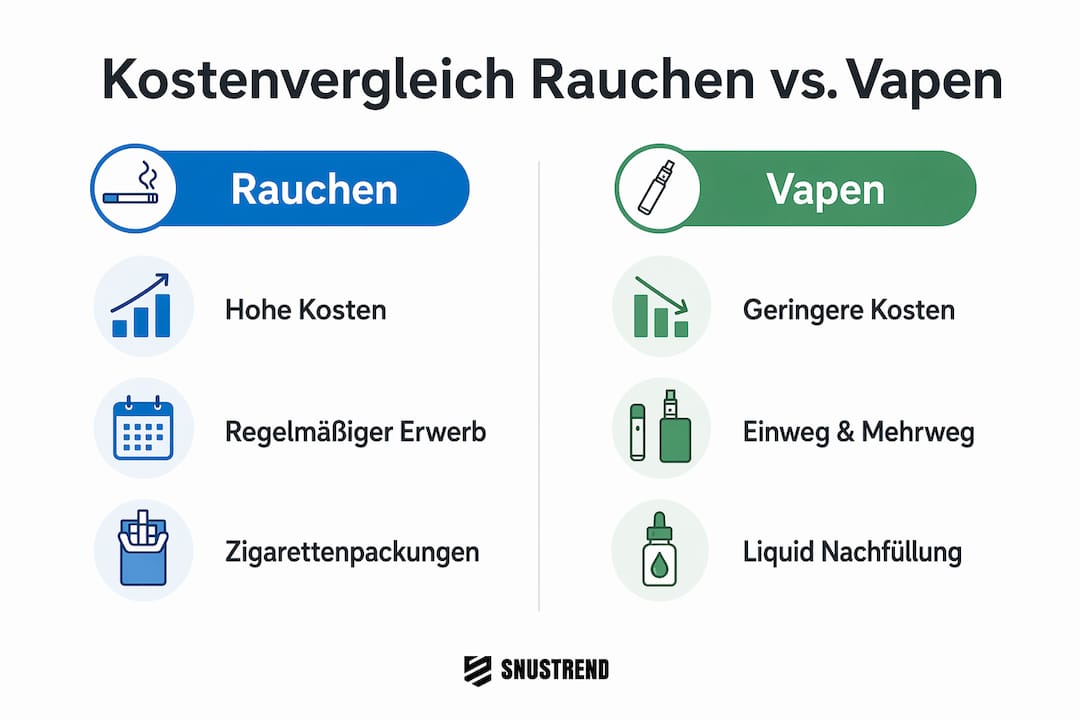
| Cost type | Smoking (annual) | Disposable Vaping (annual) | Reusable Vaping (annual) |
|---|---|---|---|
| Basic costs | Approx. 3,000 euros | Approx. 1,200 euros | Approx. 500 euros |
| Ongoing costs | Included | Included | Approx. 300 euros for liquids |
| Total costs | Approx. 3,000 euros | Approx. 1,200 euros | Approx. 800 euros |
| Savings | Reference value | Approx. 1,800 euros | Approx. 2,200 euros |
Reusable systems are the cheapest option in the long term, but require a higher initial investment and regular maintenance. Disposable vapes like the Elfbar 600 cost between 7 and 12 euros each and are roughly equivalent to a pack of cigarettes, yet are cheaper in direct comparison. The ability to gradually reduce nicotine strengths from 20 mg/ml to 0 mg/ml also makes vaping a tool for nicotine cessation, which further strengthens the financial motivation.
Why is vaping so popular among teenagers?
Almost 7% of adolescents between 12 and 17 years old regularly use vapes, with the proportion doubling since 2021. The increase among girls is particularly striking, with their share rising from 1.8% to 7.8%. These figures show that vaping is no longer a marginal phenomenon, but has become an integral part of youth consumer culture.
The reasons for this development are multifaceted. Targeted marketing strategies with colorful packaging and sweet flavors like cola or watermelon significantly lower the barrier for teenagers. Influencers on platforms like TikTok and Instagram portray vaping as part of a modern lifestyle without discussing the risks. Colorful designs next to candy vending machines and availability in youth-oriented channels further amplify this effect.
The risks involved are significant:
- Addiction potential: 90% of adolescent vape users consume nicotine-containing liquids, which means a high risk of dependency.
- Gateway to smoking: Adolescents who use vapes have a three times higher risk of smoking cigarettes later on.
- Underestimated risk: The colorful variety of flavors and designs masks the actual health risks.
- Social normalization: Vaping is perceived as normal in peer groups, which increases the pressure to start.
- Regulatory gaps: Despite mandatory age verification, vapes continue to fall into the hands of minors.
“Vapes offer a less harmful alternative for adult smokers, but pose a high risk when used uncritically by teenagers.” Hendrik Streeck, Drug Commissioner
Prevention approaches such as stricter age checks in online retail, advertising bans on social media platforms, and educational programs in schools are necessary but currently inadequately implemented. The Düsseldorf Addiction Research Center emphasizes that marketing and product design intentionally lower the threshold for nicotine initiation, which requires a societal response that goes beyond individual education.
Key insights
For adults, vaping is a sensible reduction strategy compared to smoking, but it poses significant societal risks for teenagers due to targeted marketing and high addiction potential.
| Point | Details |
|---|---|
| Health benefit | Vaping releases up to 95% fewer harmful substances than smoking, without tar and with less carbon monoxide. |
| Cost savings | Switching to reusable vapes saves up to 2,500 euros annually compared to cigarette consumption. |
| Adolescents in focus | Almost 7% of 12 to 17-year-olds vape regularly; the share has doubled since 2021. |
| Addiction risk | 90% of adolescent users consume nicotine-containing liquids with high dependency potential. |
| Correct nicotine dosage | Those switching should start with 12 to 20 mg/ml to avoid relapsing to smoking. |
My assessment of vape popularity: Opportunities and limitations
I have been observing the vaping debate for years, and my conclusion is clearer than many expect: for adult smokers who cannot quit, vaping is one of the few strategies that actually works. The reduction in harmful substances is real, the cost savings are real, and the ability to gradually reduce nicotine is a genuine tool for cessation. Anyone who switches consciously as an adult is making a rational decision.
What worries me, however, is the indifference toward youth protection. The figures from the 2025 Drug Affinity Study are no coincidence. They are the direct result of an industry that intentionally designs products to appeal to teenagers. Flavors like cola and watermelon, candy-colored devices, and influencer marketing on TikTok are no accidents. That is strategy. And the societal response to it is currently too weak.
I think it is wrong to demonize vaping across the board, as that keeps adult smokers away from a real alternative. But it is just as wrong to downplay the risks for teenagers. The solution lies in clear regulation: strict age checks, an advertising ban on social media, and transparent labeling of ingredients. Anyone who knows the safety aspects of vaping and consumes consciously can use vaping for what it can be for adults: a less harmful alternative. For teenagers with no history of nicotine use, there is no reason to start.
— Lukas
Discover vapes and alternatives at Snustrend
For adults considering switching from smoking to vaping or other nicotine alternatives, Snustrend offers a wide selection of products with fast shipping to Switzerland.

Snustrend's range includes vapes from brands like Elfbar and Vozol in various nicotine strengths, from 20 mg/ml for beginners to nicotine-free versions. Those wanting to explore other alternatives besides vapes will also find nasal snuff like Pöschl Schmalzler Südfrucht as a classic option without combustion. The product information is clear and detailed, so that even beginners can make the right choice.
FAQ
What exactly is vaping and how does it work?
Vaping refers to inhaling vapor produced by heating a liquid in an electronic device. Unlike smoking, there is no combustion, which prevents the formation of tar and many harmful substances.
Is vaping really less harmful than smoking?
Studies show that vaping releases up to 95% fewer harmful substances than smoking tobacco cigarettes. However, long-term data over decades is still missing, which is why "less harmful" should not be equated with "harmless."
Why are vapes so popular among teenagers?
Colorful designs, sweet flavors, and targeted marketing on social media platforms make vapes particularly attractive to teenagers. Almost 7% of 12 to 17-year-olds in Germany use vapes regularly, with 90% of them consuming nicotine-containing products.
What nicotine strength is recommended for those switching?
Experts recommend a nicotine strength of 12 to 20 mg/ml for getting started to avoid relapsing to smoking. The strength can then be gradually reduced to 0 mg/ml to support complete cessation.
Is the switch to vaping financially worthwhile?
Switching to reusable vapes can save up to 2,500 euros annually compared to cigarette consumption. Disposable vapes are cheaper than cigarettes but more expensive than reusable systems in the long run.
Recommendation
- Vaping vs. Smoking: Differences, risks, and opportunities – Snustrend - Snus, Vapes & Nasal Snuff
- Safety of Vapes 2026: Understanding risks and vaping safely – Snustrend - Snus, Vapes & Nasal Snuff
- How disposable vapes work: Technology, tips, and benefits – Snustrend - Snus, Vapes & Nasal Snuff
- Vape terminology explained: Overview, trends, and practical knowledge – Snustrend - Snus, Vapes & Nasal Snuff






Share:
The Meaning of Vaping: What Adults Should Know
Intensifying Vape Flavor: Your Guide for 2026