


TL;DR:
- Snus is on the rise in Switzerland, yet it carries significant risks for oral health and the cardiovascular system. Local damage and addiction potential are significant with prolonged use, especially with loose products. Education, conscious use, and protecting high-risk groups are essential for responsible consumption.
Snus is rapidly gaining popularity in Switzerland, but the topic of snus and health is often taken lightly. What is considered a smoke-free alternative to cigarettes carries its own risks that many consumers are unaware of. Gum damage, nicotine addiction, increased heart rate, and specific dangers for young people and pregnant women are not marginal phenomena. This guide explains what science currently knows about the health aspects of snus, where the real risks lie, and how you as an adult in Switzerland can make informed decisions.
Table of Contents
- Health impacts of snus on the mouth and gums
- Nicotine effects and cardiovascular impacts of snus
- Snus compared to cigarettes: Risks, benefits, and trends in Switzerland
- Specific risks and recommendations for young people, pregnant women, and high-risk groups
- Practical tips for low-risk use and alternatives to snus
- New perspectives: Why a comprehensive approach to snus is necessary in Switzerland
- Buying snus in Switzerland: Selection and conscious decisions
- Frequently asked questions about snus and health
Key Takeaways
| Point | Details |
|---|---|
| Local oral damage | Snus can cause gum recession and inflammatory reactions, especially at the site of use. |
| Nicotine risks | Nicotine from snus increases heart rate and blood pressure similarly to cigarettes and can be addictive. |
| Young people and pregnant women | Special caution is required for adolescents and pregnant women, as there are concrete health risks here. |
| Snus vs. cigarettes | Snus is considered a less harmful alternative to smoking but is not risk-free. |
| Conscious use | Low-risk consumption through low nicotine doses and knowledge of alternatives is advised. |
Health impacts of snus on the mouth and gums
Anyone using snus for the first time quickly feels why this pouch is placed under the upper lip: it sits there discreetly, and the nicotine flow begins. What many do not see: the tissue, which is constantly being pressed and irritated, suffers significantly in the long term. The health effects on the oral cavity are among the best-documented consequences of snus consumption.
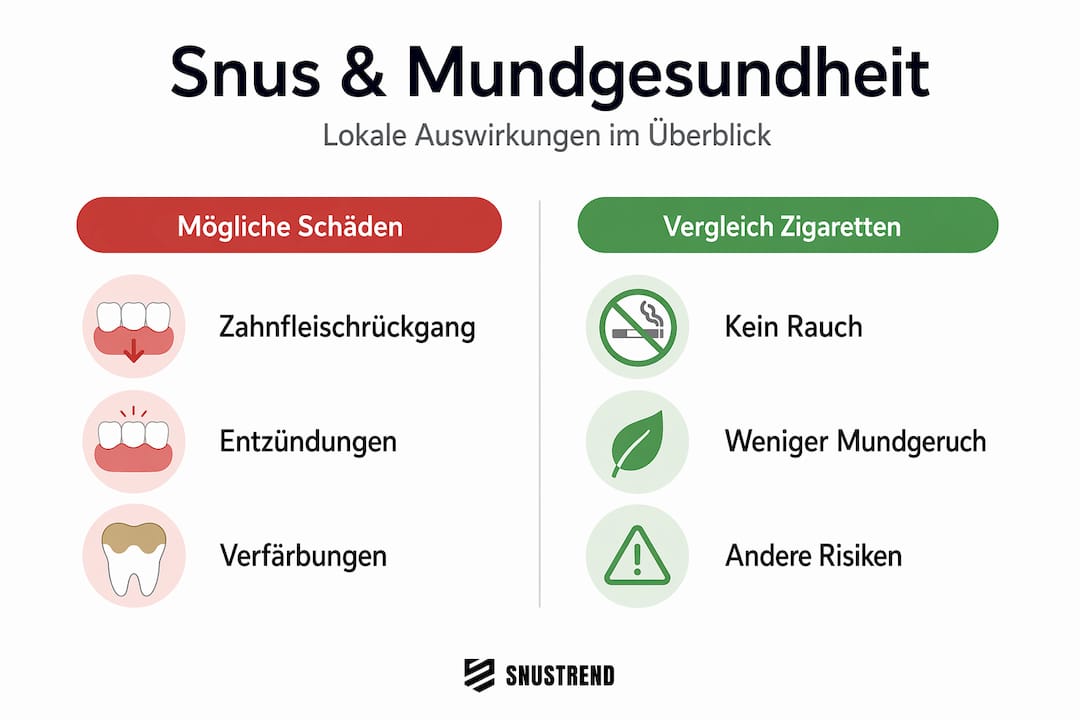
Mechanical pressure and direct chemical ingredients cause inflammatory processes that damage the gums. Gum recession caused by snus usually starts at the application site and can spread to surrounding areas. The result: exposed tooth roots, increased sensitivity to cold and heat, and in the worst case, bone loss.
A detail from research is particularly telling: the risk increases by 34% per year of consumption, and the form of snus plays an important role. Loose snus shows a prevalence of oral mucosal changes of up to 23.5%, while portioned snus leads to such damage much less frequently, with a prevalence of only about 2.9%. Choosing portioned pouches therefore measurably reduces the risk.
Important to know: A clear scientific connection with destructive periodontitis has not yet been clearly proven. Nevertheless, local damage remains real. The risks and side effects of snus primarily affect people who consume it daily over many years.
Comparison: Loose snus vs. portioned snus
| Feature | Loose Snus | Portioned Snus |
|---|---|---|
| Prevalence of oral mucosal changes | up to 23.5% | approx. 2.9% |
| Duration of contact with tissue | longer, more direct | shorter, contained in pouch |
| Risk of gum recession | higher | significantly lower |
| Dosability | more difficult | easier and more uniform |
| Recommendation for beginners | not suitable | better suited |
- Portioned snus significantly reduces local mucosal strain
- Local changes occur primarily at the application site
- Regular dental check-ups are advisable for active snus users
- White patches on the mucosa (leukoplakia) can also be early warning signs
Pro tip: Monitor your oral mucosa regularly if you use snus. Whitening or receding gums at the application site are early signals that should not be ignored.
Nicotine effects and cardiovascular impacts of snus
Nicotine is one of the most potent psychoactive substances available legally. In snus, it is not inhaled but absorbed directly into the blood through the oral mucosa. This sounds more harmless, but it is not: the absorption rate is high, and the effect is consistent.
Specifically, this means: the heart rate increases by approx. 11 bpm after 60 minutes of snus use, similar to smoking a cigarette. Blood pressure also rises. For healthy adults, this is no drama in the short term. For people with existing cardiovascular diseases or high blood pressure, however, it can have relevant consequences.
More about the effects of nicotine in snus and how different nicotine strengths influence physical reactions is explained in our in-depth article on nicotine strength and effects in snus.
Warning from the Federal Institute for Risk Assessment: Nicotine-containing products, including snus and nicotine pouches, should be completely avoided by pregnant women. People with heart disease, high blood pressure, or circulatory disorders should also avoid nicotine in any form.
Acute nicotine effects of snus use, especially during first-time use:
- Dizziness and lightheadedness due to vasodilation
- Nausea, sometimes vomiting at too high a dose
- Increased heart rate and elevated blood pressure
- Feeling of alertness and mood elevation
- Rapid development of tolerance and addiction with regular use
Precautions for snus use:
- Never consume on an empty stomach
- Start with low-dose products
- Limit usage time per pouch (maximum 30 minutes)
- Stop immediately if feeling dizzy or experiencing a racing heart
- No parallel consumption of large amounts of caffeine or alcohol
Snus compared to cigarettes: Risks, benefits, and trends in Switzerland
After analyzing the specific effects of snus, we now compare it with cigarettes and look at current trends in Switzerland.
Snus or cigarettes? This is the decisive question for many adults. The argument for snus is usually: no smoke, no tar, no carbon monoxide. And that is true. The cancer risks caused by combustion products in smoking are indeed significantly lower with snus. This makes snus a form of harm reduction, not a risk-free choice.
The Swedish model is cited internationally as a case study. Smoking rates fell to 5% in Sweden, while at the same time daily snus use is at 25% for men and 10% for women. This is no coincidence, but the result of a decades-long societal shift away from cigarettes. The lung cancer rate among Swedish men is now one of the lowest in Europe.
In Switzerland, the trend is similar. The consumption of snus and nicotine pouches is increasing, even among young people. A detailed comparison of snus and cigarettes shows where the real differences lie and what both products have in common. And those who want to classify snus as an alternative in Switzerland will find a sober overview there.
Direct comparison: Snus vs. cigarettes
| Criterion | Snus | Cigarettes |
|---|---|---|
| Overall cancer risk | significantly lower | high (lung, throat, bladder) |
| Oral cancer risk | slightly increased | increased |
| Heart rate increase | present | present |
| Smoke and secondhand smoke | none | highly burdensome |
| Addiction potential | high | very high |
| Societal acceptance (Switzerland) | growing | declining |
| Gum damage | locally at application site | generally, due to smoke |
Benefits and disadvantages at a glance:
- Benefit of snus: no smoke, no tar, no combustion products
- Benefit of snus: discreet use without odor nuisance
- Disadvantage of snus: local oral mucosal damage at the application site
- Disadvantage of snus: similarly high addiction potential to cigarettes
- Benefit of cigarettes: none (from a health perspective)
- Disadvantage of cigarettes: lungs, heart, circulation, teeth, surroundings
Pro tip: Anyone who wants to give up nicotine entirely should choose alternative cessation methods, such as behavioral therapy support or nicotine replacement patches. Snus is not suitable as a cessation aid.
Specific risks and recommendations for young people, pregnant women, and high-risk groups
After the general comparison, we now focus on groups with a particularly high risk from snus consumption.
Nicotine is an addictive substance for everyone. However, for certain groups, the health consequences are more severe than for others. Three groups are particularly in the spotlight.

Young people are in a phase of intensive brain development that continues into early adulthood. Nicotine directly interferes with neuronal development processes, which makes the nicotine consumption risks for young people particularly serious. Studies show that early nicotine contact increases susceptibility to addiction for all other substances and can permanently impair cognitive performance.
Pregnant women face a particularly high risk. Nicotine from snus increases the risk of cleft palate in babies by 48% and is associated with premature births and low birth weight. There is no safe level of nicotine in pregnancy.
People with cardiovascular diseases are more sensitive to the blood pressure-raising and heart rate-increasing effects of nicotine. For them, even moderate snus consumption can pose a real risk of acute events.
Precautions and recommendations for high-risk groups:
- Young people under 18 years of age should not consume snus; it is legally prohibited and strongly discouraged from a medical perspective
- Pregnant and nursing mothers must strictly avoid all nicotine-containing products
- People with high blood pressure should seek medical advice before using snus
- For those with cardiac arrhythmias or coronary diseases, snus is contraindicated
- Anyone wishing to stop consumption can find support through Addiction Switzerland or their family doctor
Pro tip: If you are in a high-risk group or have questions about nicotine in combination with existing illnesses, consult your family doctor or an addiction counseling center. An informed decision is always better than guessing.
Practical tips for low-risk use and alternatives to snus
Finally, we provide practical advice on how to use snus with lower risk or switch to alternatives.
Adults who choose to consume snus consciously can noticeably reduce their personal risk through a few simple behaviors. This is not a free pass for careless consumption, but a sober approach to the subject.
Especially for beginners, the recommendation is to start with low-dose snus pouches, i.e., products with 2 to 4 mg of nicotine, and to adjust the dose slowly and consciously. Anyone who consumes too much too quickly risks nausea, addiction, and unnecessarily high stress on the oral mucosa.
Instructions for lower-risk snus consumption:
- Product choice: Start with portioned snus with low nicotine content (2 to 4 mg)
- Placement: Always place the pouch under the upper lip; do not chew or move it
- Wear time: Maximum 30 minutes per pouch, then remove
- Frequency: Consciously limit frequency of consumption; no continuous use
- Observation: Check oral mucosa regularly; pause if changes occur
- Storage: Store products safely and coolly, out of reach of children
As an alternative to classic tobacco snus, tobacco-free nicotine pouches offer an option with reduced carcinogen exposure. But caution: nicotine pouches are not necessarily safer, because nicotine remains nicotine. Long-term data on tobacco-free pouches are still largely missing.
Tips for safe storage and child protection:
- Never leave snus and nicotine pouches lying around openly
- Use original containers with child-resistant caps
- Dispose of used pouches directly in a sealed container
- Nicotine poisoning in children is an emergency: Swiss Toxicological Information Centre: 145
Pro Tip: Tobacco-free nicotine pouches like Velo or similar products offer a different risk profile than tobacco snus, but they are not without risk. Always weigh the benefits and risks individually and inform yourself about the recommended nicotine strengths for beginners before purchasing a product.
New Perspectives: Why a comprehensive approach to snus is necessary in Switzerland
In public debate, things often boil down to a simple picture: snus is better than smoking, so snus is good. This is too short-sighted and ignores several uncomfortable realities that we can clearly name after years in this market.
The concept of harm reduction is legitimate and empirically sound, as Sweden impressively demonstrates. But in the Swiss discussion, it is too often misunderstood as an acquittal for snus. Anyone who switches from cigarettes to snus and thereby lowers their lung cancer risk has done something important. Anyone who starts using snus as a non-smoker because they think it is harmless has made a mistake.
The greatest underestimated danger with snus is not the substance itself, but the distorted risk perception that surrounds it. Consumers systematically underestimate local oral damage and overestimate its harmlessness compared to cigarettes.
The trend among adolescents and young adults in Switzerland is particularly worrying. Snus and nicotine pouches are present in schools, are easily obtainable, and appear visually tame to young people—no smoke, no fire, no smell. The regulatory gaps are real.
Furthermore, long-term data on non-tobacco nicotine pouches—products without tobacco—hardly exist. We know what a decade of tobacco snus does to the gums. What a decade of nicotine pouches does, we simply do not yet know.
Our position: Education must become more precise. Not "snus is bad" and not "snus is harmless," but: snus carries specific, documented risks for certain parts of the body and certain groups of people. Anyone who knows this and makes a conscious decision is acting in an informed manner. Anyone who does not know this is poorly advised. A more in-depth discussion on snus as a drug substitute and its social consequences shows how complex these issues really are.
Public health services, schools, and the industry itself share responsibility here. Clearly labeling products, visibly warning risk groups, and actively offering advice: these are not obstacles to consumption for adult, informed people. They are the standard that this market needs.
Buying Snus in Switzerland: Selection and Conscious Decisions
Now that you are comprehensively informed, we would like to show you a suitable selection of snus products for your conscious enjoyment.
At Snustrend, you will find a wide selection of products with different nicotine strengths, flavors, and formats, from classic snus to tobacco-free nicotine pouches. Detailed product descriptions will help you make the right choice for your needs and experience level.

Newcomers will find products with moderate nicotine content, clear instructions for use, and a customer service team to answer your questions. Experienced consumers benefit from the variety of brands and aromas. For those who would also like to explore classic snuff products: Pöschl Schmalzler Südfrucht 100g and Pöschl Schmalzler Südfrucht 25g are proven entry-level options, as is the practical Pöschl plastic snuff bottle for on the go.
Pro Tip: Always choose products with moderate nicotine levels when starting out. Your body will thank you, and you will retain control over your usage.
Frequently Asked Questions About Snus and Health
Is snus better for health than cigarettes?
Snus is considered less harmful than cigarettes because it does not produce combustion products. Nevertheless, local oral damage and cardiovascular risks persist, and while the smoking rate in Sweden shows that snus works as a harm-reduction tool, it is not completely risk-free.
How dangerous is snus for adolescents?
Adolescents are particularly susceptible to nicotine addiction and cognitive impairment because their brains are still developing. Nicotine is proven to harm the adolescent brain and increases long-term susceptibility to addiction to other substances.
Can snus lead to gum damage?
Yes, snus can lead to gum recession and inflammatory reactions directly at the site of application. The risk increases by 34% per year of consumption, with loose snus causing significantly more damage than portioned snus.
Is snus legal in Switzerland?
The import and purchase of snus are permitted for adults in Switzerland; sales are regulated. Minors are not allowed to consume snus, and rising youth consumption presents challenges for both authorities and providers.
What alternatives to snus exist for nicotine consumers?
Tobacco-free nicotine pouches as an alternative offer a different risk profile because they contain no tobacco; however, long-term data on their safety is lacking. Vapes and other smoke-free products also exist, but they are not addiction-free and should be chosen with the same awareness of the risks.
Recommendation
- Snus Legal Situation Switzerland 2026: Legal Overview – Snustrend - Snus, Vapes & Snuff
- Buying Snus in Switzerland: Buy cheaply & safely 2026 – Snustrend - Snus, Vapes & Snuff
- Snus as a Drug Substitute 2026: Facts and Alternatives – Snustrend - Snus, Vapes & Snuff
- Snus vs. Cigarettes: Taste, Costs, and Risks – Snustrend - Snus, Vapes & Snuff






Share:
Choosing the right e-cigarettes: criteria for 2026
How to Use Snuff Correctly: The Complete Guide