

As of October 8, 2026 · Snustrend Editorial Team · Reading time approx. 9 minutes
In short: The appropriate snus dosage depends on three things: mg of nicotine per pouch, how much the pouch actually releases, and how many pouches you take per day. If you already consume nicotine, it’s best to start at the "mild" level (up to 8 mg per pouch) or "normal" (9–16 mg), taking only one pouch at a time and increasing after a few days at the earliest. Nausea, dizziness, or rapid heartbeat mean: remove the pouch immediately. If you do not consume nicotine, you should not start.
“How many mg do I need?” is one of the most common questions regarding snus and nicotine pouches. The numbers on the cans range from 3 mg to over 40 mg per pouch – and there are also specifications like mg/g, “Strong,” “Extreme,” or points. In this guide, you will learn what the numbers mean for your actual dose, how much nicotine a pouch really releases, which strength fits your previous consumption, and how to recognize when it’s too much. All numbers come from studies, official data, or our product data and are linked below.
Important in advance: This guide is aimed at adults who already consume nicotine (cigarettes, vapes, or snus). It is not medical advice. Nicotine is addictive.
What does “dosage” mean for snus and nicotine pouches?
For snus and nicotine pouches, three factors determine how much nicotine you ultimately absorb:
- Nicotine per pouch (mg): the amount contained in a single pouch. This is the most important number on the can.
- Release: No pouch releases all its nicotine. How much comes out depends on the product type, moisture, pH level, and how long the pouch stays under the lip.
- Frequency: How many pouches you take per day and how quickly one after the other.
The strength on the can is just the starting point. Two people with the same can can absorb very different daily amounts. We explain in detail how to differentiate between mg per pouch and mg/g in Nicotine Pouch Strength Explained: What Does mg per Pouch Mean?.
How much nicotine does a pouch actually release?
There are concrete measurements for this. In a study by Lunell et al. (2020, Nicotine & Tobacco Research), it was measured how much nicotine was released from the pouch after 60 minutes. Result: For tobacco-free nicotine pouches (ZYN), it was about 56–59%, while for classic tobacco snus (General, 8 mg) it was only 32%. The German Federal Institute for Risk Assessment (BfR) states that at least half of the nicotine from nicotine pouches is absorbed through the oral mucosa.
| Product (Study) | Nicotine in Pouch | Released from the Pouch after 60 Min. | That’s about |
|---|---|---|---|
| Nicotine Pouch, 3 mg | 3 mg | 55.9 % | 1.7 mg |
| Nicotine Pouch, 6 mg | 6 mg | 59.1 % | 3.5 mg |
| Tobacco Snus (Original Portion), 8 mg | 8 mg | 32.0 % | 2.6 mg |
| For comparison: 1 cigarette | – | – | about 1 mg absorbed |
Sources: Lunell et al. 2020 (Pouch and Snus Values); U.S. National Cancer Institute, Monograph 7 (Cigarette: approx. 1 mg per cigarette, range 0.37–1.6 mg). The dissolved amount is an upper limit – part of it is swallowed.
This leads to three things you should know about dosing:
- Nicotine pouches release more per mg than classic snus. A 6-mg pouch can deliver more nicotine than an 8-mg tobacco snus. Therefore, if switching from tobacco snus to all-white pouches, you should not simply choose the same mg number.
- Even a mild pouch delivers more than a cigarette. A 6-mg pouch releases about 3.5 mg – which is more than the amount from a single cigarette. More on this in the article How Many Cigarettes is a Snus Equivalent?
- Strong pouches reach high blood levels. In a study by Mallock-Ohnesorg et al. (2024, Frontiers in Pharmacology), the peak nicotine level in the blood after a 30-mg pouch was 29.4 ng/ml – almost double that after a cigarette (15.2 ng/ml). The pulse increased by about 25 beats per minute.
Which strength is right for me? The four strength levels at a glance
At Snustrend, we categorize each product by mg of nicotine per pouch into one of four levels. You can access the appropriate strength filter directly through the links in the Snus category.
| Level | mg per Pouch | For whom (Guidance) | Examples at Snustrend |
|---|---|---|---|
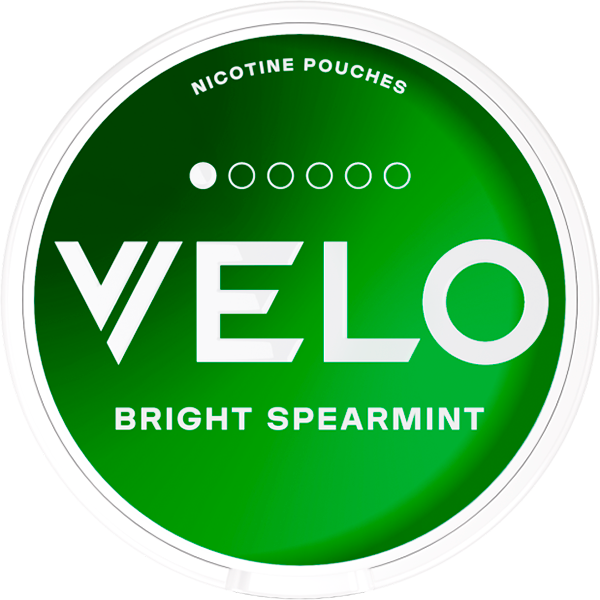
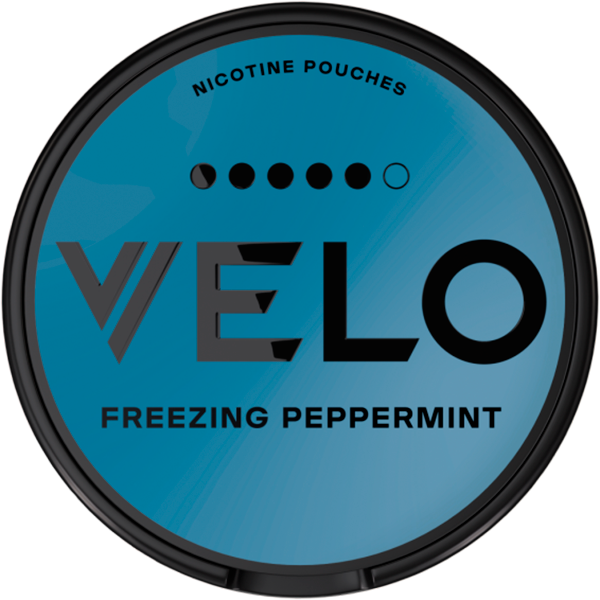
| Mild | up to 8 mg | Switchers with low consumption, occasional users, anyone looking to reduce their dose | ZYN Mini Normal (3 mg), VELO Bright Spearmint Mini (4 mg) |
| Normal | 9–16 mg | Regular nicotine consumers, switching from daily smoking | Pablo Silver (approx. 10 mg), Odens Cold Extreme White Dry Slim (approx. 14 mg) |
| Strong | 17–25 mg | Experienced users with high tolerance | Pablo Gold (17 mg), NOIS Mint Slim (20 mg), Siberia Blue Ice Cold Power (approx. 24 mg) |
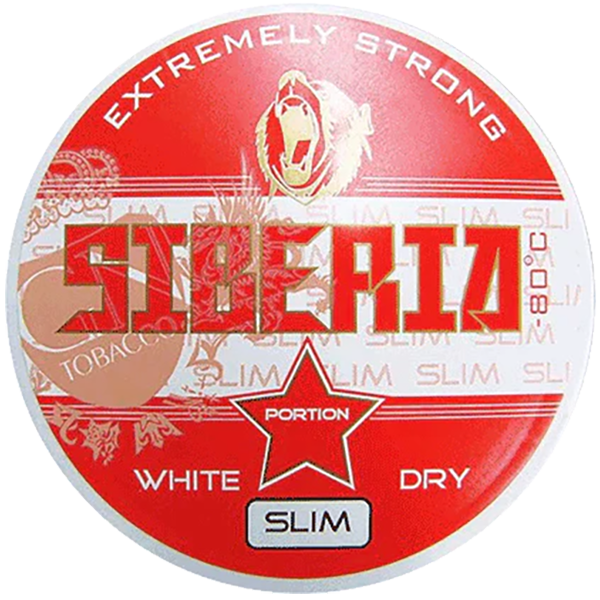
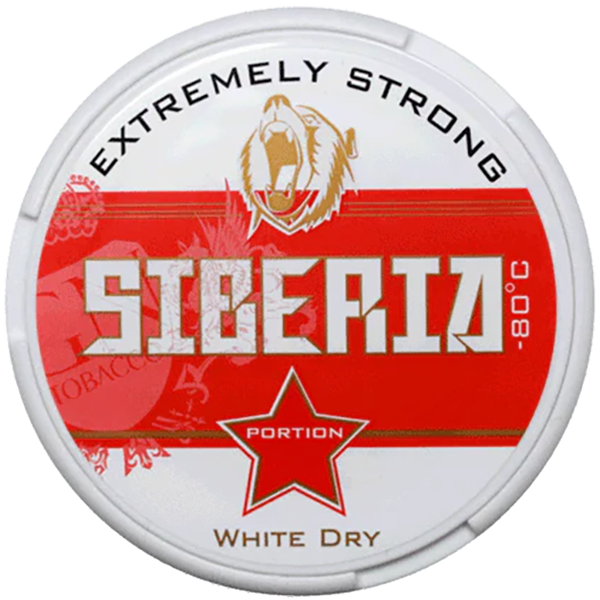
| Extra Strong | from 26 mg | Only for very experienced users – not for beginners | Siberia Red White Dry Slim (approx. 28 mg), Iceberg (40 mg), Cuba Black (43 mg) |
Information according to manufacturer and product data. You can find all brands with their values in the Snus Strength Table, and the strongest products in the ranking The Strongest Nicotine Pouches 2026.
What starting strength fits my previous consumption?
There is no official dosage table for nicotine pouches. The following overview is a cautious guideline derived from the measurements above (about 1 mg per cigarette, around 55–60% release for pouches). It applies only to adults who already consume nicotine. When in doubt, always choose the lower level.
| Previous Consumption | Recommended Starting Level | Note |
|---|---|---|
| No nicotine | none | Do not start with nicotine. Nicotine-free pouches are available in the Nicotine-Free category. |
| Occasional or under 10 cigarettes per day | Mild (3–6 mg) | Choose mini pouches, only one pouch at a time. |
| 10–20 cigarettes per day | Mild to Normal (4–10 mg) | Start with mild; switch to normal after a few days if necessary. |
| More than 20 cigarettes per day | Normal (8–14 mg) | Do not start directly with “strong” or “extra strong.” |
| Vapes / E-cigarettes | Mild to Normal | The nicotine specification in the liquid (mg/ml) cannot be directly converted to mg per pouch – start low. |
| Tobacco Snus (Original/White Portion) | one level lower than before | All-white pouches release more nicotine per mg than tobacco snus (see table above). |
Step by step: How to find your dosage
- Start low. Choose the lower of the two levels that apply to you. Mini or slim pouches are easier to dose than large portions.
- One pouch, then wait. Place one pouch under your upper lip and observe how you feel in the next 20–30 minutes. Do not add another pouch while the first one is still effective.
- Use duration as an adjustment factor. The longer the pouch stays in, the more nicotine is released (the study measured up to 60 minutes). If a pouch is too strong for you, remove it earlier – this immediately lowers the dose.
- Change only one thing at a time. Either the strength, the format (mini, slim, large), or the type (all white, white dry, original). Observe each change for at least two to three days.
- Keep a record. Briefly note the product, mg, number of pouches per day, and how you felt. This way, you can see after a week if your amount is increasing.
- After a break, start low again. If you haven’t had nicotine for a few days, you often won’t tolerate your usual strength as well.
How do mini, slim, and large affect the dose?
Many manufacturers specify the strength in mg per gram (mg/g). The amount per pouch then depends on the pouch weight. This means: The same variety can be very differently strong depending on the format. Two examples from our range:
| Variety | mg/g | Mini | Slim | Large / Normal |
|---|---|---|---|---|
| Odens Cold Extreme White Dry | 22 mg/g | approx. 10 mg (0.45 g) | approx. 14 mg (0.65 g) | approx. 18 mg (0.8 g) |
| Siberia Red White Dry | 43 mg/g | approx. 19 mg | approx. 28 mg (0.65 g) | approx. 34 mg (0.8 g) |
Calculation: mg/g × pouch weight, according to product data. Values rounded.
This results in a simple rule: If you like a variety but find it too strong, first try the smaller format of the same variety. The type also plays a role: White Dry Portion is drier and releases nicotine more evenly, while moist pouches often act faster. More on this in Dry vs. Moist Snus.
How do I know if the dose is too high?
According to the BfR, even individual pouches increase pulse and blood pressure – at 6 mg, heart rate increased by about 10 beats per minute in studies. Typical signs of too much nicotine include:
| Signs | What you should do |
|---|---|
| Light dizziness, “head is full,” cold sweat | Remove pouch immediately, sit down, drink water, get fresh air. |
| Nausea, stomach cramps, excessive salivation | Remove pouch, rinse mouth, do not add another. Next time, choose a lower level. |
| Rapid heartbeat or palpitations | Remove pouch and rest. Seek medical advice if symptoms persist. |
| Vomiting, severe dizziness, shortness of breath | Emergency call 144. For poisoning inquiries, contact Tox Info Suisse at 145 (24 hours). |
| A child has put a pouch in their mouth or swallowed it | Call 145 (Tox Info Suisse) immediately. Do not induce vomiting. |
The strength is then too high for you – even if the variety suits others without problems. Tolerance is individual.
How many pouches per day are too many?
There is no official “safe” daily amount for nicotine pouches – neither in Switzerland nor in the EU. However, it is clear: The daily dose results from strength × number of pouches × duration of use. Ten pouches of 4 mg can deliver more nicotine than three pouches of 10 mg.
Watch for these signals that your consumption is increasing:
- You reach for the first pouch earlier in the day.
- You immediately add the next pouch as soon as you remove one.
- The usual strength “is no longer enough” and you keep switching to stronger varieties.
- Without a pouch, you become irritable, restless, or have trouble concentrating.
These are typical signs of nicotine dependence. If you want to consume less or no nicotine at all, you can find free advice at the Smoking Cessation Hotline 0848 000 181 (Mon–Fri, 11 AM–7 PM). A gradual switch to lower levels or to nicotine-free pouches can make consumption visible – but it does not replace counseling.
The most common dosing mistakes
- Buying by name instead of by mg. “Strong” in one brand can be milder than “Normal” in another. The decisive factor is mg per pouch.
- Confusing mg/g with mg per pouch. 43 mg/g is about 28 mg in the slim pouch – not 43 mg. Conversely, 20 mg per pouch is a lot, even if higher numbers are on other cans.
- Using two pouches at the same time. This doubles the dose. It’s better to test a higher level individually than to stack two weaker ones.
- Adding too quickly. The effect builds up over minutes. If you add before the first pouch has worn off, you easily overdose.
- Switching directly to “extra strong.” The jump from 6 mg to 30 mg is five times. If at all, then in small steps.
- Equating tobacco snus and pouches. All-white pouches release more nicotine per mg (see above).
Who are nicotine pouches not suitable for?
The BfR explicitly advises against use by pregnant and breastfeeding women, people with cardiovascular diseases, non-smokers, and children and adolescents. Anyone regularly taking medication or having health questions should discuss nicotine consumption with a doctor. Always store cans safely out of reach of children – even used pouches still contain nicotine.
What applies in Switzerland?
Since October 1, 2024, a nationwide ban on sales to persons under 18 years of age applies under the Tobacco Products Act (TabPG) – also for tobacco-free nicotine pouches. There is currently no legal upper limit for nicotine content per pouch in Switzerland. Therefore, strengths over 40 mg are also available here, which are not available in some other countries. It is all the more important to choose the strength consciously. Snustrend sells nicotine products only to persons aged 18 and over.
Frequently Asked Questions (FAQ)
Which snus strength is suitable for beginners?
For adults who already consume nicotine and are switching to pouches, the “mild” level with 3–8 mg per pouch is a cautious start, for example, ZYN Mini (3 mg) or VELO Mini (4 mg). If you do not consume nicotine, you should not start.
Is 20 mg of snus a lot?
Yes. 20 mg per pouch is in the “strong” level (17–25 mg) and is about five times as much as a 4-mg mini pouch. This strength is only intended for experienced users with high tolerance.
How long should a snus pouch stay in?
This is individual. The longer the pouch stays under the lip, the more nicotine is released; in studies, about 56–59% of the nicotine from pouches was dissolved after 60 minutes. If you want to lower the dose, remove the pouch earlier.
How many snus pouches per day are normal?
There is no official recommendation and no safe limit. The daily dose results from strength, number of pouches, and duration of use. If the number is continuously increasing or you reach for the first pouch earlier, that is a sign of increasing dependence.
What to do if I feel sick from snus?
Remove the pouch immediately, rinse your mouth, sit down, and drink water. The symptoms usually subside. In case of vomiting, shortness of breath, or severe dizziness, call emergency number 144; Tox Info Suisse provides advice at 145 around the clock.
Is a nicotine pouch with 6 mg weaker than a tobacco snus with 8 mg?
Not necessarily. In a study, nicotine pouches released about 59% of their nicotine after 60 minutes, while tobacco snus only released 32%. A 6-mg pouch thus released about 3.5 mg, while an 8-mg tobacco snus released about 2.6 mg.
How many cigarettes is a nicotine pouch equivalent to?
A smoker absorbs about 1 mg of nicotine per cigarette on average. A 6-mg pouch can release around 3.5 mg – so as much as several cigarettes. In strong pouches with 30 mg, almost double the peak values were measured in the blood compared to a cigarette.
Sources
- Lunell E. et al. (2020): Pharmacokinetic Comparison of a Novel Non-tobacco-Based Nicotine Pouch (ZYN) With Conventional, Tobacco-Based Swedish Snus and American Moist Snuff. Nicotine & Tobacco Research
- Mallock-Ohnesorg N. et al. (2024): Small pouches, but high nicotine doses – nicotine delivery and acute effects after use of tobacco-free nicotine pouches. Frontiers in Pharmacology
- BfR: Preliminary Health Assessment of Nicotine Pouches (Statement 027/2021)
- German Cancer Research Center: Facts about Smoking – Nicotine Pouches (2025)
- U.S. National Cancer Institute: Smoking and Tobacco Control Monograph 7 (Nicotine absorption per cigarette)
- Tox Info Suisse: Information Sheet on Poisoning (Emergency Call 145)
- BAG spectra: Smoking Cessation Hotline 0848 000 181
- Federal Council: The new Tobacco Products Act applies from October (2024)
- blue News: No nicotine upper limit for pouches in Switzerland
Note: This guide does not replace medical advice. Strength specifications come from manufacturer and product data and may vary by batch. Nicotine products are only for adults aged 18 and over. Nicotine is addictive.
Discover now: Mild Nicotine Pouches up to 8 mg · Normal Strength 9–16 mg · Snus Strength Table

Share:
Disposable Vape Ban in Switzerland: Which Cantons Ban Puff Bars? (As of October 2026)