

In short:
- Nicotine without smoke is consumed via alternatives like nicotine patches, pouches, and e-cigarettes to avoid harmful substances. These methods reduce exposure to dangerous combustion products and are recommended by health organizations. Conscious dosing and gradual reduction are important for successful cessation.
Consuming nicotine without smoke means taking the active ingredient through alternatives like nicotine replacement therapies, nicotine pouches, or e-cigarettes without inhaling the combustion products of tobacco smoke. Experts refer to this approach as smoke-free nicotine intake or nicotine replacement therapy. For adults in Switzerland who want to change their smoking habits or quit entirely, this is one of the most effective strategies available. Health organizations such as the World Health Organization (WHO) and the Federal Office of Public Health (FOPH) explicitly recommend such methods as part of a structured smoking cessation plan. Those who know the differences between available products make better decisions for their own journey.
What methods are there for nicotine intake without smoke?
Smoke-free nicotine sources can be divided into three main categories. Each works differently, has its own efficacy profile, and is suitable for different needs.
Nicotine Replacement Therapy: Patches, Gum, and Spray
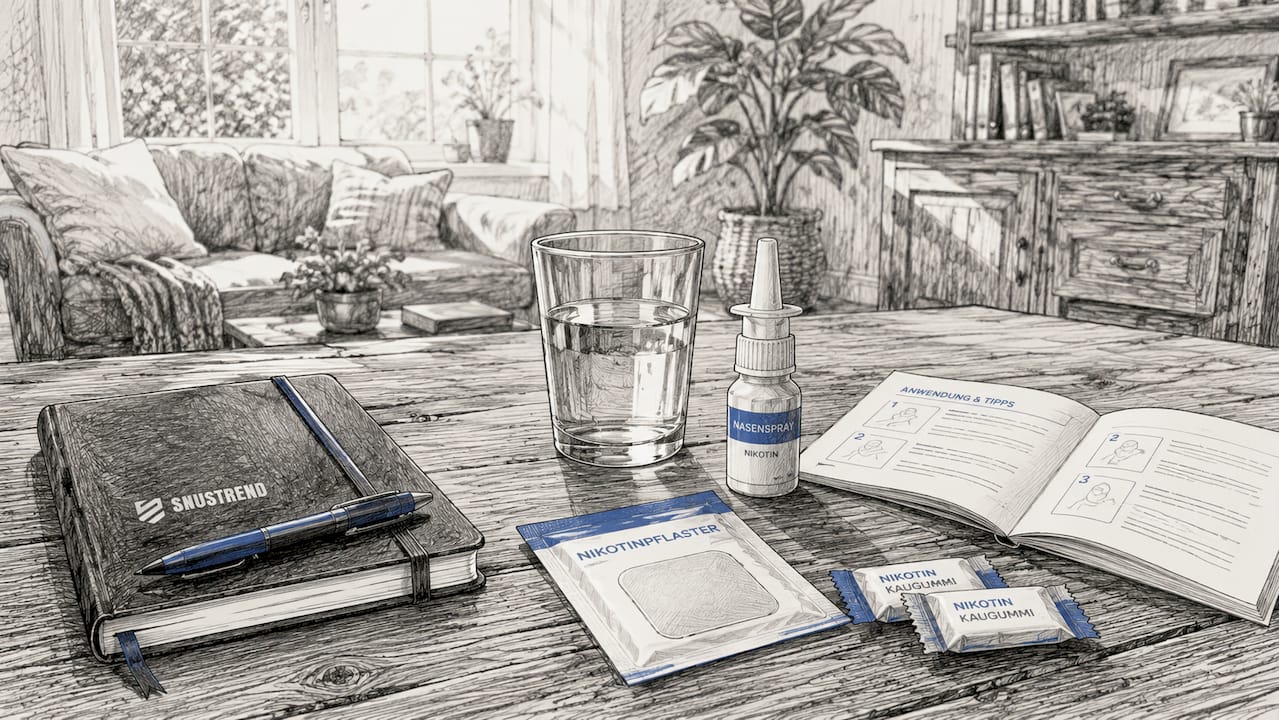
Classic nicotine replacement therapy (NRT) includes patches, gum, lozenges, and nasal sprays. Patches deliver nicotine evenly through the skin over 16 or 24 hours. This ensures a stable nicotine level but does not prevent acute cravings. Gum and spray work faster because nicotine enters the blood directly through the oral or nasal mucosa. Nicotine replacement therapy doubles the chances of successful smoking cessation compared to no treatment.
Nicotine Pouches: Discreet and Tobacco-Free
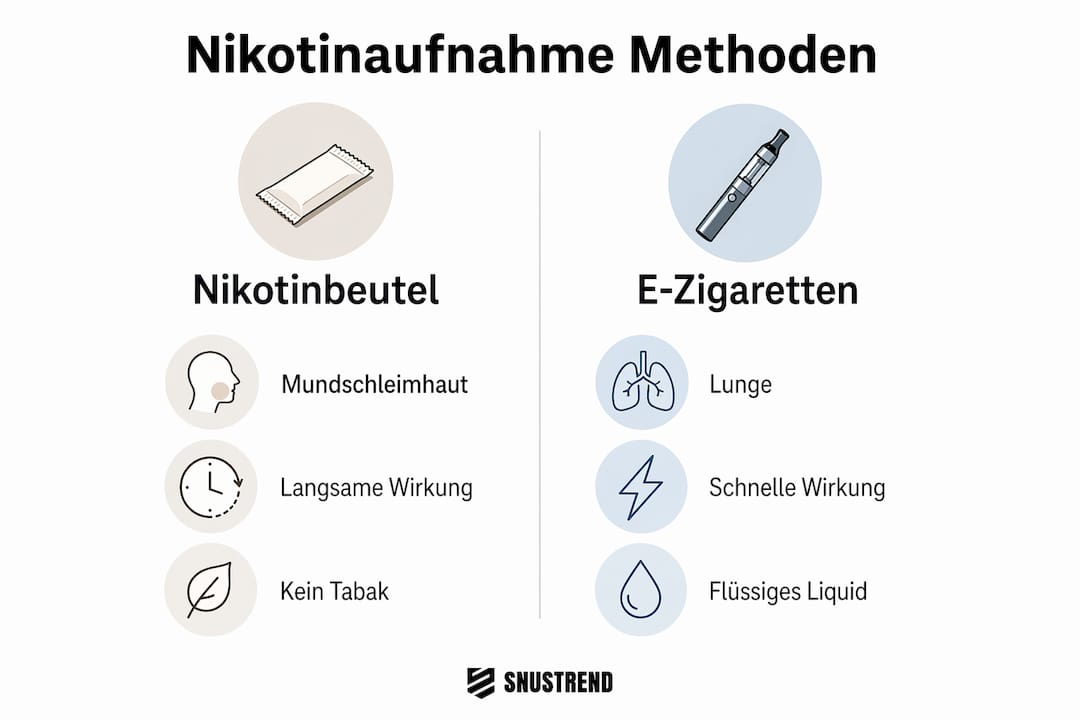
Nicotine pouches are small portion bags placed between the gum and upper lip. Nicotine is absorbed through the oral mucosa without smoking or vaping. The effect kicks in after about 5–15 minutes. Nicotine pouches are odorless, produce no vapor, and can be used discreetly anywhere. Strengths range from 4 mg up to 50 mg of nicotine per pouch, representing a very wide spectrum.
E-cigarettes: Nicotine via Vaping
E-cigarettes vaporize a nicotine-containing liquid. Nicotine enters the blood via the lungs and takes effect within 30–60 seconds. This is significantly faster than with nicotine pouches or patches. In Switzerland and the EU, there is a nicotine limit of 20 mg/ml for liquids. E-cigarettes most closely mimic the smoking ritual, which is psychologically helpful for many who switch.
The most important differences at a glance:
- Patches: slow, steady release via skin, no ritual, no odor
- Gum/Spray: quick effect via oral mucosa, flexibly dosable
- Nicotine pouches: discreet, no smoke, no vapor, effect after 5–15 minutes
- E-cigarettes: fastest effect via lungs, mimics smoking ritual, produces vapor
All four methods provide nicotine without the combustion products of a cigarette. That is their decisive advantage over traditional smoking.
Why is smoke-free nicotine intake healthier than smoking?
Tobacco smoke contains over 4,000 chemical compounds, including tar and carbon monoxide. These substances damage the lungs, heart, and blood vessels. Those who switch to smoke-free alternatives avoid exactly these combustion products entirely. Switching to reduced-harm alternatives like e-cigarettes or nicotine pouches lowers exposure to carcinogens by up to 80–100 percent.
Specifically, this means the lungs and airways are under significantly less stress. Second-hand smoke is completely eliminated. Those using nicotine pouches or patches do not burden their environment either. This is particularly relevant in Switzerland, where smoking bans in public spaces are strictly enforced.
Smoke-free nicotine alternatives are not risk-free, but they are significantly less harmful than smoking. In the long term, the focus should be on quitting completely.
Nevertheless: Nicotine itself is highly addictive and strains the cardiovascular system. The German Federal Institute for Risk Assessment (BfR) explicitly warns against high nicotine doses, especially for pregnant women, heart patients, and adolescents. Smoke-free products are a tool for behavior change, not a green light for unlimited consumption.
Pro Tip: If you switch to nicotine pouches or e-cigarettes, you should choose your dosage consciously. Start with a strength that reflects your previous consumption and reduce it gradually.
Current nicotine replacement trends in Switzerland show that more and more adults are specifically switching to smoke-free products, even without the goal of an immediate, total quit.
How do you use nicotine replacement products effectively?
The most common source of error in nicotine replacement therapy is infrequent use. Anyone who only uses gum or spray when they have a strong craving is constantly fighting withdrawal symptoms. Spray or gum should be used every 1–2 hours in the initial phase to keep nicotine levels stable.
The most proven method is combination therapy:
- Patches as a base: Wear a nicotine patch daily to ensure a steady baseline level.
- Supplement with a fast-acting product: Use gum, spray, or a nicotine pouch additionally when acute cravings strike.
- Adjust dosage: Start with a strength that matches your previous consumption. Heavy smokers (more than 20 cigarettes per day) start with higher dosages.
- Reduce gradually: Weaning over 8–12 weeks is considered effective and safe. The brain needs time to wean off nicotine.
- Fill the psychological gap: Many smokers miss the hand-to-mouth ritual. Exercise, healthy snacks, or a non-nicotine inhaler can replace this ritual.
The psychological component of smoking is often underestimated. Those who only treat physical dependence often fail due to habit. Successful switchers report that they consciously replaced the ritual with a new activity.
Pro Tip: Always keep nicotine gum or a nicotine pouch within reach, for example, at your desk or in the car. This ensures you grab the right product the moment a craving strikes.
Nicotine pouches can help break the hand-to-mouth ritual because they require no hand movement. The Snustrend guide explains more about the use of nicotine pouches.
Side effects like dizziness, nausea, or sleep disturbances occur primarily with too high a dosage. If you notice these symptoms, you should reduce the strength and, if necessary, consult a doctor.
Nicotine Pouches or E-cigarettes: Which fits better?
Nicotine pouches and e-cigarettes are the two most significant smoke-free alternatives for adults who do not want to give up nicotine. They differ fundamentally in the method of intake, speed of effect, and daily convenience.
| Feature | Nicotine Pouch | E-cigarette |
|---|---|---|
| Intake method | Oral mucosa | Lungs |
| Onset of effect | 5–15 minutes | 30–60 seconds |
| Odor | none | slight vapor smell |
| Discretion | very high | medium |
| Dosage | 4–50 mg per pouch | max. 20 mg/ml (Switzerland/EU) |
| Vapor/Smoke | none | vapor |
E-cigarettes work faster because nicotine is absorbed directly through the lungs. This is often more comfortable for heavy smokers because the effect is similar to a cigarette. Nicotine pouches, on the other hand, are completely odorless and produce no vapor. This makes them ideal for situations where vaping is not possible or desired.
An important point regarding e-cigarettes: Flavorings in liquids can release toxic substances. Lung specialists are therefore calling for a ban on certain flavors, especially to protect young people. Those using e-cigarettes as a smoking substitute should rely on tested products.
With nicotine pouches, there is a risk of overdose. Pouches can contain up to 47.5 mg of nicotine, significantly more than a cigarette with a maximum of 1 mg. If you don't feel the effect after 10 minutes, you often put in a second pouch too early. This is the most common source of error.
A detailed comparison of both methods with practical tips is offered in the Snustrend article on smoke-free alternatives.
Key Findings
Smoke-free nicotine intake is more effective than willpower alone, but only if the method, dosage, and frequency of use match one's own consumption pattern.
| Topic | Details |
|---|---|
| NRT Effectiveness | Combination therapy of patches and a fast-acting product doubles the chances of success in quitting smoking. |
| Comparison of onset speed | E-cigarettes work in 30–60 seconds; nicotine pouches take 5–15 minutes. |
| Dosage risk with nicotine pouches | Pouches with up to 47.5 mg of nicotine can lead to overdose if used incorrectly. |
| Cessation duration | Gradual reduction over 8–12 weeks is considered safe and effective. |
| Psychological component | The hand-to-mouth ritual must be consciously replaced with new habits. |
My perspective on smoke-free nicotine alternatives
I have been observing for years how adults approach the switch to smoke-free products. And I see the same mistake again and again: choosing a product because it’s trendy, not because it fits one's consumption pattern. Nicotine pouches are wonderfully discreet, but someone who smoked 20 cigarettes a day won't be happy with a 6 mg pouch. That’s just physics.
What really impresses me about the current product variety: The selection has never been this large. Nicotine pouches in strengths from 4 mg to 50 mg, e-cigarettes with precisely dosed liquids, patches for the night. If you take the time to analyze your own habits, you will find a combination that works.
My honest assessment: Nicotine replacement products are a crutch. A good crutch that makes the transition easier, but not a permanent solution. Those who want to live nicotine-free in the long term must also address the psychological dependence. This works best when you consistently lower the dosage every few weeks and become aware of when and why you reach for the product.
What I specifically recommend to Swiss adults: Start with a realistic strength, not the lowest. And give the product at least four weeks before you judge it. Change requires patience, not perfectionism.
— Lukas
Smoke-free nicotine products at Snustrend
Those in Switzerland looking for high-quality smoke-free nicotine alternatives will find a wide selection at Snustrend. The range includes nicotine pouches of various strengths, snus, and snuff for every taste.

For beginners and experienced users, Snustrend offers clear product information, fast shipping to Switzerland, and regular special offers. If you want to try a classic smoke-free alternative, Pöschl Schmalzler Südfrucht Snuff is a proven starting point. Snuff is absorbed through the nasal mucosa and is one of the oldest smoke-free nicotine sources of all. Snustrend delivers directly to your home, discreetly and reliably.
FAQ
What does smoke-free nicotine intake mean?
Consuming nicotine without smoke means using alternatives such as nicotine patches, gum, nicotine pouches, or e-cigarettes without burning tobacco. Combustion products like tar and carbon monoxide are completely eliminated.
How fast do nicotine pouches work compared to e-cigarettes?
Nicotine pouches take effect after about 5–15 minutes because nicotine is absorbed through the oral mucosa. E-cigarettes work significantly faster, namely within 30–60 seconds, as nicotine enters the blood directly through the lungs.
Is smoke-free nicotine intake really safer?
Smoke-free alternatives significantly reduce exposure to carcinogens but are not entirely risk-free. Nicotine itself strains the cardiovascular system and creates dependence, regardless of the method of intake.
How long should one use nicotine replacement products?
A gradual weaning process over 8–12 weeks is considered effective. The goal is to regularly lower the dosage until nicotine products are no longer needed.
Can nicotine pouches be overdosed?
Yes. Nicotine pouches contain up to 47.5 mg of nicotine per pouch, far more than a cigarette. Those who are unaware of the delayed effect and add another one too soon risk dizziness and nausea.






Share:
Vaping myths debunked: Facts instead of misinformation
Wildkraut Energy Sniff: Caffeine Nasal Powder Tested