

As of October 9, 2026 · Snustrend Editorial Team · Reading time approx. 7 minutes
In short: According to EFSA, up to 200 mg of caffeine at once and up to 400 mg per day from all sources are considered safe for healthy adults. An energy pouch contains about 25 to over 200 mg, with Snustrend usually containing 50 to 100 mg. At 80 mg per pouch, that’s a maximum of 2 pouches at once and 5 per day – including coffee and energy drinks. Pregnant women: maximum 200 mg per day.
Energy pouches – also known as caffeine pouches – look like nicotine pouches but contain no nicotine, only caffeine. You place the pouch under your upper lip, and the caffeine enters the bloodstream through the oral mucosa. Since many varieties contain 80 mg or more per pouch, the question quickly arises: How much caffeine is too much? Here you will find the official guidelines, a conversion per pouch, and the most important warning signs.
How much caffeine is in an energy pouch?
The caffeine content varies widely. A pharmacy lecturer at Kingston University cites a range of 25 mg to over 200 mg per pouch. Strong varieties contain as much caffeine as two cups of coffee. The pouches at Snustrend range from 50 to 100 mg according to manufacturer and product specifications.
| Product / Drink | Amount | Caffeine approx. |
|---|---|---|
| Cola | Can 330 ml | 35 mg |
| Black tea | Cup 200 ml | 45 mg |
| Vika Rave (Single, e.g. Juicy Lemon) | 1 pouch | approx. 50 mg (retailer information) |
| Espresso | 60 ml | 80 mg |
| Energy drink | Can 250 ml | 80 mg |
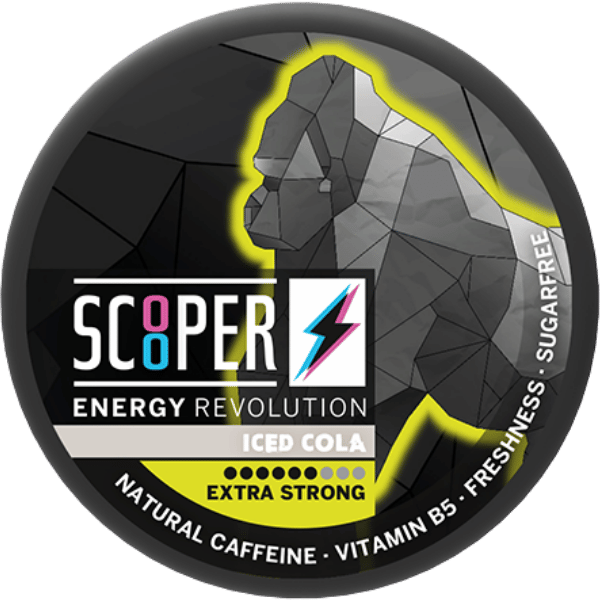
| Scooper Energy (all varieties) | 1 pouch | approx. 80 mg (manufacturer information) |
| Vika Rave Double Shot | 1 pouch | 80 mg (according to product name) |
| Filter coffee | Cup 200 ml | 90 mg |
| HICAFF Instant Energy | 1 pouch | 100 mg (according to product name) |
| Very strong pouches on the market | 1 pouch | 150 to over 200 mg |
Drink values: Federal Institute for Risk Assessment (BfR). Pouch values: Manufacturer and retailer information.
How much caffeine is safe per day?
The European Food Safety Authority (EFSA) established guidelines in 2015, which are also used as a reference by the BfR and the Swiss BLV:
- Healthy adults: up to 200 mg as a single dose and up to 400 mg per day from all sources.
- Pregnant and breastfeeding women: up to 200 mg per day.
- Children and adolescents: as a guideline, a maximum of 3 mg per kg body weight per day. Energy pouches are not intended for them.
- Sleep: According to EFSA, around 100 mg shortly before bedtime can delay sleep onset and shorten sleep duration for some adults.
Important: The 400 mg applies to all sources combined – including coffee, tea, cola, energy drinks, and pouches.
How many energy pouches can I take per day?
The following table converts the EFSA values to pouches. It only applies if you do not consume any other caffeine that day. Every coffee counts.
| Caffeine per pouch | Max. at once (200 mg) | Max. per day (400 mg) | Pregnant women (200 mg/day) |
|---|---|---|---|
| 50 mg | 4 pouches | 8 pouches | 4 pouches |
| 80 mg | 2 pouches | 5 pouches | 2 pouches |
| 100 mg | 2 pouches | 4 pouches | 2 pouches |
| 150 mg | 1 pouch | 2 pouches | 1 pouch |
| 200 mg | 1 pouch | 2 pouches | 1 pouch |
Example: If you drink two cups of filter coffee in the morning (approx. 180 mg), you have about 220 mg left until you reach 400 mg – so a maximum of two Scooper pouches of 80 mg spread throughout the rest of the day, not at the same time.
Also, adhere to the information on the can. Some manufacturers recommend fewer pouches per day than the EFSA values mathematically allow.
Does caffeine from pouches work faster than coffee?
Caffeine from drinks takes effect according to BfR after 15 to 30 minutes and lasts for several hours. With pouches, part of the caffeine is absorbed through the oral mucosa. An internist from the Cantonal Hospital St. Gallen told 20 Minuten that the effect sets in after about five minutes. There is a downside: Side effects such as palpitations or nervousness can also be felt more quickly and intensely. There are no long-term data on caffeine pouches yet.
How do I know if I had too much caffeine?
Typical signs of excessive caffeine intake according to BfR:
- Nervousness, trembling, inner restlessness
- Palpitations or rapid heartbeat, arrhythmias
- Profuse sweating
- Insomnia
- with consistently high intake: elevated blood pressure
Remove the pouch immediately if you notice such symptoms, and do not consume any more caffeine that day. In case of severe symptoms such as chest pain, shortness of breath, or persistent rapid heartbeat: Emergency call 144. For questions about a possible overdose, contact Tox Info Suisse at 145 (available 24/7).
This is not a theoretical risk: According to a report from Tox Info Suisse for the BLV (2026), caffeine was the most common substance in cases of intentional intake of dietary supplements by adults – in terms of frequency and severity of symptoms. The cases often originated from sports, fitness, or gaming products, sometimes containing amounts far exceeding EFSA values.
Who should avoid energy pouches?
- Children and adolescents: A single strong pouch can already exceed the guideline value of 3 mg per kg body weight. Snustrend only sells to adults aged 18 and over.
- Pregnant and breastfeeding women: only in consultation with a doctor and never over 200 mg per day.
- People with cardiovascular problems, high blood pressure, or anxiety disorders: They often react more sensitively to caffeine.
- Before intense exercise: high caffeine amounts plus intense exertion can put additional strain on the heart.
Is there a caffeine limit in Switzerland?
For energy drinks, there is a maximum limit of 320 mg of caffeine per liter in Switzerland. A sample by SRF Investigativ (June 2026) found 10 out of 27 energy drinks exceeding this value; a cantonal chemist ordered a recall. There is no legal age limit for caffeinated beverages in Switzerland. There is no specific limit for caffeine pouches per pouch. Therefore, it is even more important to read the information on the can and do the math yourself.
Energy pouch or nicotine pouch – what is the difference?
Energy pouches contain caffeine (often with vitamins like B5), nicotine pouches contain nicotine. Caffeine and nicotine work differently: nicotine is addictive and is dosed differently (in mg of nicotine per pouch). More on this in our comparison Nicotine Pouches vs. Energy Pouches. Those who use nicotine pouches can find the suitable strength in our guide Snus Dosage: Which strength (mg) is right for me?. Important: Taking both products at the same time adds up the stimulating effect on the heart and circulatory system.
Frequently Asked Questions (FAQ)
How many energy pouches are too many per day?
It depends on the caffeine content. At 80 mg per pouch, you reach the EFSA daily limit of 400 mg with 5 pouches – without coffee. You should not take more than 200 mg at once (e.g., 3 pouches of 80 mg).
Is an energy pouch stronger than a coffee?
Often similar: A cup of filter coffee has about 90 mg, an espresso 80 mg. Many energy pouches range from 50 to 100 mg, very strong varieties from 150 to over 200 mg – equivalent to two cups of coffee.
Do energy pouches contain nicotine?
No. Real energy pouches like Scooper Energy or HICAFF are nicotine-free and contain caffeine. Always check the information on the can, as some brands carry both product types.
How long does a caffeine pouch last?
The effect sets in after about five minutes according to experts and lasts for several hours like coffee. Therefore, a pouch in the evening can disturb sleep – according to EFSA, for some people already from around 100 mg.
Can pregnant women use energy pouches?
EFSA recommends a maximum of 200 mg of caffeine per day from all sources for pregnant women. That’s two pouches of 80 mg without any coffee. Discuss caffeine consumption during pregnancy with your doctor.
What to do in case of too much caffeine?
Remove the pouch, do not consume any more caffeine, drink water, and rest. In case of rapid heartbeat, chest pain, or shortness of breath, call emergency number 144. For advice on suspected poisoning: Tox Info Suisse, phone 145.
Sources
- EFSA: Scientific Opinion on the safety of caffeine (2015)
- BfR: Questions and Answers on caffeine and caffeinated foods
- BLV: Inquiries to Tox Info Suisse about poisoning with dietary supplements (2026)
- SRF: Too much caffeine – these energy drinks are illegally on the market (02.06.2026)
- 20 Minuten: Energy Pouches (27.04.2026, with assessment from Cantonal Hospital St. Gallen)
- ScienceAlert / The Conversation: Caffeine pouches can pack 2 coffees in 1 hit (Kingston University)
- Tox Info Suisse – Emergency number 145
Note: This article is for informational purposes only and is not medical advice. Energy pouches are intended for adults only; Snustrend has a minimum age of 18 years for all products. Nicotine products are for adults aged 18 and over. Nicotine is addictive.
Discover now: Nicotine-free pouches & energy pouches · Scooper Energy (80 mg caffeine) · Scooper Energy Iced Cola
Share:
Snus Dosage: Which Strength (mg) is Right for Me?