


TL;DR:
- Snus is a traditional Swedish tobacco product that has been legally available in Switzerland since 2019.
- It is placed under the upper lip, contains nicotine, and comes in a wide variety of flavors and nicotine strengths.
- The risks are lower than those of smoking, but it is not without health hazards.
Snus polarizes opinions like few other tobacco products. Many Swiss people still believe it is prohibited, while others confuse it with chewing tobacco or think it is less harmful than a cigarette. Neither is accurate. Snus has been legally available in Switzerland again since 2019, and interest has been growing rapidly ever since. If you want to make informed decisions, you need clear facts about its effects, risks, and legal framework. This is exactly what this article provides: an objective overview that breaks down myths and helps you view snus in a realistic light.
Table of Contents
- Fundamentals and History of Snus
- Effects and Use of Snus
- Health Risks: Facts, Studies, and Myths
- Legal Situation and Safe Procurement in Switzerland
- Personal Assessment: Between Risk Perception and Practical Alternative
- Your Entry into the World of Snus: Products and Advice
- Frequently Asked Questions About Snus
Key Findings
| Point | Details |
|---|---|
| Snus Briefly Explained | Snus is a smoke-free tobacco product originating in Sweden, sold under regulation in Switzerland. |
| Effects and Risks | Nicotine from snus has a stimulating effect and can be addictive, but carries a lower cancer risk than smoking. |
| Comparison to Cigarettes | Scientific data show that snus is less harmful than classic cigarettes. |
| Compliance with Legislation | Clear regulations regarding age and quantities apply in Switzerland; online purchase is permitted from age 18. |
| Responsible Start | Anyone wishing to try snus should inform themselves well beforehand and rely on reputable providers. |
Fundamentals and History of Snus
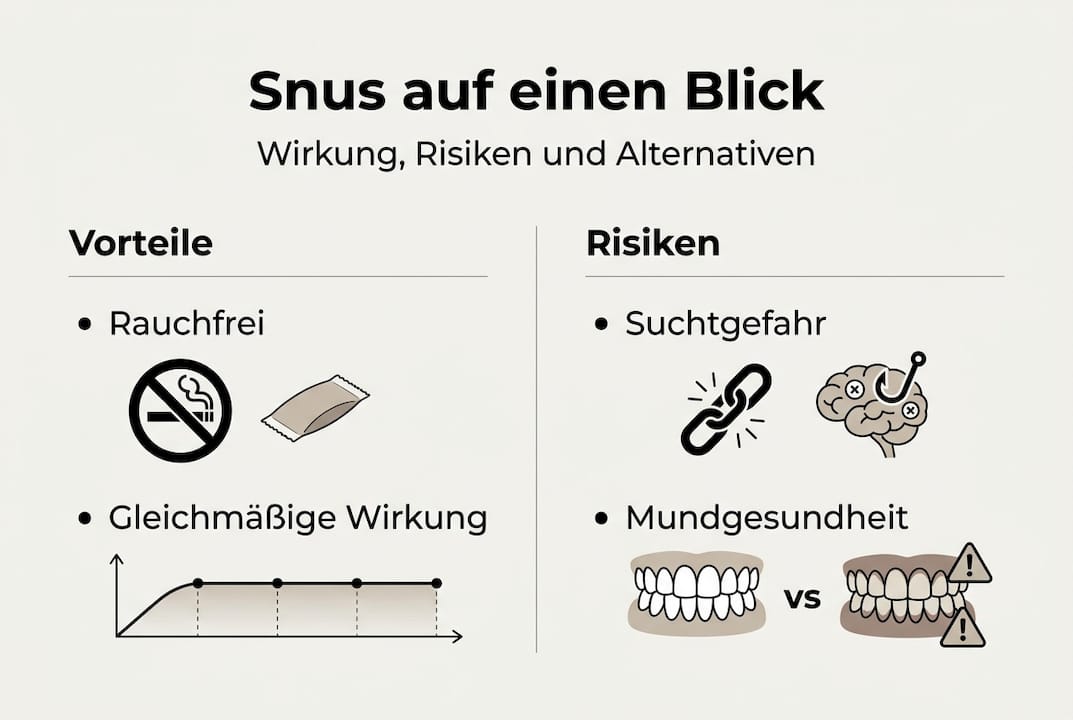
Snus is a Swedish tobacco product that is placed under the upper lip. It is available in loose portions or in small bags, known as pouches. Unlike chewing tobacco, snus is not actively chewed and is not swallowed. The tobacco simply sits still between the lip and gum, releasing nicotine through the oral mucosa. This sounds unspectacular, but it makes a significant difference: no smoke, no fire, no fumes.
Its origins lie in Sweden, where snus has been consumed since the 18th century. Originally, it was a working-class product—affordable and practical. Over the decades, it developed into a cultural component of Swedish everyday life. Today, Sweden is the only EU country allowed to sell snus, an exception negotiated upon joining the EU in 1995.
For a long time, snus was either prohibited or in a legal gray area in Switzerland. This changed in 2019 when the product was officially re-authorized. Since October 2024, the Tobacco Products Act (TabPG) has regulated the market in a binding manner, with clear specifications for warning labels, age checks, and product standards.
What surprises many is that snus exists in a huge variety of flavors—from classic tobacco to mint and citrus, and even berries and coffee. Additionally, there are various nicotine strengths, ranging from light to extremely strong. Tobacco-free versions, known as nicotine pouches, contain no tobacco at all, only nicotine in synthetic form, making them particularly interesting for beginners.
The most important features at a glance:
- Form of consumption: Place a pouch or loose portion under the upper lip
- Duration of effect: Typically 20 to 60 minutes per portion
- Flavor spectrum: Tobacco, mint, fruit, coffee, and many others
- Nicotine strengths: Normal (4 mg), strong (8 mg) to very strong (over 16 mg)
- Variants: With tobacco or tobacco-free (nicotine pouches)
- Legality: Legal in Switzerland since 2019, regulated by the TabPG since October 2024
The development of the market is remarkable. Within a few years, snus has built a loyal user base in Switzerland, especially among younger adults looking for alternatives to smoking. With an understanding of the basic concept, we will now turn to its current significance and usage.
Effects and Use of Snus
Now that you are familiar with its history, let’s look at the consumption experience and the noticeable effects. Use is very simple, but a few details make the difference between a good and an unpleasant experience.
How to use it, step by step:
- Remove a pouch: Take a snus pouch out of the can.
- Place it: Slide the pouch under your upper lip, on the left or right side.
- Wait: You will feel a slight tingling for the first few minutes. This is normal and shows that nicotine is being absorbed.
- Enjoy: After about 5 minutes, the full effect kicks in and lasts for 20 to 60 minutes.
- Dispose: Throw the pouch in the trash after use; do not flush it down the toilet.
Nicotine enters the bloodstream directly through the oral mucosa. This is different from smoking, where nicotine is absorbed through the lungs. The effect sets in slightly slower but lasts longer. Nicotine stimulates dopamine and adrenaline, which produces alertness combined with a certain level of relaxation. This dual effect is a main reason why many people find snus pleasant.

Compared to cigarettes, the immediate "kick" created by smoke in the lungs is missing. In return, the effect is more consistent and lasts longer. Those familiar with the snus-to-cigarette nicotine comparison know that a strong snus pouch can be equivalent to several cigarettes in terms of nicotine. This is important for dosage.
Typical side effects, especially in the beginning, include tingling in the mouth area, slight nausea if the nicotine strength is too high, and occasionally dizziness. These symptoms usually disappear after a few days of regular consumption. Long-term, gum recession and oral irritation can occur if snus is always placed in the same spot.
Pro Tip: Beginners should start with a low nicotine strength (4 to 6 mg) and initially limit usage time to 20 minutes. Placing the pouch in different spots under the lip daily protects the gums. Those trying snus as an alternative to smoking will quickly realize that the right dosage is key to a pleasant experience.
Health Risks: Facts, Studies, and Myths
Once you understand the effects, potential risks and the current state of research should also be highlighted. This area is particularly prone to myths, which is why a clear look at science is important.
“Snus is not harmless, but the risks differ significantly from those of smoking. No lung cancer, but an increased risk for oral and pancreatic cancer as well as cardiovascular problems.”
The main risks according to current research:
- Oral cancer: Increased risk, especially with long-term use in the same spot
- Pancreatic cancer: Slightly increased risk compared to non-smokers
- Cardiovascular diseases: Nicotine permanently increases blood pressure and heart rate
- Gum problems: Gum recession with incorrect application
- Addiction: Nicotine is addictive, regardless of the form of consumption
This sounds worrying. However, the comparison with cigarettes is decisive. While there is an increased cancer risk (oral, pancreatic), it exists without the risk of lung cancer, COPD, or other smoking-related diseases. Furthermore, tobacco-free nicotine pouches contain fewer tobacco-specific nitrosamines (TSNAs), which are considered carcinogenic.
The data from Sweden is particularly revealing: high snus consumption correlates there with a significantly lower smoking rate and a below-average cancer mortality rate compared to the rest of the EU. This is not proof that snus is healthy, but it shows that switching from smoking to snus can have positive effects at a population level.
| Product | Lung Cancer | Oral Cancer | Heart Risk | Addiction Potential |
|---|---|---|---|---|
| Cigarettes | Very high | High | High | Very high |
| Snus (with tobacco) | No risk | Increased | Medium | High |
| Nicotine pouches | No risk | Low | Medium | Medium |
| Vapes | Low | Unclear | Low | Medium |
The risks and side effects of snus are real, but they are not identical to those of smoking. Anyone familiar with the cancer risk comparison between snus and cigarettes can make a more informed decision. And those weighing up different alternatives will find further useful information in the comparison of snus vs. vapes.
Legal Situation and Safe Procurement in Switzerland
To move from knowledge to a concrete, actionable decision, the legal situation and purchasing behavior must be understood. The legal situation in Switzerland is clearly regulated today, but many consumers are unaware of the details.
Snus has been legal in Switzerland since 2019. Since October 2024, the Tobacco Products Act (TabPG) has been in full effect. It defines what is permitted and what is not. Key points:
| Regulation | Detail |
|---|---|
| Minimum Age | Sale only to those 18+ |
| Age Verification | Mandatory for all retailers, including online |
| Warning Labels | Must be visible on every pack |
| Import | Up to 250g duty-free for personal use |
| Online Retail | Permitted, with age verification |
| Advertising | Strictly limited |
Importing up to 250g duty-free means that those ordering snus from abroad can bring in up to 250g without customs duties. Beyond that, taxes and fees apply. This is relevant for many consumers who want to take advantage of cheaper offers from abroad.
How do you identify a reputable online shop? This is one of the most common questions from beginners. Here is a practical checklist:
- Clear age verification during the ordering process
- Visible health warnings on product pages
- Transparent information on ingredients and nicotine strengths
- Secure payment methods (credit card, Twint, PayPal)
- Accessible customer service with a Swiss contact option
- Clear return and data protection policies
Pro Tip: Beginners should opt for trial sets or smaller pack sizes for their first purchase. This allows you to test different flavors and nicotine strengths without buying large quantities. Those looking to buy snus safely and affordably will find a clear selection with transparent product information at Snustrend.com. For all questions regarding the legality of snus and safe online shopping, there are further resources available.
A common mistake: buying products through unverified channels where neither age checks nor quality standards are guaranteed. The risk of receiving counterfeit or uncontrolled products is real and should not be underestimated.
Personal Assessment: Between Risk Perception and Practical Alternative
After covering the facts and rules, let’s look at the personal and societal significance. At Snustrend, we observe daily how differently people approach the topic of snus. Many come with prejudices that are not supported by science or experience.
The biggest misunderstanding is that snus is just as dangerous as smoking. That is not true. The risks are real but distributed differently. Those switching from smoking to snus reduce certain risks significantly, especially those related to burning tobacco.
What users often underestimate is the potential for addiction. Nicotine is nicotine, regardless of the form. Anyone who thinks snus is a risk-free relaxation aid is mistaken. Tobacco-free nicotine pouches reduce contact with tobacco and TSNAs, but not nicotine dependence.
Our recommendation: Anyone considering snus as an alternative to smoking should do so informed. Not because snus is harmless, but because a fact-based decision is always better than one based on ignorance. Social discourse benefits when it is based on data rather than emotion.
Your Entry into the World of Snus: Products and Advice
Those now interested in a self-test or a switch will find expert assistance and tested products at Snustrend. Our range includes classic snus brands, tobacco-free nicotine pouches, and vaping products for every taste and level of experience.

For beginners, we recommend starting with mild versions and working your way up slowly. Those who prefer vaping will find an uncomplicated entry option with the O’S TOBACCO Vape 750 Bliss. Those with more traditional tastes will get their money's worth with the Pöschl Schmalzler Südfrucht. Visit the Snustrend shop and discover the entire product range with fast shipping to Switzerland and transparent product information.
Frequently Asked Questions About Snus
What is the main difference between snus and chewing tobacco?
Snus is placed under the upper lip and generally contains fewer harmful substances than traditional chewing tobacco, which is actively chewed and partially swallowed.
Is snus really legal in Switzerland and are there any restrictions?
Yes, snus has been legal since 2019, but it may only be sold to adults aged 18 and over; imports of up to 250g are duty-free.
What are the health risks associated with consuming snus?
Risks include an increased risk of cancer, particularly in the oral cavity, circulatory problems, and addiction, but are generally considered lower than those of smoking.
How do you identify reputable online shops for snus?
Reputable shops provide clear information on age verification, warn about risks, and offer secure payment methods as well as accessible customer support.
Can snus help with quitting smoking?
Swedish data shows that long-term snus consumption correlates with a declining smoking rate and fewer tobacco-related health issues.
Recommendation
- Snus as a drug substitute in 2026: Facts and alternatives – Snustrend - Snus, Vapes & Snuff
- Snus alternatives 2026: high-quality and affordable options – Snustrend - Snus, Vapes & Snuff
- Is snus harmful? An overview of risks, side effects, and important facts – Snustrend - Snus, Vapes & Snuff
- How many cigarettes is one snus equivalent to? The big comparison – Snustrend - Snus, Vapes & Snuff
- Smoke-free, quitting smoking with hypnosis in Stuttgart






Share:
Disposable vape ban in Switzerland: What vapers need to know now
Sustainability in Vaping: Tips for Environmentally Conscious Vaping