


TL;DR:
- Millions of disposable vapes cause massive environmental waste and resource depletion. Reusable systems are more sustainable, durable, and cost-effective. The Swiss market offers a wide range of sustainable vaping options in 2026, including recycling programs and refillable devices.
Every year, millions of disposable vapes end up in the trash, and very few vapers think about the consequences. In Switzerland, disposable products are taxed five times higher than sustainable alternatives, which shows that lawmakers have long recognized the problem. Plastic casings, lithium batteries, nicotine residues: a single discarded vape contains substances that can cause decades of damage to the soil. If you want to vape more consciously, you don't have to sacrifice enjoyment. In this article, you will learn how reusable systems work, what you should look for when buying, and which sustainable alternatives are truly available in the Swiss market in 2026.
Table of Contents
- Environmental Impact of Disposable vs. Reusable Vapes
- Mechanics and Benefits of Sustainable Vape Alternatives
- Sustainable Purchasing Decisions and Reliable Alternatives
- Availability of Sustainable Vapes in Swiss Retail
- Why True Sustainability in Vaping Is More Than Just Avoiding Disposables
- Finding Sustainable Products and Advice at Snustrend
- Frequently Asked Questions About Sustainability in Vaping
Key Findings
| Point | Details |
|---|---|
| Disposable vapes as an environmental problem | Disposable devices cause significant amounts of plastic and electronic waste, harming the environment. |
| Prioritize reusable alternatives | Reusable vapes and refillable systems help reduce waste and resource depletion. |
| Sustainability goes further | Conscious purchasing decisions and choosing suitable liquids increase environmental benefits. |
| Assortment is growing steadily | More and more retailers and brands are offering sustainable alternatives and trendy products. |
Environmental Impact of Disposable vs. Reusable Vapes
The figures are sobering. 62 million tons of e-waste are generated annually in the UK alone, and disposable vapes contribute significantly to this. In Switzerland, the situation is more regulated due to strict taxation, but the fundamental problem remains the same: millions of devices are thrown away after just a few days.
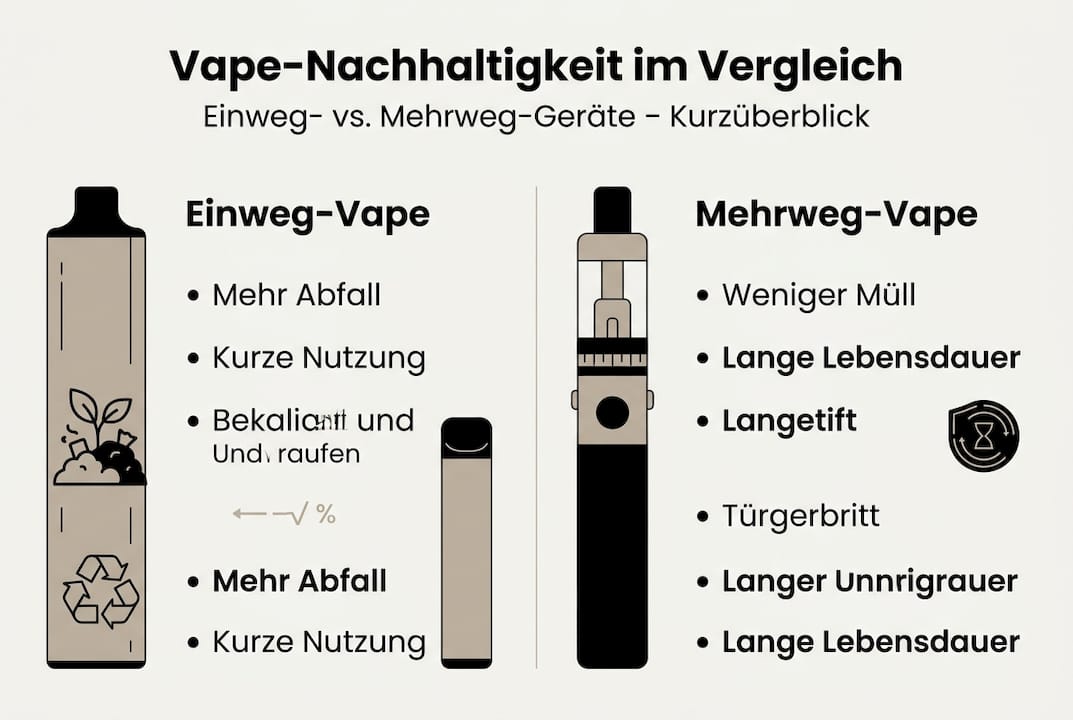
Disposable vapes generate significant waste through plastic, batteries, and non-recyclable components, leading to microplastics and resource depletion. The problem starts with production: raw materials like lithium, cobalt, and various plastics are consumed for a single disposable device. These materials are finite, and their extraction puts an enormous strain on the environment.
Reusable vapes offer a clear advantage here. You only replace the pods or refill the liquid, while the battery and casing remain in use for months or years. This drastically reduces material consumption. Instead of twelve discarded devices per year, you have one device with twelve replaced pods, many of which are recyclable.
Switching to reusable systems today not only saves money but also actively prevents toxic battery acid and microplastics from entering Swiss soil and water bodies.
The disposable vape ban in Switzerland is a further step in this direction and shows how seriously lawmakers are taking the issue. Other European countries have taken similar measures or are planning them for 2026.
| Criterion | Disposable Vape | Reusable Vape |
|---|---|---|
| Lifespan | 1 to 3 days | 6 to 24 months | Waste volume | Entire device | Only pods and liquid | Battery waste | New every time | One-time per device | Long-term costs | High | Significantly lower | Recyclability | Very difficult | Partially possible |
The table makes it clear: the ecological footprint of disposable devices is worse in almost every category. Battery waste, in particular, is a critical issue, as lithium batteries are among the most dangerous types of waste in household trash.
Mechanics and Benefits of Sustainable Vape Alternatives
Now that the differences are clear, it is worth taking a closer look at how sustainable alternatives actually work in everyday life. Many vapers are hesitant to switch because they fear that reusable systems are more complicated or less convenient. Often, the opposite is true.
Reusable vapes are rechargeable, and only the consumable parts need to be replaced. This means: you charge the device like a smartphone, change the pod when needed, or refill the liquid, and that's it. Modern devices have batteries with 300 to 500 charge cycles, which corresponds to a usage period of one to two years.
Here are the most important steps for getting started with more sustainable systems:
- Choose a device with replaceable pods: Ensure that pods are available individually and that the entire device does not need to be replaced.
- Check battery capacity: A larger battery means less frequent charging and a longer device lifespan.
- Consider repairability: Some manufacturers offer spare parts. This significantly extends the service life.
- Buy liquid separately: Refillable systems allow you to buy liquid in larger quantities, which reduces packaging waste.
- Use recycling programs: Some brands take back old pods or devices. Find out about this when purchasing.
Pro tip: Choose a device for which the manufacturer guarantees spare parts and pods for at least two years. A cheap device without access to spare parts is neither sustainable nor economical in the long run.
Especially interesting are clever reusable alternatives like the Vozol Vista, which was specifically developed as an answer to the disposable vape problem. Such devices combine the user-friendliness of disposable vapes with the sustainability of reusable systems. For those also considering high-quality tobacco alternatives, there are further options that make the transition easier.
Another underestimated advantage: reusable systems allow you to try different liquids and flavors without having to buy a new device every time. This is not only more sustainable but also significantly cheaper and more flexible.
Sustainable Purchasing Decisions and Reliable Alternatives
With this knowledge, it is easier to make conscious purchasing decisions. But which criteria are truly decisive when looking for a sustainable vape system?
The most important points at a glance:
- Modularity: Can parts be replaced individually, or does the entire device have to be discarded?
- Refillability: Are there refillable pods, or do you have to buy pre-filled disposable pods?
- Recyclability: Does the manufacturer offer take-back or recycling programs?
- Repairability: Are spare parts such as mouthpieces, coils, or batteries sold separately?
- Certifications: Are there environmental certificates or sustainability reports from the manufacturer?
Pro tip: Specifically look for devices where the coil is replaceable. A new coil often costs just a few francs and extends the device's life by months without you having to replace the entire unit.
An interesting practical example: IQOS repair programs significantly reduce e-waste by repairing defective devices instead of discarding them. This model shows where the journey should head: manufacturers taking responsibility for the entire product lifecycle.
| Product Type | Sustainability | Monthly Costs | Recommendation |
|---|---|---|---|
| Disposable Vape | Very low | 60 to 120 CHF | Not recommended |
| Pod System (refillable) | High | 20 to 40 CHF | Highly recommended |
| Box Mod with Tank | Very high | 15 to 30 CHF | For experienced users |
| Heated Tobacco Product | Medium | 30 to 50 CHF | Alternative |
The safety of sustainable vapes is also a topic that should be considered when purchasing. High-quality reusable devices generally have better safety mechanisms than cheap disposable products. Those interested in additional tobacco alternatives can find a comprehensive overview of various options there.
Used systems are also an option that is often overlooked. A well-maintained secondhand reusable device makes ecological sense and saves money. It is important to pay attention to hygiene and the condition of the battery.
Availability of Sustainable Vapes in Swiss Retail
But what specific solutions exist in Swiss retail? The Swiss market is responding to the disposable problem with its own product range, and the offering is growing rapidly.
In 2026, the range of sustainable vape products in Switzerland is broader than ever before. Specialized online shops and physical retailers are increasingly offering reusable systems, refillable pods, and recycling services. This is a direct reaction to legislative changes and the growing environmental awareness of consumers.
| Trend 2026 | Description | Availability |
|---|---|---|
| Refillable Pod Systems | Compatible with various liquids | Widespread |
| Recycling Programs | Take-back of old devices and pods | Increasing |
| Biodegradable Packaging | Less plastic for liquids | Growing |
| Regional Liquid Manufacturers | Shorter transport routes | Niche market |
Key points when shopping in Switzerland:
- Look for retailers that actively offer or support recycling programs.
- Buy liquids in larger containers to minimize packaging waste.
- Find out about sustainable liquids that focus on fewer additives and more eco-friendly production.
- Discover the variety of flavors for switchers to make the change to reusable systems interesting and varied.
For those who want to take the step even further and become completely smoke-free through switching, professional support is available. Sustainable vaping and quitting tobacco use are not mutually exclusive but can complement each other.
The demand for sustainable products is also driving innovation. Manufacturers are investing in biodegradable materials, more efficient battery technologies, and modular designs. What is still a niche today will become the standard in a few years.
Why True Sustainability in Vaping Is More Than Just Avoiding Disposables
These many individual aspects lead us to a decisive perspective: sustainability in vaping is not a one-time product switch, but an attitude. Anyone who switches to a reusable system today but continues to buy their old liquid in small plastic bottles has only gone halfway.
True sustainability begins with small habits: disposing of pods properly, not overcharging batteries, having devices repaired instead of thrown away. Technology can help, but it does not replace personal initiative. At Snustrend, we believe that informed consumers are the greatest force for change.
Those who have more choice in brands can make more conscious decisions. Every switch counts, even if it seems small. A vaper who switches from twelve disposable devices per year to a reusable system prevents twelve lithium batteries from ending up in the trash. Multiplied by thousands of users, this results in a real impact.
Finding Sustainable Products and Advice at Snustrend
Anyone wanting to make the switch will find the right options here. At Snustrend, we have specifically expanded our range to include sustainable vape alternatives that are both ecologically sensible and practical in everyday life.

Two concrete examples from our offer: the O’S TOBACCO Bliss Vape and the O’S TOBACCO Disco Vape offer a high-quality vaping experience with a clear focus on quality and enjoyment. Our team is happy to advise you on which system best suits your needs and your sustainability standards. Discover the entire assortment at snustrend.com and take the first step toward more conscious vaping.
Frequently Asked Questions About Sustainability in Vaping
Why are disposable vapes bad for the environment?
Disposable vapes generate significant waste through plastic, batteries, and non-recyclable components, leading to microplastics and resource depletion. Lithium batteries, in particular, are dangerous and difficult to dispose of.
How do I recognize a sustainable vape alternative?
Look for reusable systems with refillable pods and repair options. Sustainable products are often labeled as such and offer recycling programs.
What are the new trends for sustainable vapes in Switzerland?
In 2026, many shops offer specifically sustainable vapes, refillable systems, and recycling initiatives, as the Swiss market is actively responding to the disposable problem.
Does the choice of liquid also contribute to sustainability?
Yes, sustainable liquids focus on fewer chemicals, regional production, and recyclable packaging. Larger containers additionally reduce packaging waste per milliliter.
Are there subsidies or tax breaks for sustainable products?
Single-use products are taxed five times higher in Switzerland than sustainable alternatives, which automatically makes reusable systems more economically attractive.
Recommendation
- Vape safety 2026: Understanding risks and vaping safely – Snustrend - Snus, Vapes & Snuff
- What is vaping: an understandable guide for beginners – Snustrend - Snus, Vapes & Snuff
- Smart vaping at SNUSTREND: Apps, tracking & AI – Snustrend - Snus, Vapes & Snuff
- Vape beginner's guide Switzerland 2026: starting safely – Snustrend - Snus, Vapes & Snuff






Share:
Snus explained: An overview of effects, risks, and alternatives
Changing Vape Flavors: Step-by-Step Guide