

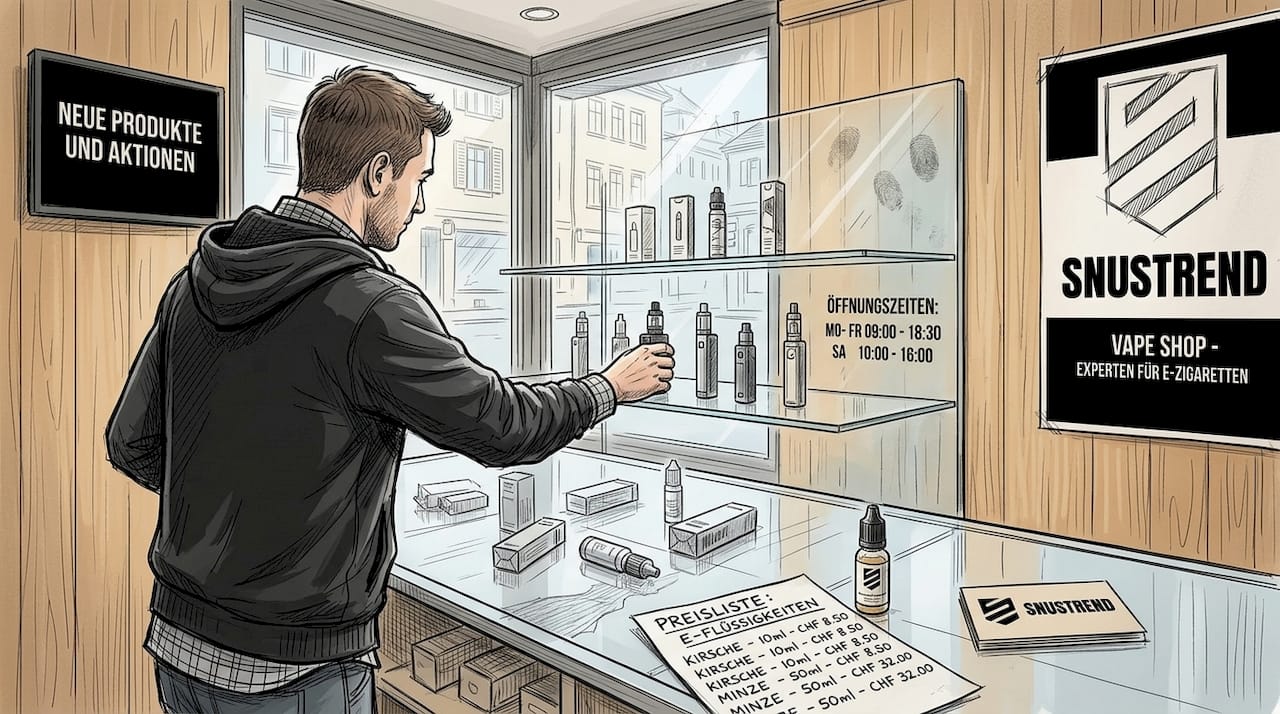
Around 60% of 14 to 25-year-olds in Switzerland have already tried disposable vapes, even though sales have been restricted to adults only since 2024. This picture shows how ineffective a mere age restriction alone is. Now, Switzerland is taking it a step further: Parliament has passed a motion to completely ban disposable e-cigarettes. For vapers, retailers, and anyone interested in nicotine products, the question arises immediately: What is changing specifically, why was this ban decided, and which alternatives remain legal? This article provides clear answers to all the important questions regarding the disposable vape ban in Switzerland.
Table of Contents
- The political background: How the ban was decided
- Why the ban? Youth consumption, environment, and import trends
- What remains allowed? Rechargeable alternatives and their benefits
- International development: Switzerland, EU, and global trends
- Our perspective: What the ban really means for vapers and retail
- Switch sustainably and safely now: Your offers at Snustrend
- Frequently Asked Questions
Key Takeaways
| Point | Details |
|---|---|
| Only disposable vapes affected | The ban applies exclusively to disposable e-cigarettes, not refillable systems. |
| Sustainable alternatives available | Rechargeable vapes and snus products offer a legal and eco-friendly path. |
| Focus on youth and environmental protection | Proactive regulation aims to reduce consumption and avoid waste. |
| International harmonization | With this ban, Switzerland is following the European trend. |
| Retail and education are key | Retailers and consumers should focus on sustainable options and transparent information. |
The political background: How the ban was decided
The political development surrounding the disposable vape ban in Switzerland unfolded surprisingly quickly. In 2024, the National Council already approved a motion to adapt the Tobacco Products Act (TabPG) accordingly. The TabPG is the central Swiss law governing the production, import, and sale of tobacco and nicotine products. In 2025, the Council of States followed with its decision, making the ban a done deal at the federal level. Now, the Federal Council is tasked with formally implementing the legal framework.
In parallel, several cantons have already acted independently. Cantons like Bern, Jura, and Valais introduced bans at the cantonal level even before the federal government took action. Basel-City and Ticino are also discussing similar regulations. This cantonal pioneering role shows how great the political pressure from below was and how urgently many authorities saw the need for action.
Parliamentary debates were not without opposition. The SP, The Centre, and the Greens argued unanimously for the ban, focusing on youth protection and environmental responsibility. The SVP, by contrast, criticized the move as an excessive interference with personal freedom and instead called for better enforcement of existing laws.
"We don't need a new ban, but consistent enforcement of existing rules." (SVP representative during the parliamentary debate)
The majority saw it differently. The Swiss Parliament adopted the motion to create a clear legal basis. You can find more background information on the ban in our detailed blog article on the topic.
Important milestones at a glance:
- 2024: National Council approves motion to amend the TabPG
- 2024: Vape sales permitted only to those 18 and older
- 2025: Council of States confirms the ban on disposable e-cigarettes
- Cantons of Bern, Jura, Valais: Cantonal bans already in effect
- Federal Council: Tasked with formal implementation of the legislative amendment
| Decision Level | Status 2026 |
|---|---|
| National Council | Motion accepted (2024) |
| Council of States | Ban confirmed (2025) |
| Cantons of Bern/Jura/Valais | Cantonal ban in effect |
| Federal Council | TabPG implementation in progress |
Why the ban? Youth consumption, environment, and import trends
The ban does not come out of nowhere. There are three clear, well-documented reasons that were repeatedly cited in the political debate: high youth consumption, massive environmental impact, and an explosively increased import rate.
Regarding youth consumption, the figures speak for themselves. Disposable vapes are often equipped with nicotine levels exceeding 20 mg/ml, which is significantly above the EU limit. Added to this are sweet flavors like watermelon, mango, or bubble gum, as well as colorful, child-friendly designs. This makes these products particularly attractive to young people. According to current data on youth consumption and imports, 60% of 14 to 25-year-olds have already tried disposable vapes. This is not a fringe phenomenon; it is a social problem.
Main reasons for the ban at a glance:
- Nicotine content over 20 mg/ml: significantly more addictive than traditional products
- Sweet flavors and colorful design specifically target young demographics
- Lithium batteries and electronic components usually end up in household waste
- Rare proper disposal leads to environmental damage
- Import of disposable vapes rose to up to 15 million units annually
The environmental aspect is at least as significant. Every discarded disposable e-cigarette contains a lithium battery, plastic parts, and electronic components. These belong in e-waste, but in practice, they almost always end up in normal trash. The consequences are heavy metals and chemicals leaching into the soil. With imports of up to 15 million units per year in Switzerland, growing by around 30% annually, the scale is substantial. We have prepared separate information on the risks of nicotine content and how to handle it responsibly.
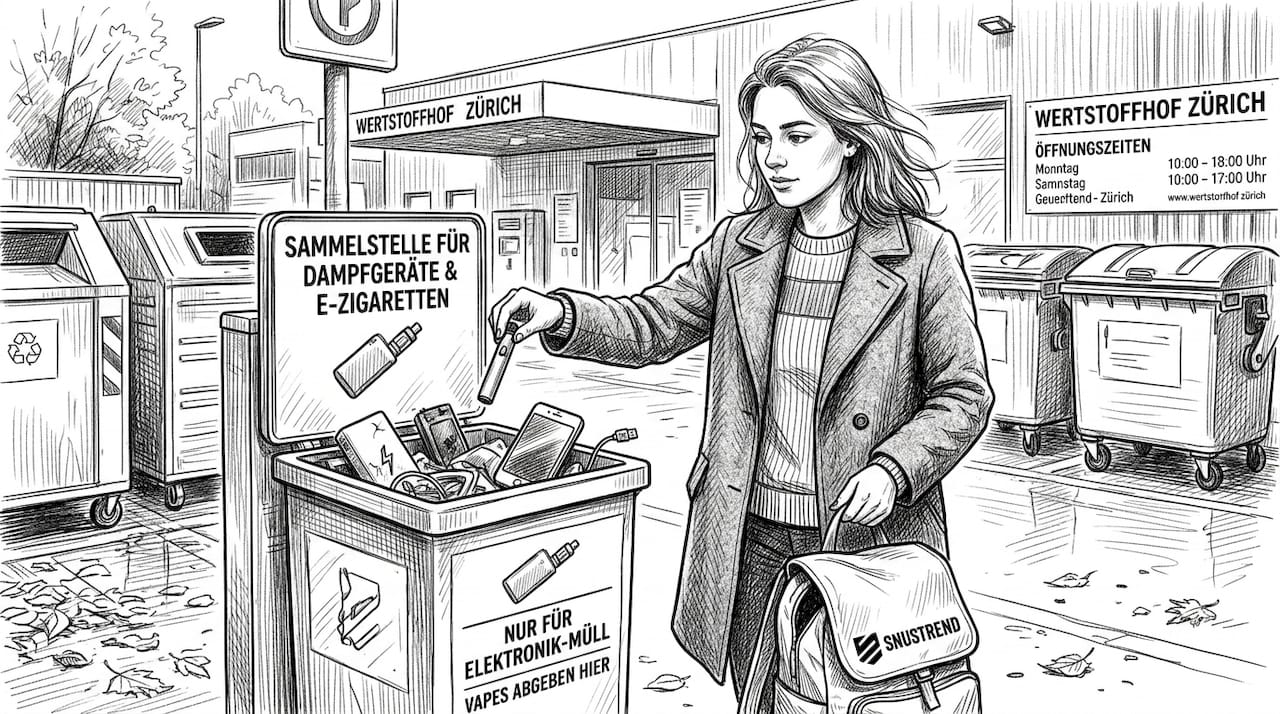
Pro Tip: You can recognize sustainable nicotine products by their reusable components, clearly stated nicotine content, and transparent disposal instructions. Be critical of products without this information.
| Feature | Disposable Vape | Refillable System |
|---|---|---|
| Nicotine content | Often over 20 mg/ml | Freely selectable |
| Disposal | Usually household waste | Reusable |
| Long-term costs | High | Significantly lower |
| Environmental impact | Very high | Low |
Current vape trends 2026 also show that the market for sustainable systems is growing strongly. The ban further accelerates this change and creates room for better products. SRF News also offers further information on protection against nicotine consumption.
What remains allowed? Rechargeable alternatives and their benefits
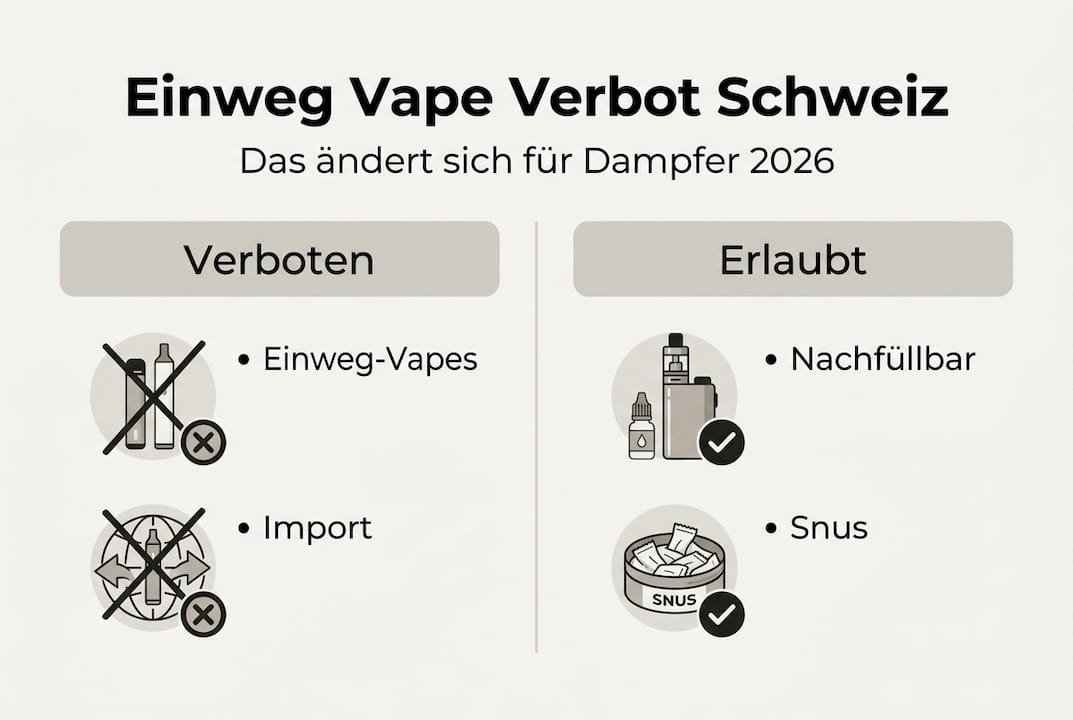
The ban applies exclusively to disposable e-cigarettes. Those who wish to continue vaping still have good and legal options available. Rechargeable e-cigarettes and pod systems remain allowed and are recommended by experts as a sustainable alternative.
Pod systems work with replaceable cartridges that can be refilled with liquid or used as pre-filled pods. The device itself is kept, while only the cartridge is replaced. This significantly reduces waste and lowers ongoing costs. A good pod system costs slightly more to purchase initially than a disposable e-cigarette, but it pays off after a few weeks due to cheaper refill options.
Benefits of rechargeable systems at a glance:
- Significantly less e-waste due to reusable devices
- Free choice of nicotine content: from 0 mg/ml to 20 mg/ml
- Large selection of flavors through different liquids
- Long-term cheaper than constantly buying new disposable products
- Better quality control by regulated manufacturers
- Compatible with certified liquids from specialized retailers
Anyone who has exclusively used disposable vapes so far will need a short orientation. However, getting started is easier than many think. Our vaping beginner's guide for Switzerland explains step by step what you should look for in your first device. For those also considering smoke-free nicotine alternatives, taking a look at nicotine alternatives in comparison is worthwhile.
Pro Tip: When purchasing a new system, look for the CE certificate and a clearly stated nicotine content under 20 mg/ml. Devices without these specifications may not comply with Swiss regulations and could pose health risks.
Snus and nicotine pouches also remain legal in Switzerland and are an interesting alternative for many users, especially if one wants to forgo vaping entirely. The product diversity in this area is great and continues to grow.
International development: Switzerland, EU, and global trends
Switzerland is not alone with its ban. A look beyond the borders shows that many countries have taken similar steps or are in the process of doing so. The ban follows the EU trend and harmonizes Swiss legislation with important neighboring states, without compromising national autonomy.
France has already completely banned disposable vapes; Belgium and Great Britain have also moved forward. Germany is planning a ban by 2026. Switzerland is following suit, sending a clear signal: the European consensus against disposable e-cigarettes is growing.
Country overview: Status of bans 2026:
- France: Ban already in effect
- Belgium: Ban already in effect
- Great Britain: Ban already in effect
- Germany: Ban planned by the end of 2026
- Switzerland: Parliamentary decision 2025, implementation by Federal Council underway
- Austria: Discussions ongoing, no decision yet
| Country | Ban Status | Special Feature |
|---|---|---|
| France | In effect | Pioneering role in the EU |
| Belgium | In effect | Combined with advertising ban |
| Great Britain | In effect | Strictest controls |
| Germany | Planned 2026 | Transition period intended |
| Switzerland | Decided 2025 | Federal Council implementing |
A detail that highlights the limits of such bans is particularly interesting: despite the sales ban for those under 18 since 2024, consumption among teenagers between 15 and 20 has risen by about 10%. This shows that bans alone do not stop consumption. Black markets, informal sharing among peers, and online sources from abroad circumvent the regulations. A legal overview of the Swiss legal situation gives you a good overview of what is currently valid and what is changing in 2026.
However, international development also makes it clear: the market for sustainable vaping products benefits from these bans. Manufacturers are investing more in reusable systems, and product quality is noticeably increasing.
Our perspective: What the ban really means for vapers and retail
Bans are easy. Changing behavior is genuinely difficult. The disposable vape ban is a necessary step, but it does not solve the underlying problem alone. Critics demand better enforcement instead of symbolic prohibition policy, and they have a point. If you really want to do something for youth protection, you must invest in education, consistent age verification, and recycling infrastructure.
For retailers, the ban represents a real opportunity. Those who now focus on sustainable, reusable products and advise their customers honestly will position themselves better in the long term than someone who only looked at sales of disposable products. Sustainability is not a marketing term, but a necessity. And transparent information about vape safety builds trust that no ban can replace. The ban is a beginning. What comes next will be decided by retailers, consumers, and authorities together.
Switch sustainably and safely now: Your offers at Snustrend
The ban on disposable vapes does not have to mean the end of your vaping experience. At Snustrend, you will find tested, legal alternatives that are both sustainable and enjoyable.

Whether you want to switch to a high-quality refillable system like the Bliss Vape as a sustainable alternative or try out a smoke-free option with snus products like Schnupftabak Südfrucht (snuff), our product range is aligned with the new legal requirements. All products are sold with strict age verification. Fast shipping throughout Switzerland and expert advice included. Discover it now and enjoy legally.
Frequently Asked Questions
When does the disposable vape ban in Switzerland come into effect?
The ban comes into effect after the formal adjustment of the Tobacco Products Act by the Federal Council; the parliamentary decision was finalized in 2025. A specific date depends on the speed of implementation by the Federal Council.
What happens to disposable vapes that are already on the market?
As soon as the ban is in effect, disposable vapes may no longer be sold or imported. Existing stock must be disposed of properly.
Which alternatives to disposable vapes remain legal?
Refillable e-cigarettes, pod systems, and snus products remain allowed. Rechargeable products are explicitly recommended as a sustainable and cost-efficient alternative.
Why is the ban being introduced?
The three main reasons are the protection of minors, environmental impact caused by lithium batteries and e-waste, and the sharp increase in imports, reaching up to 15 million units annually in Switzerland.
Recommendation
- Ban on disposable vapes in Switzerland: Innovations, background, and international comparisons – Snustrend - Snus, Vapes & Snuff
- Vape beginner's guide Switzerland 2026: Starting safely – Snustrend - Snus, Vapes & Snuff
- What is vaping: Understandable guide for beginners – Snustrend - Snus, Vapes & Snuff
- Vape liquids explained: Quality, effects, and trends 2026 – Snustrend - Snus, Vapes & Snuff






Share:
Seriously Pod Fill 3: Discover new 100 ml shortfill e-liquids
Snus explained: An overview of effects, risks, and alternatives