


Many people in Switzerland wonder whether snus is a legal drug or a harmless alternative to smoking. The truth lies somewhere in between: snus is a nicotine-containing tobacco product that is addictive but not illegal. In Switzerland, adults aged 18 and over are allowed to purchase and consume snus. This article explains its effects, health risks, the legal situation, and available alternatives. You will learn how snus differs from other nicotine products and what options are available in Switzerland in 2026.
Table of Contents
- Key findings on snus and its use
- What is snus? Origin, composition, and effects
- Legal situation and consumption trends of snus in Switzerland 2026
- Health and addiction risks of snus compared to cigarettes
- Alternative tobacco and nicotine products: Opportunities and differences
- Discover affordable snus alternatives and vapes at Snustrend
- Frequently Asked Questions
Key findings on snus and its use
| Point | Details |
|---|---|
| Addictive | Snus contains nicotine and is as addictive as cigarettes. |
| Legal from 18 | In Switzerland, sales have been strictly limited to adults since October 2024. |
| Growing consumption | 4.5% of the Swiss population use smokeless tobacco products, a trend that has been rising since 2018. |
| Health risks | Moderate risk of oral and pancreatic cancer, but lower than with cigarettes. |
| Tobacco-free alternatives | Nicotine pouches offer similar effects without tobacco and come in a wide range of flavors. |
What is snus? Origin, composition, and effects
Snus is a tobacco product that contains nicotine and originally comes from Sweden. It is offered as moist, ground tobacco in small portion pouches. Users place the pouch under the upper lip, where the nicotine is absorbed through the oral mucosa. The effect kicks in within a few minutes and lasts about 30 to 60 minutes.
The composition of snus consists mainly of tobacco, water, salt, and flavorings. The nicotine content varies between 8 and 45 mg per gram, depending on the brand. This range allows users to choose between mild and strong varieties. Strong brands like Siberia provide an intense nicotine kick, while milder products are suitable for beginners.
Snus differs significantly from other smokeless products:
- Nicotine pouches contain no tobacco, but rather plant fibers with added nicotine
- Chewing tobacco is actively chewed rather than held passively under the lip
- Snuff is inhaled through the nose, not consumed orally
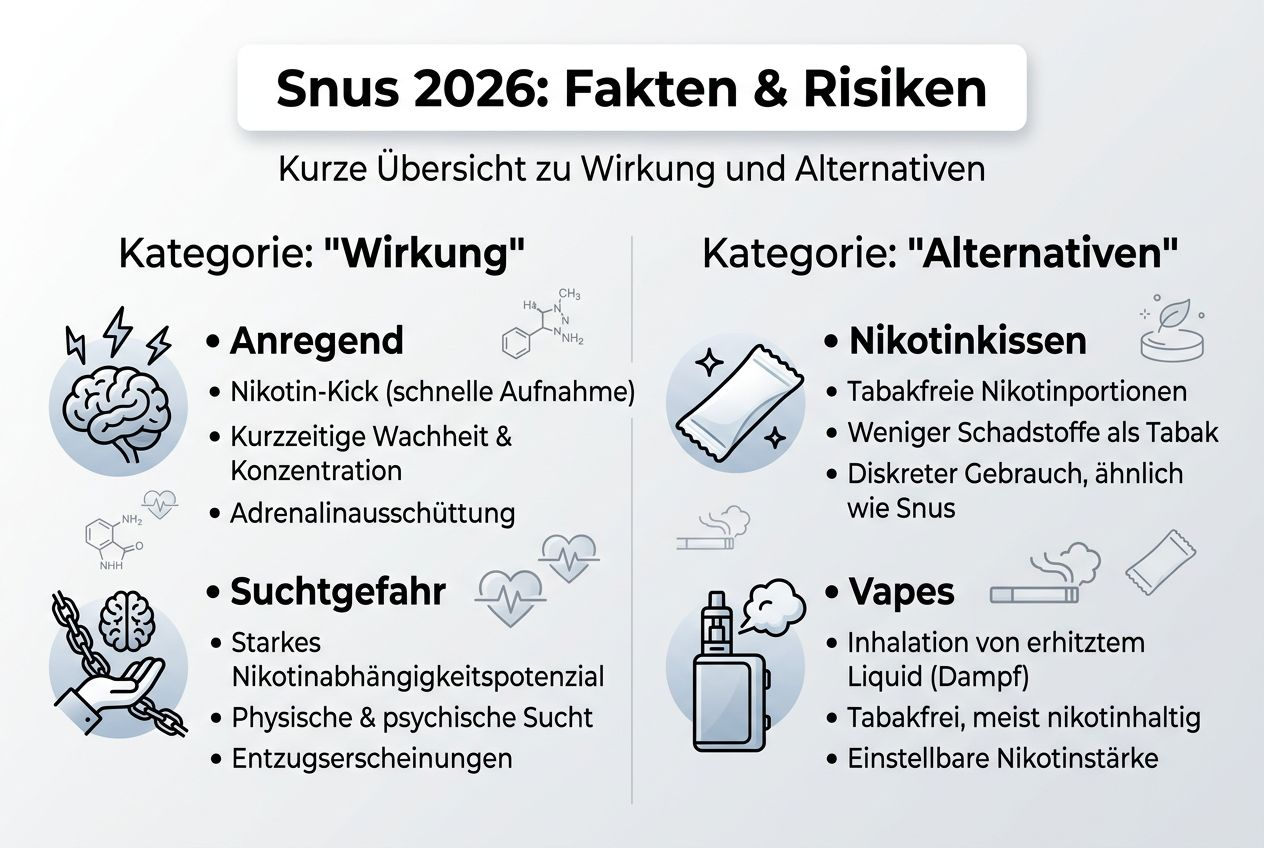
Nicotine acts as a stimulant on the central nervous system. It increases heart rate and blood pressure while briefly improving concentration and attention. At the same time, it triggers the release of dopamine, which leads to the development of addiction. Regular users quickly develop a tolerance and require higher doses for the same effect.
Pro tip: When choosing nicotine alternatives, start with moderate nicotine levels between 6 and 12 mg. 70% of successful beginners start in this range to avoid overdose and discomfort.
The application is discreet and does not produce smoke or vapor. Users can use snus in situations where smoking is prohibited. This feature has contributed to its growing popularity, especially among people looking for smoke-free nicotine sources. The pouches leave a light taste after use, which can range from minty to fruity, depending on the variety.
Legal situation and consumption trends of snus in Switzerland 2026
The sale of snus is legal in Switzerland for those aged 18 and over, with a clear age limit in effect since October 2024. This regulation protects minors from gaining access to nicotine-containing products. Retailers must verify age at the point of sale, both in physical stores and online. Violations can lead to fines and sales bans.
The legal situation differs significantly between European countries. In Germany, the sale of snus is prohibited, although possession and consumption are not illegal. Sweden enjoys an exception within the EU and may continue to sell snus. As a non-EU country, Switzerland has developed its own tobacco laws that permit the sale but regulate it strictly.
4.5% of the Swiss population consumes smokeless tobacco products, a trend that is increasing compared to 2018. This statistic includes snus, snuff, and similar products. The increase shows a trend away from combustible tobacco goods toward smoke-free alternatives. Young adults, in particular, are driving this development.
Consumption patterns show clear demographic differences:
| Age group | Men | Women |
|---|---|---|
| 15-34 years | 13.5% | 2.1% |
| 35-54 years | 5.8% | 1.4% |
| 55+ years | 2.3% | 0.6% |
Men consume smokeless tobacco products significantly more often than women. The highest usage is found among young men between 15 and 34 years old, where more than one in eight uses these products. As age increases, the consumption rate drops significantly.

The age verification for online purchases is carried out via various methods. Shops use ID checks upon delivery or digital identity verification. These systems are intended to ensure that only adults have access to nicotine products. The implementation varies between providers, but all reputable retailers comply with legal requirements.
The market for snus and related products is growing continuously. New brands and flavors appear regularly. Manufacturers are responding to the demand for tobacco-free options and are developing innovative nicotine pouches. This development reflects the global trend toward harm reduction in tobacco consumption.
Health and addiction risks of snus compared to cigarettes
Snus contains nicotine and is therefore addictive, similar to cigarettes. Dependency develops through repeated nicotine intake, which activates the reward system in the brain. Users develop physical and psychological dependence. Withdrawal symptoms when stopping consumption include irritability, difficulty concentrating, and a strong craving for nicotine.
The intensity of the addiction depends on several factors. Higher nicotine content leads to faster dependency. Frequency and duration of use reinforce the addiction. Some users consume 10 to 20 pouches daily, which corresponds to an enormous nicotine dose. This amount often exceeds the nicotine consumption of average smokers.
Snus use is associated with a low to moderate risk of certain types of cancer, including oral and pancreatic cancer. Studies show that the risk is significantly lower than that of cigarettes, but it is not zero. The cancer risk is caused by tobacco-specific nitrosamines, which are also found in smokeless tobacco. Modern manufacturing processes reduce these harmful substances but do not eliminate them completely.
A direct comparison illustrates the differences:
| Risk factor | Snus | Cigarettes |
|---|---|---|
| Addiction potential | High | Very high |
| Lung cancer | Minimal | Very high |
| Oral cancer | Low to moderate | High |
| Cardiovascular | Moderate | Very high |
| Mortality | Significantly lower | High |
In Sweden, smoking rates fell below 5% while snus consumption increased. The country has the lowest rate of tobacco-related deaths in Europe. These data provide indications of harm reduction by switching from cigarettes to snus. However, critics point out that non-smokers should not start using snus.
The health risks of snus also include non-cancer-related effects. Gum recession occurs frequently in long-term users. Tooth discoloration is possible. Increased blood pressure and heart rate put strain on the cardiovascular system. People with pre-existing conditions should be particularly cautious.
Pro tip: If you want to switch from smoking to snus, start with a complete switch rather than dual consumption. Parallel use increases the total nicotine load and prevents the potential benefits of harm reduction.
The cancer risk comparison between snus and cigarettes shows clear differences. Cigarette smoke contains over 70 carcinogenic substances, while snus primarily carries risks due to nitrosamines. The absence of combustion products reduces the exposure to pollutants significantly. Nevertheless, snus remains a risk product that cannot be described as harmless.
Alternative tobacco and nicotine products: Opportunities and differences
The market offers various alternatives to traditional snus. Nicotine pouches are tobacco-free alternatives with a wide range of flavors, suitable for those avoiding tobacco. These products use plant fibers such as eucalyptus or pine as a carrier material. Synthetic or tobacco-extracted nicotine is added, along with flavorings and humectants.
The most important differences between the product categories:
- Snus contains real tobacco and traditional flavorings
- Nicotine pouches are tobacco-free with modern flavors like mango, berry, or mint
- Chewing tobacco is actively chewed and creates saliva that must be spat out
- Snuff is consumed nasally and requires a different application technique
Nicotine pouches offer several advantages over tobacco products. They contain fewer tobacco-specific harmful substances because no tobacco is processed. The variety of flavors far exceeds that of traditional snus products. Manufacturers experiment with exotic aromas that would not be possible in tobacco-containing products. The white color of the pouches prevents tooth discoloration.
Chewing tobacco plays a minor role in Switzerland. Its use is more conspicuous because users have to spit out saliva regularly. This makes consumption in public spaces impractical. The taste is more intense and takes more getting used to than that of snus. Younger consumers prefer more discreet options.
How to choose the right nicotine product:
- Determine your nicotine tolerance and choose the appropriate strength
- Decide between tobacco flavor and modern flavorings
- Consider discretion and convenience in everyday life
- Test different brands, as quality and taste vary
- Pay attention to the price-performance ratio for regular consumption
The snus alternatives of 2026 also include electronic cigarettes and vapes. These devices vaporize nicotine-containing liquids and offer a completely different experience compared to oral tobacco products. The comparison between snus and vapes shows different advantages and disadvantages. Vapes require device maintenance and refilling but offer immediate nicotine absorption via the lungs.
Tobacco-free nicotine pouches are increasingly gaining market share. Brands like Velo, ZYN, and Nordic Spirit dominate this segment. The products are offered in various strengths, from 3 mg to 20 mg of nicotine per pouch. Beginners should start with low doses and increase them if necessary. Overdose leads to nausea, dizziness, and discomfort.
The choice between tobacco-containing and tobacco-free products depends on personal preference. Traditionalists appreciate the authentic tobacco taste of snus. Modern users prefer the variety and reduced pollutants of nicotine pouches. Both categories serve the purpose of nicotine delivery but differ in experience and risk profile.
Discover affordable snus alternatives and vapes at Snustrend
Now that you know the differences between snus, nicotine pouches, and other alternatives, you might want to try out different products. Snustrend offers a wide range of high-quality nicotine products at attractive prices. From classic snus to modern nicotine pouches, vapes, and snuff, you will find everything in one place.

The platform enables easy access with reliable age verification for safe online shopping. Beginners benefit from a large selection of mild products with moderate nicotine levels. Experienced users will find strong varieties and exclusive brands. Products such as O’s Tobacco Vape 750 Bliss combine tobacco flavor with modern vape technology. For traditional snuff lovers, classics like Pöschl Schmalzler Südfrucht or Pöschl Gletscherprise are available. The diverse flavors and strengths make it possible for everyone to find the right product.
Frequently Asked Questions
Is snus a legal drug?
Snus is legal in Switzerland for those aged 18 and over; it contains nicotine but is not considered an illegal drug. It is classified as a tobacco product and is subject to the corresponding sales regulations. The substance nicotine itself is not prohibited but is regulated. Consumption is legal for adults, while selling it to minors is a punishable offense.
How does snus differ from other tobacco products?
Snus contains tobacco and is placed under the upper lip; nicotine pouches are tobacco-free, and chewing tobacco is chewed. The method of application determines nicotine absorption and duration of effect. Snus offers discreet use without the need for spitting, whereas chewing tobacco requires saliva production. Nicotine pouches eliminate tobacco completely, thereby reducing certain pollutants.
Is snus less harmful to health than cigarettes?
Snus is seen as a less harmful alternative to cigarettes but carries addiction risks and a moderate cancer risk. Studies show significantly lower rates of lung cancer and cardiovascular disease compared to smoking. The risk of oral and pancreatic cancer remains but is lower than with cigarettes. Snus should not be considered harmless, but it offers smokers a harm reduction option.
How strong is the risk of addiction with snus?
The risk of addiction is comparable to cigarettes, as both contain nicotine. Regular users quickly develop tolerance and dependence. Withdrawal symptoms are similar to those of smokers: irritability, concentration problems, and strong cravings. Some snus users consume higher nicotine doses than average smokers, which can intensify the addiction.
Which nicotine strength is suitable for beginners?
Beginners should start with 6 to 12 mg of nicotine per pouch. This moderate dose allows you to get to know the effect without symptoms of an overdose. Excessively high initial doses lead to nausea, dizziness, and negative experiences. After an adjustment period, users can switch to stronger products if necessary. Individual tolerance varies significantly.
Can you order snus online in Switzerland?
Yes, online sales are legal with mandatory age verification. Reputable retailers verify age through ID checks upon delivery or digital identity systems. Shipping is discreet and fast within Switzerland. Buyers must be of legal age and be able to prove this when ordering.
Recommendation
- Snus alternatives 2026: high-quality and affordable options – Snustrend - Snus, Vapes & Snuff
- VELO Snus meaning 2026: 99% fewer pollutants – Snustrend - Snus, Vapes & Snuff
- How many cigarettes does one snus correspond to? The great comparison – Snustrend - Snus, Vapes & Snuff
- Choosing nicotine alternatives: 70% of beginners use moderate values – Snustrend - Snus, Vapes & Snuff






Share:
Yellow fingers from smoking: causes and solutions 2026
Vape safety in 2026: Understanding risks and vaping safely