


A recent study shows that many vapes contain unexpectedly high levels of toxic metals. These heavy metals can significantly increase health risks. For adult vapers and snus users in Switzerland, it is crucial to understand the causes of this contamination and to choose safe products. This article sheds light on the primary risks, compares vapes with traditional cigarettes, and provides practical tips for safe usage. You will learn what to look for when purchasing and how to better protect your health while vaping.
Table of Contents
- Key Findings on Vape Safety
- Causes of Contaminant Emissions in Vapes
- Comparing Contaminants in Vapes vs. Traditional Cigarettes
- Safe Vaping and Choosing E-Liquids
- Our Recommendations for Safe Vapes and High-Quality Liquids
- Frequently Asked Questions About Vape Safety
Key Findings on Vape Safety
| Point | Details |
|---|---|
| Heavy metal exposure | Toxic metals in vapes can be up to 1000 times more concentrated than in cigarette smoke. |
| Main cause | Defective heating coils and illegal components release nickel, chromium, lead, and antimony. |
| Product quality | Store-bought e-liquids show more stable and safer emission profiles than cheap disposables. |
| Risk models | Certain brands like Esco Bar show particularly high metal concentrations. |
| Prevention | Careful product selection and regular replacement of heating coils significantly reduce risks. |
Causes of Contaminant Emissions in Vapes
Exposure to toxic metals in vapes stems primarily from technical defects and low-quality materials. During use, heating coils release up to 1000 times more chromium and nickel into the aerosols than expected. This corrosion increases with every use. If the coils consist of low-quality alloys, metal particles dissolve particularly quickly. The aerosols then transport these directly into the lungs.
Another issue is illegal components. Many cheap disposables use lead-based alloys in solder joints and casings. Lead is especially dangerous because it accumulates in the body and damages nerves and organs. Copper and zinc from inferior connections also contribute to total exposure. These metals enter the vapor through overheating and mechanical wear. With prolonged use, concentrations increase exponentially.
Duration of use plays a central role. New devices often show acceptable levels. However, after 20 to 30 puffs, corrosion becomes noticeable. Metal release then increases sharply. Disposables designed for single use are particularly critical. Their components are often not intended for extended use, leading to faster wear and higher contaminant emissions.
Pro-tip: When buying, look for quality seals and manufacturer information. Cheap disposables may be tempting, but they pose significant health risks. It is better to invest in certified devices with replaceable heating coils. Change the coil regularly, ideally every two weeks with daily use. This significantly minimizes metal exposure.
The most common problematic metals in vapes are:
- Lead: Damages the nervous system and organs; accumulates in the body
- Nickel: Can trigger allergic reactions and respiratory problems
- Chromium: Carcinogenic in high doses and harmful to the lungs
- Copper: Causes irritation and can be toxic if overdosed
- Zinc: Leads to inflammation of the respiratory tract when inhaled
- Antimony: Less well-known, but potentially harmful to the heart and lungs
Switzerland has responded to these risks. The ban on disposable vapes aims to remove low-quality products from the market. Nevertheless, many problematic devices remain in circulation. Consumers must be proactive and make informed decisions. This is the only way to effectively reduce the risk.
Comparing Contaminants in Vapes vs. Traditional Cigarettes
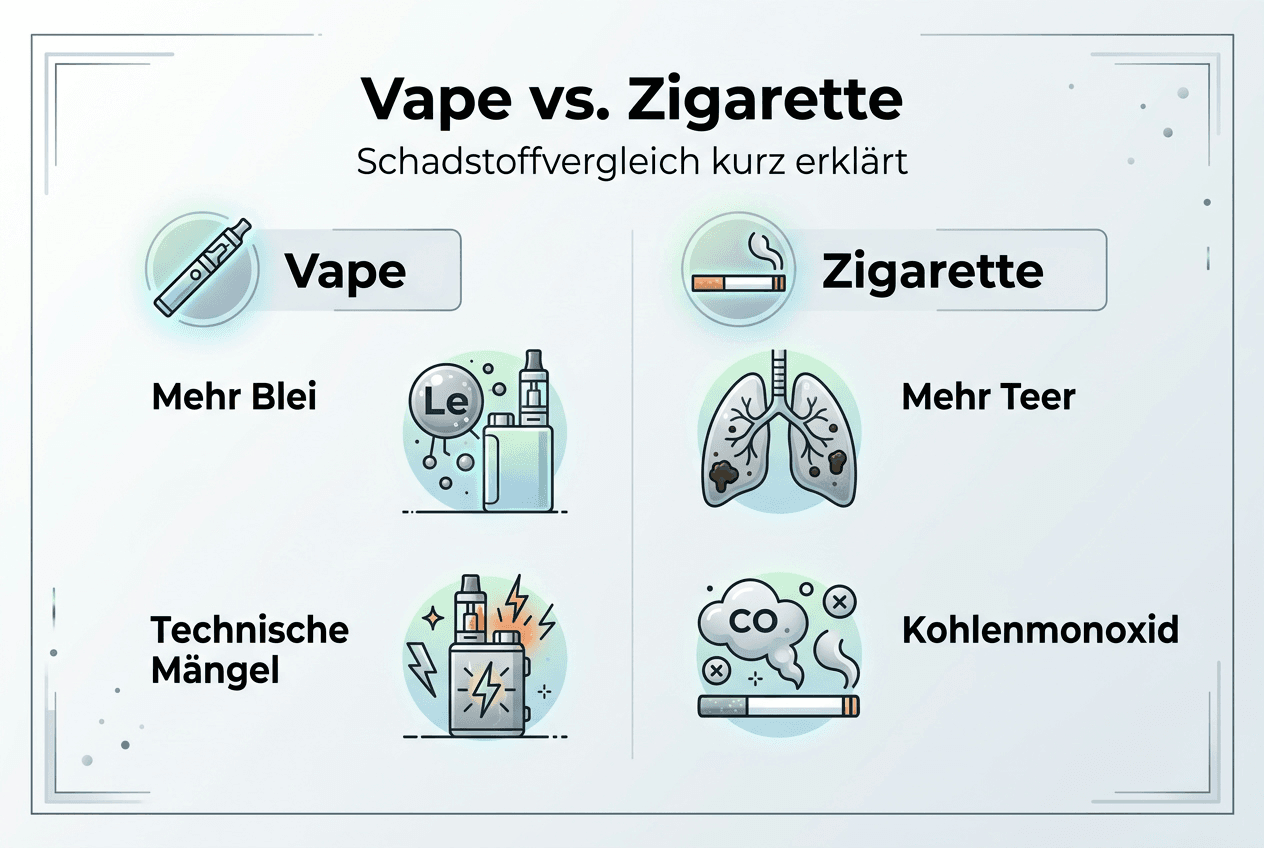
Many vapers assume that vapes are generally safer than cigarettes. This assumption is only partially true. While vapes indeed produce fewer combustion products, they can release significantly higher concentrations of toxic metals. Although traditional cigarette smoke contains fewer trace metals, it shows different patterns of contaminants. A direct comparison reveals important differences.
Cigarette smoke is primarily dangerous due to tar, carbon monoxide, and carcinogenic organic compounds. These are created by burning tobacco at over 600 degrees Celsius. Metals play a secondary role here. Vapes, by contrast, heat liquids to only 200 to 300 degrees. This results in virtually no combustion products. However, metal exposure from corroding heating coils becomes the main problem. In some cases, it exceeds the metal concentration in cigarette smoke by a hundredfold.
The following table shows the average concentrations of key metals in both products:
| Metal | Vapes (µg/m³) | Cigarettes (µg/m³) | Factor |
|---|---|---|---|
| Lead | 15.2 | 0.8 | 19x higher |
| Nickel | 28.5 | 2.1 | 13x higher |
| Chromium | 42.3 | 0.9 | 47x higher |
| Copper | 18.7 | 3.2 | 6x higher |
| Zinc | 22.1 | 4.5 | 5x higher |
| Antimony | 8.9 | 0.4 | 22x higher |
These values come from lab tests with common disposables and filter cigarettes. They clearly show that vapes have a specific risk profile regarding metals. This does not automatically mean that cigarettes are safer; their overall toxicity remains very high due to other contaminants. Rather, it is about understanding the different dangers.
Another difference lies in the duration of exposure. Cigarette smokers usually inhale smoke for only a few minutes at a time. Vape users often puff on the device over longer periods. This further increases cumulative metal intake, which is particularly problematic with low-quality devices that have high metal release rates, continuously stressing the lungs.
Key differences and risks at a glance:
- Vapes release more metals; cigarettes release more organic toxins
- Metal exposure in vapes increases exponentially with duration of use
- Cigarette smoke contains tar and carbon monoxide, which are absent in vapes
- Both products pose significant health risks, just in different ways
- The choice between the two should not be seen as picking the "lesser evil"
This comparison is important for users considering switching between smoking and vaping. While those switching from smoking to vaping may reduce certain risks, new dangers from metals emerge. An informed decision requires understanding both contaminant profiles. The comparison between snus and cigarettes shows similar complexity in risk assessment.
Ultimately, it remains clear: neither vapes nor cigarettes are safe. Both products should be used with caution. Anyone who vapes must pay attention to quality and maintain devices regularly. Only in this way can the specific metal risk be kept within limits. The assumption that vapes are inherently harmless is dangerous and has been disproven by studies.
Safe Vaping and Choosing E-Liquids
After understanding the risks, the practical question arises: How can vapers maximize their safety? The good news is that conscious product selection and proper usage can drastically lower exposure. The market now offers many tested alternatives to cheap disposables. Recognizing and consistently using these is key.
The first step is choosing high-quality devices. Look for certifications and test reports from independent institutes. Devices with replaceable heating coils are generally safer than disposables. They allow for regular coil replacement before severe corrosion sets in. Invest in branded products from established manufacturers. These are subject to stricter quality controls and use better materials.
The same applies to e-liquids. Store-bought e-liquids show more stable and safer emission profiles than cheap home-mixed alternatives. Purchase liquids only from reputable providers that provide full ingredient lists. Avoid products with no proof of origin or with unclear additives. Liquids from official channels are regularly tested and meet legal standards. DIY or imported cheap products carry incalculable risks.
Device maintenance plays a central role. Clean your vape device regularly according to manufacturer instructions. Replace the heating coil every two to three weeks with daily use. Watch for discoloration or a metallic taste; these signs indicate advanced corrosion. In such cases, you should replace the coil immediately. Store liquids in a cool, dark place to avoid chemical changes.
Pro-tip: Keep a usage log. Note when you change the heating coil and which liquids you use. This helps you track and recognize patterns. If certain combinations cause irritation, you can react quickly. This simple measure significantly increases your safety.
Steps for safe usage and selection:
- Buy only tested vapes with quality certificates and manufacturer warranties
- Choose devices with replaceable heating coils instead of disposables
- Use exclusively store-bought liquids from established brands
- Change the heating coil every two to three weeks with regular use
- Clean your device weekly according to manufacturer instructions
- Avoid excessively long puffs that lead to overheating
- Store liquids in a cool, dark, and child-safe place
- Watch for warning signs like a metallic taste or discoloration
- Stay informed about new studies and recommendations
- Purchase only from reputable retailers with transparent product origins
It is particularly important to avoid known problematic products. Models such as Esco Bar have shown extremely high metal concentrations in tests. Check current test results before purchasing. Consumer protection organizations and independent labs regularly publish lists of problematic products. Use this information actively.
Choosing the right liquid influences not just flavor, but also safety. High-quality liquids contain fewer impurities and react more stably when heated, producing fewer harmful byproducts. The quality of vape liquids differs significantly between manufacturers. Invest in tested products with clear declarations.
In summary: Safe vaping is possible but requires attention and discipline. The risks are real but manageable through conscious decisions. Those who prioritize quality, maintain their devices, and stay informed can significantly reduce health risks. Ignorance and cutting corners, however, lead to avoidable exposure. The responsibility ultimately lies with each individual user.
Our Recommendations for Safe Vapes and High-Quality Liquids
After all this information about risks and safety measures, we would like to provide specific product recommendations. At Snustrend, you will find a carefully selected range of tested vapes and high-quality liquids. Our products meet strict quality standards and are regularly tested. We understand our customers' concerns and take product safety seriously.

An example from our assortment is the OS Tobacco Vape 750 Bliss. This device combines quality with a pleasant flavor experience. It uses tested heating coils and high-quality liquids. For lovers of traditional aromas, we also offer alternatives such as Pöschl’s Schmalzler Südfrucht. These snuffs are an interesting option for anyone looking for variety.
On our homepage, you can find the complete product range, from established brands like Elfbar and Vozol to innovative new products. We regularly update our range and provide information on new study results. Visit us and benefit from our expertise in safe tobacco alternatives and vaping products.
Frequently Asked Questions About Vape Safety
How do I identify a safe vape on the market?
Look for quality certificates, transparent manufacturer information, and positive test reports from independent institutes. Safe vapes have replaceable heating coils and come from established brands. Avoid products with no clear origin or extremely low prices. Reputable retailers provide full product information and customer service.
Which metals are particularly harmful in vapes?
Lead, chromium, and nickel are among the most dangerous metals in vapes. Lead damages the nervous system and accumulates in the body. Chromium is carcinogenic in high doses. Nickel often triggers allergic reactions and respiratory problems. Antimony, copper, and zinc can also be harmful when inhaled.
How can I reduce my exposure to contaminants while vaping?
Change your heating coils every two to three weeks and buy only tested liquids. Clean your device regularly and avoid excessively long puffs. Watch for warning signs like a metallic taste. Invest in quality products instead of cheap disposables. Keep a usage log to recognize patterns.
How does the cancer risk of vapes compare to snus?
Both products carry different risks. Vapes can cause damage through metal exposure and heated aerosols. Snus contains nitrosamines, which can increase cancer risk. A direct comparison shows that both alternatives to cigarettes have specific dangers. A general statement about which poses a higher risk is difficult.
What are currently recommended liquids for maximum safety?
Store-bought liquids from established brands with full ingredient declarations are the safest. Products that are regularly tested and meet legal standards minimize risks. Avoid DIY or imported cheap products. Information on the quality of vape liquids helps with selection. Pay attention to current test results and recommendations from consumer protection organizations.
Recommendation
- Vape Beginner's Guide Switzerland 2026: Getting Started Safely – Snustrend - Snus, Vapes & Snuff
- Vape Liquids Explained: Quality, Effects, and Trends 2026 – Snustrend - Snus, Vapes & Snuff
- Smart Vaping at SNUSTREND: Apps, Tracking & AI – Snustrend - Snus, Vapes & Snuff
- Vape Brand Overview 2026: 15% More Freedom of Choice for Vapers – Snustrend - Snus, Vapes & Snuff
- Understanding CBD Breath Spray: Benefits, Usage, and Safety – Stop Oral Care






Share:
Snus as a drug substitute in 2026: facts and alternatives
Discover various vape flavors: top tastes 2026