

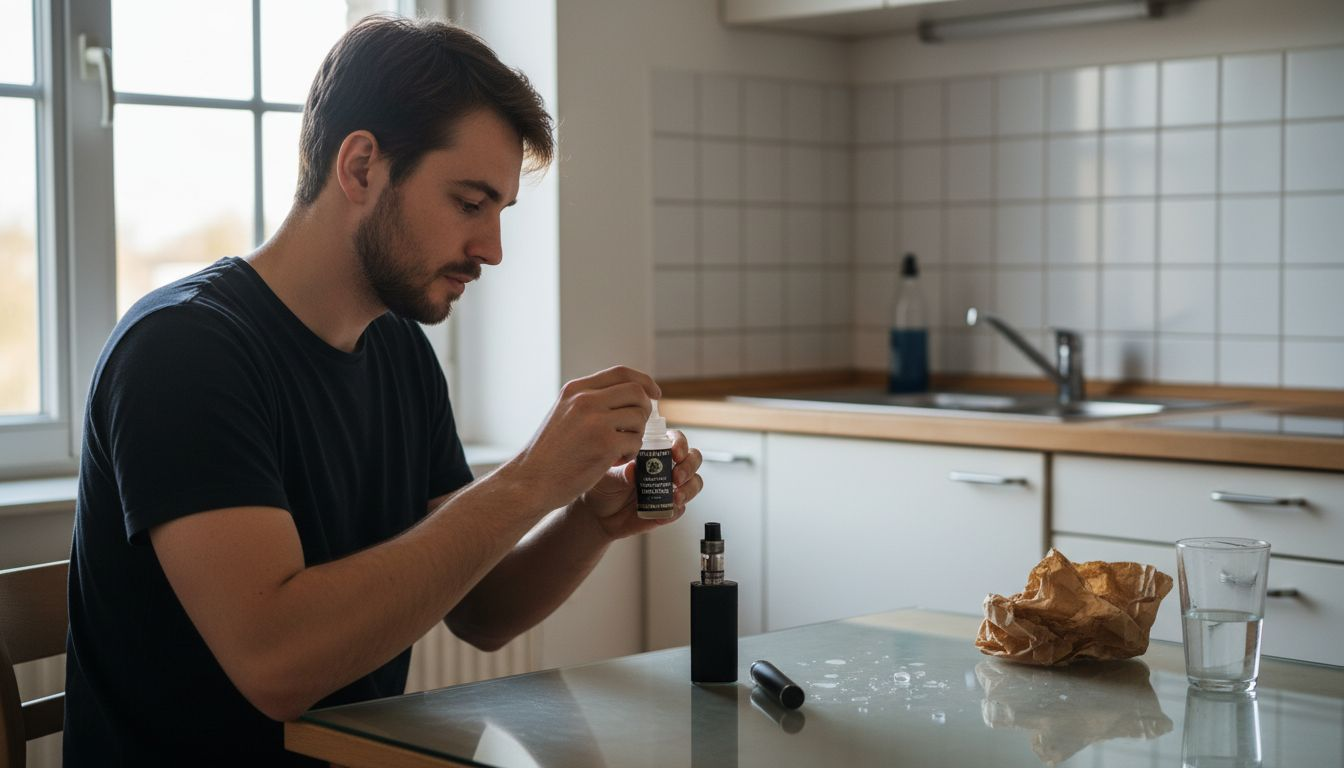
Viele glauben, alle Vape-Liquids seien gesundheitsschädlich wie Tabakzigaretten. Aktuelle Studien zeigen jedoch eine deutliche Reduktion schädlicher Stoffe. Dieser Artikel erklärt die Zusammensetzung, Wirkung, Sicherheit und aktuellen Trends von Vape-Liquids in der Schweiz. Sie erfahren, worauf es bei der Auswahl hochwertiger Produkte ankommt und wie Sie Ihr Dampferlebnis durch bewusste Entscheidungen optimieren können.
Inhaltsverzeichnis
- Wichtige Erkenntnisse zum Thema Vape Liquids
- Grundlagen der Vape-Liquid-Zusammensetzung
- W Wirkungsweise und Absorption der Inhaltsstoffe
- Unterschiedliche Aromakategorien und deren Herstellung
- Qualitätsmerkmale und Sicherheitsaspekte
- Regulatorische Besonderheiten in der Schweiz
- Aktuelle Trends und Neuheiten im Vaping-Segment
- Tipps zur Auswahl hochwertiger Vape-Liquids
- Entdecken Sie hochwertige Vape-Liquids und Snus bei Snustrend
- Häufig gestellte Fragen zu Vape Liquids
Wichtige erkenntnisse zum Thema Vape liquids
| Point | Details |
|---|---|
| Hauptbestandteile | Propylenglykol, pflanzliches Glycerin, Nikotin und Aromen bestimmen Wirkung und Geschmack entscheidend. |
| Qualitätssicherung | GMP- und ISO-Zertifikate garantieren sichere Herstellung ohne toxische Zusatzstoffe wie Diacetyl. |
| Schweizer Regulierung | Nikotinlimit von 20 mg/ml und Meldepflichten schützen Konsumenten durch strenge Überwachung. |
| Markttrends 2026 | Nikotinfreie Liquids und CBD-Varianten gewinnen massiv an Popularität bei Schweizer Dampfern. |
| Bewusste Auswahl | PG/VG-Verhältnis und transparente Herkunftsangaben verbessern Dampfqualität und Sicherheit nachhaltig. |
Grundlagen der vape-liquid-zusammensetzung
Vape-Liquids bestehen aus vier Hauptkomponenten: Propylenglykol (PG), pflanzliches Glycerin (VG), Nikotin und Aromen. PG dient als Trägerflüssigkeit und sorgt für intensiveren Geschmackstransport. VG erzeugt größere Dampfwolken und mildert die Schärfe im Hals.
Das PG/VG-Verhältnis variiert je nach Anwendung erheblich. Ein 50/50-Mix bietet ausgewogenen Geschmack und moderate Dampfentwicklung. Höhere VG-Anteile von 70/30 oder 80/20 bevorzugen Wolkenjäger mit Sub-Ohm-Geräten.
Nikotinkonzentrationen reichen typischerweise von 0 mg/ml bis zum Schweizer Limit von 20 mg/ml. Einsteiger beginnen oft mit 6 bis 12 mg/ml. Starke Raucher wählen initial 18 bis 20 mg/ml für befriedigenden Nikotinkick.
Typische Verhältnisse im Überblick:
- 50/50 PG/VG: Ideal für Einsteiger und Mund-zu-Lunge-Dampfen
- 70/30 VG/PG: Subohm-Dampfen mit großen Wolken
- 80/20 VG/PG: Maximale Dampfproduktion für Fortgeschrittene
- 30/70 PG/VG: Geschmacksfokussierte Pod-Systeme
Aromen runden die Rezeptur ab und schaffen individuelle Geschmackserlebnisse. Hersteller kombinieren Lebensmittelaromen in präzisen Dosierungen. Die Qualität dieser Komponenten entscheidet über Geschmackstreue und Sicherheit.
Wer Vape-Liquids mit Snus vergleicht, erkennt fundamentale Unterschiede in Anwendung und Wirkstoffaufnahme. Beide Produkte dienen als Tabak-Alternativen mit verschiedenen Konsummustern.
Wirkungsweise und absorption der inhaltsstoffe
Die Wirkung von Vape-Liquids entsteht durch das Zusammenspiel aller Komponenten. PG erzeugt den sogenannten Throat Hit, der das Rauchgefühl simuliert. VG produziert weichen, voluminösen Dampf mit sanfter Halsreizung.
Nikotin wird über die Mundschleimhaut und Lunge aufgenommen. Die Absorption erfolgt schneller als bei Nikotinpflastern, aber langsamer als bei Tabakzigaretten. Innerhalb von Sekunden erreicht der Wirkstoff das Gehirn und aktiviert Nikotinrezeptoren.
Studien belegen, dass E-Zigaretten schädliche Stoffe um mindestens 95% reduzieren im Vergleich zu herkömmlichen Zigaretten. Dieser Vorteil macht Vaping zur attraktiven Schadensminderungsstrategie für Umsteiger.
So beeinflussen die Komponenten Ihr Dampferlebnis:
- PG-Anteil: Höhere Konzentration verstärkt Geschmacksintensität und Throat Hit deutlich
- VG-Anteil: Mehr VG erzeugt dichtere Wolken mit weicherer Inhalation
- Nikotinstärke: Direkt proportional zur wahrgenommenen Befriedigung und körperlichen Wirkung
- Aromakomplexität: Mehrstufige Aromen schaffen facettenreiches Geschmackserlebnis
Die Balance zwischen Dampfmenge und Geschmacksintensität bestimmt Ihre Präferenz. Experimentieren Sie mit verschiedenen Verhältnissen, um Ihren Sweet Spot zu finden.
Profi-Tipp: Wechseln Sie regelmäßig zwischen Geschmacksrichtungen, um Geschmacksblindheit zu vermeiden. Ihre Rezeptoren gewöhnen sich an identische Aromen binnen weniger Tage.
Die Unterschiede beim Dampfen und bei Snus zeigen sich besonders in der Absorptionsgeschwindigkeit. Während Snus kontinuierlich Nikotin freisetzt, liefert Vaping schnellere Spitzen mit kürzerer Wirkdauer.
Unterschiedliche aromakategorien und deren herstellung
Vape-Aromen gliedern sich in vier Hauptkategorien mit charakteristischen Eigenschaften. Fruchtaromen dominieren den Markt mit erfrischenden, süßen Profilen. Mentholgeschmäcker bieten kühlende Intensität mit belebender Wirkung.
Dessertaromen imitieren Backwaren, Cremes oder Süßigkeiten mit komplexen Geschichtsschichten. Tabakaromen sprechen Umsteiger an, die vertraute Noten schätzen. Jede Kategorie nutzt spezifische Aromachemikalien für authentische Sensorik.
Natürliche Aromen stammen aus pflanzlichen Extrakten und ätherischen Ölen. Synthetische Aromen werden im Labor hergestellt und bieten präzise Geschmackskontrolle. Beide Varianten durchlaufen strenge Qualitätsprüfungen auf Lebensmittelsicherheit.
Forschungen zeigen, dass über 2000 zugelassene Aromastoffe in Lebensmittelqualität in Vape-Liquids zum Einsatz kommen. Diese Vielfalt ermöglicht nahezu unbegrenzte Geschmackskombinationen für individuelle Vorlieben.
Hersteller vermeiden gezielt schädliche Verbindungen wie Diacetyl. Diese Chemikalie verursacht Lungenschäden und hat in hochwertigen Liquids nichts zu suchen. Seriöse Produzenten publizieren Laboranalysen als Transparenznachweis.
Typische Aromaprofile nach Kategorie:
| Kategorie | Beispielaromen | Typische Komponenten | Zielgruppe |
|---|---|---|---|
| Frucht | Erdbeere, Mango, Zitrus | Ester, Aldehyde | Einsteiger, Allrounder |
| Menthol | Pfefferminz, Eisbonbon | Menthol, Koolada | Erfrischungssuchende |
| Dessert | Vanille, Karamell, Kuchen | Vanillin, Diacetylfreie Butteraromen | Genießer, Ex-Raucher |
| Tabak | Virginia, Orient, Nuss | Pyrazine, Rauchextrakte | Umsteiger |
Die Vape-Aromenvielfalt im Detail umfasst auch innovative Kombinationen wie Frucht-Menthol-Mixes. Solche Kreuzungen sprechen experimentierfreudige Dampfer an.
Qualitätshersteller setzen auf mehrstufige Aromaentwicklung. Top Notes liefern den ersten Eindruck, Heart Notes die Hauptgeschmacksrichtung, Base Notes den Nachgeschmack. Diese Komplexität unterscheidet Premium-Liquids von Billigprodukten.
Qualitätsmerkmale und sicherheitsaspekte
Hochwertige Vape-Liquids zeichnen sich durch strikte Qualitätskontrollen aus. GMP-Zertifizierung (Good Manufacturing Practice) garantiert hygienische Produktionsbedingungen. ISO-Normen standardisieren Herstellungsprozesse für gleichbleibende Qualität.

Transparente Inhaltsangaben listen alle Komponenten mit exakten Mengenangaben auf. Batch-Nummern ermöglichen Rückverfolgbarkeit bei Qualitätsproblemen. Unabhängige Laboranalysen bestätigen Reinheit und Abwesenheit schädlicher Stoffe.
Studien belegen, dass Vape-Liquids deutlich weniger schädliche Stoffe enthalten als Tabakzigaretten, sofern keine verbotenen Zusätze vorhanden sind. Diese Sicherheit setzt voraus, dass Sie geprüfte Produkte wählen.
Wichtige Qualitätskriterien im Überblick:
- Verzicht auf Diacetyl, Acetoin und andere lungenschädliche Chemikalien
- Verwendung pharmazeutischer PG- und VG-Qualität
- Lebensmittelechte Aromen ohne allergene Zusätze
- Kindersichere Verschlüsse und manipulationssichere Versiegelung
- Klare Kennzeichnung von Nikotingehalt und Herkunft
Die Schweizer und europäische Regulierung setzen strenge Maßstäbe. Hersteller müssen Sicherheitsdatenblätter vorweisen und toxikologische Bewertungen durchführen. Diese Hürden schützen Konsumenten vor minderwertigen Produkten.
Profi-Tipp: Kaufen Sie ausschließlich bei Händlern, die vollständige Produktinformationen bereitstellen. Fehlende Angaben zu Inhaltsstoffen oder Herkunft sind Warnsignale für fragwürdige Qualität.
Regulierungen und Sicherheitsstandards entwickeln sich kontinuierlich weiter. Die Schweiz verschärft Kontrollen, um Verbraucherschutz zu maximieren.
Regulatorische besonderheiten in der schweiz
Die Schweiz limitiert Nikotinkonzentrationen in Vape-Liquids auf maximal 20 mg/ml. Diese Obergrenze entspricht EU-Standards und soll übermäßigen Konsum verhindern. Höhere Konzentrationen sind illegal und werden konsequent vom Markt genommen.
Hersteller und Importeure unterliegen Meldepflichten beim Bundesamt für Gesundheit. Vor Markteinführung müssen detaillierte Produktinformationen eingereicht werden. Sicherheitsdatenblätter dokumentieren toxikologische Risikobewertungen.
Bestimmte Aromastoffe unterliegen Beschränkungen oder Verboten. Substanzen mit nachgewiesener Gesundheitsgefahr dürfen nicht verwendet werden. Die Behörden aktualisieren diese Listen regelmäßig basierend auf wissenschaftlichen Erkenntnissen.
Werbebeschränkungen gelten ähnlich wie für Tabakprodukte. Fernsehwerbung ist untersagt, Plakatwerbung eingeschränkt. Jugendschutz steht im Fokus aller regulatorischen Maßnahmen.
Schweizer Besonderheiten im Vergleich zur EU:
- Strengere Durchsetzung von Alterskontrollen beim Verkauf
- Höhere Bußgelder bei Verstößen gegen Werberestriktionen
- Eigenständige Bewertung von Aromastoffen zusätzlich zu EU-Listen
- Kantonale Unterschiede bei Verkaufsstellen und Automaten
Rechtliche Rahmenbedingungen in der Schweiz umfassen auch Online-Verkäufe. Händler müssen Altersverifikationssysteme implementieren, um Jugendschutz zu gewährleisten.
Die Regulierung balanciert Verbraucherschutz mit Produktverfügbarkeit für erwachsene Dampfer. Dieser Ansatz unterscheidet die Schweiz von restriktiveren oder liberaleren internationalen Modellen.
Aktuelle trends und neuheiten im vaping-segment
Der Schweizer Vape-Markt 2026 zeigt deutliche Verschiebungen zu nikotinfreien Produkten. Immer mehr Dampfer suchen intensive Geschmackserlebnisse ohne Nikotinabhängigkeit. Diese Liquids fokussieren auf Aromakomplexität und Dampfqualität.
CBD-infundierte Vape-Liquids etablieren sich als wachsende Produktkategorie. Cannabidiol verspricht entspannende Wirkung ohne psychoaktive Effekte. Schweizer Hersteller nutzen legal angebautes Cannabis für diese Innovationen.
Natürliche Aromen gewinnen Marktanteile gegenüber synthetischen Varianten. Konsumenten schätzen pflanzliche Extrakte als authentischere Option. Diese Tendenz spiegelt allgemeine Clean-Label-Trends in der Lebensmittelindustrie wider.
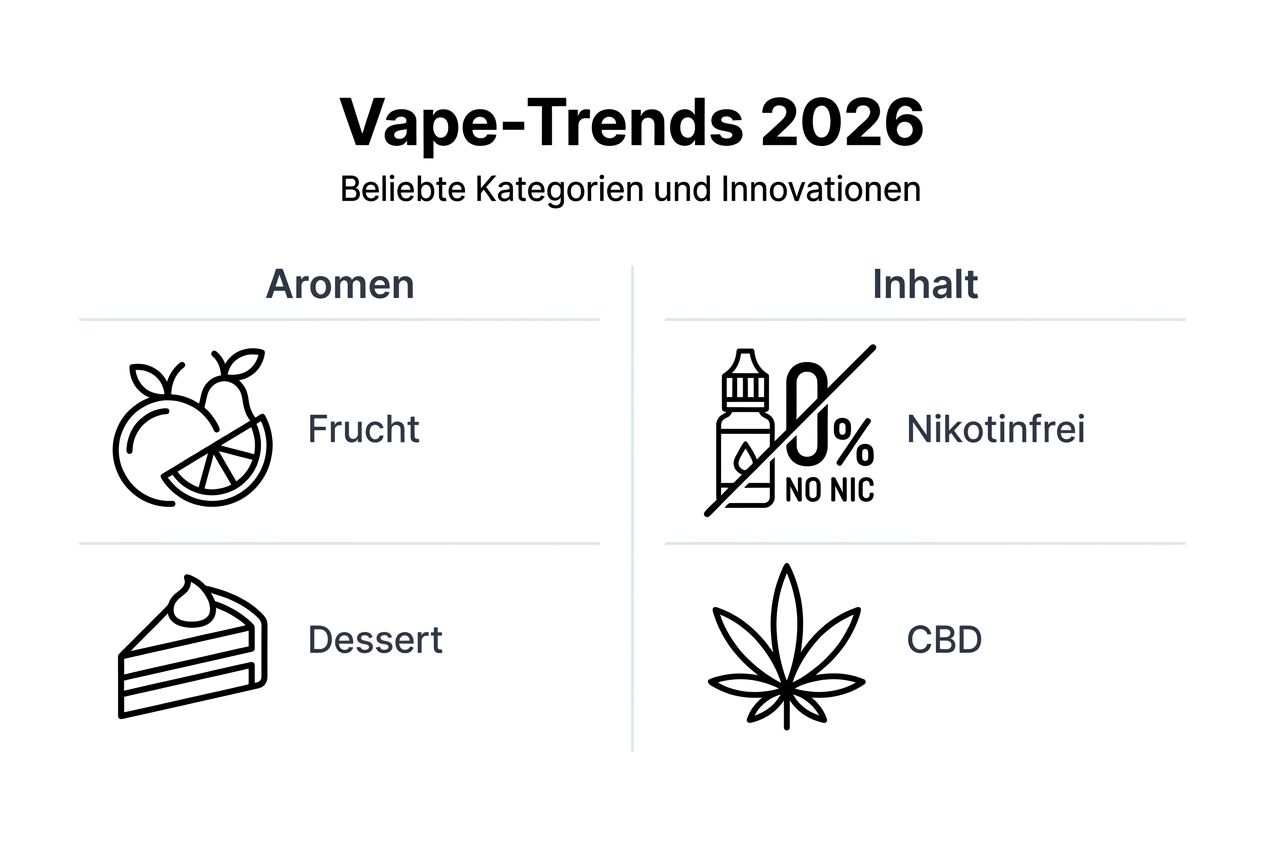
Transparenz und Nachhaltigkeit werden zu Kaufkriterien. Hersteller kommunizieren Produktionsbedingungen und Lieferketten offener. Recycelbare Verpackungen und CO2-neutrale Herstellung differenzieren Premium-Marken.
Schlüsseltrends im Überblick:
- Zero-Nikotin-Varianten mit Premium-Aromakonzentration
- CBD-Liquids mit zertifizierten Cannabidiol-Gehalten
- Hybrid-Aromen, die Kategorien übergreifend kombinieren
- Kurzfüllerflaschen zum individuellen Nikotinmischen
- Nachhaltige Produktionsverfahren mit Umweltzertifikaten
Trends bei Vape-Aromen entwickeln sich rasant. Exotische Fruchtkombinationen und limitierte Editionen treiben Innovation voran.
Technologische Fortschritte ermöglichen präzisere Temperaturkontrolle und Coil-Designs. Diese Verbesserungen optimieren Geschmacksentfaltung und Dampfkonsistenz. Smart-Vapes mit App-Steuerung bieten personalisierte Dampfprofile.
Tipps zur auswahl hochwertiger vape-liquids
Beginnen Sie mit der Nikotinstärke, die Ihrem bisherigen Konsumverhalten entspricht. Starke Raucher starten mit 18 bis 20 mg/ml für ausreichende Befriedigung. Gelegenheitsraucher finden mit 6 bis 12 mg/ml den richtigen Einstieg.
Wählen Sie das PG/VG-Verhältnis nach gewünschtem Dampferlebnis. Geschmacksorientierte Dampfer bevorzugen höhere PG-Anteile von 50% oder mehr. Wolkenjäger mit Sub-Ohm-Geräten setzen auf VG-dominierte Mischungen ab 70%.
Achten Sie auf Qualitätssiegel und Zertifizierungen etablierter Prüfinstitute. GMP- und ISO-Zertifikate garantieren kontrollierte Herstellung. Fehlen diese Angaben, meiden Sie das Produkt konsequent.
Transparente Herkunftsangaben zeigen seriöse Hersteller. Batch-Nummern, Produktionsdatum und Herstellerland sollten klar ersichtlich sein. Unklare oder fehlende Informationen deuten auf fragwürdige Qualität hin.
Schritt-für-Schritt zur richtigen Wahl:
- Definieren Sie Ihr Nutzerprofil: Einsteiger, Umsteiger oder erfahrener Dampfer
- Bestimmen Sie bevorzugtes Dampfverhalten: Mund-zu-Lunge oder direktes Lungendampfen
- Wählen Sie Aromakategorie basierend auf Geschmacksvorlieben
- Prüfen Sie Produktzertifikate und Inhaltsstoffangaben gründlich
- Starten Sie mit kleinen Flaschengrößen zum Testen verschiedener Optionen
Profi-Tipp: Führen Sie ein Dampftagebuch für die ersten Wochen. Notieren Sie Liquid-Namen, Eindrücke und Nikotinwirkung. Diese Dokumentation beschleunigt die Findung Ihrer Idealeinstellung erheblich.
Meiden Sie Liquids mit unspezifischen Aromabeschreibungen oder Fantasienamen ohne Inhaltsangaben. Seriöse Hersteller kommunizieren präzise, was im Produkt steckt. Geheimniskrämerei deutet auf minderwertige oder unsichere Zusammensetzung hin.
Tipps für sicheren Vape-Kauf umfassen auch die Überprüfung der Verkaufsstelle. Nur bei autorisierten Händlern erhalten Sie garantiert konforme Produkte.
Beachten Sie Jugendschutz und Kaufregeln beim Online-Kauf. Seriöse Shops implementieren robuste Altersverifizierung zum Schutz Minderjähriger.
Entdecken sie hochwertige vape-liquids und snus bei snustrend
Nachdem Sie nun die Grundlagen hochwertiger Vape-Liquids kennen, wird die praktische Umsetzung entscheidend. Snustrend bietet Ihnen geprüfte Produkte von etablierten Marken wie Elfbar und Vozol speziell für den Schweizer Markt.
Unsere transparenten Produktinformationen erleichtern Ihre Kaufentscheidung erheblich. Jedes Liquid enthält detaillierte Inhaltsstoffangaben, Zertifikate und Kundenbewertungen. Sie finden garantiert das passende Geschmacksprofil und Nikotinstärke für Ihre Bedürfnisse.
Exklusive Neuheiten und Trendprodukte ergänzen unser Kernsortiment kontinuierlich. Der detaillierte Vergleich zwischen Snus und Vapes hilft bei der Wahl der richtigen Tabak-Alternative.
Entdecken Sie unsere große Auswahl an Vape-Aromen von Frucht bis Dessert. Schneller Versand und sichere Zahlungsoptionen machen den Einkauf unkompliziert.
Häufig gestellte fragen zu vape liquids
Sind vape liquids gesundheitsschädlich im vergleich zu tabakzigaretten?
Vape-Liquids sind nicht risikofrei, aber deutlich weniger schädlich als Tabak. Studien dokumentieren eine Reduktion schädlicher Stoffe um mindestens 95% gegenüber Zigaretten. Diese massive Schadensminderung macht Vaping zur attraktiveren Option für Umsteiger.
Wie wähle ich das richtige pg/vg-verhältnis für mich aus?
Ein 50/50-Verhältnis eignet sich ideal für Einsteiger mit ausgewogenem Geschmack und moderater Dampfproduktion. Erfahrene Dampfer bevorzugen oft 70/30 VG/PG oder höher für dichtere Wolken. Testen Sie verschiedene Mischungen, um Ihre persönliche Präferenz zu finden. Tipps zu PG/VG-Verhältnissen helfen bei der Orientierung.
Welche sicherheitszertifikate sollten vape-liquids haben?
GMP-Zertifizierung garantiert hygienische Produktionsbedingungen nach pharmazeutischen Standards. ISO-Normen bestätigen standardisierte Qualitätsprozesse. Transparente Laboranalysen von unabhängigen Instituten zeigen Reinheit und Abwesenheit schädlicher Stoffe. Sicherheitsstandards bei Vape-Liquids werden kontinuierlich verschärft.
Gibt es in der schweiz spezielle regeln für aromen in vape-liquids?
Das Nikotinlimit von 20 mg/ml gilt für alle aromatisierten Liquids ohne Ausnahme. Bestimmte Aromastoffe unterliegen Beschränkungen oder Meldepflichten beim Bundesamt für Gesundheit. Hersteller müssen toxikologische Bewertungen für alle verwendeten Aromen vorlegen. Schweizer Aromaregelungen schützen Konsumenten vor gesundheitsgefährdenden Substanzen.
Empfehlung
- Smart Vaping bei SNUSTREND: Apps, Tracking & KI – Snustrend - Snus, Vapes & Schnupf
- Packspod Vapes: Test, Erfahrung & Geschmacksrichtungen – Snustrend - Snus, Vapes & Schnupf
- Higs Vape: Alle Geschmacksrichtungen im Überblick – Snustrend - Snus, Vapes & Schnupf
- Jiggi Vape: Test, Erfahrung & Geschmacksrichtungen – Snustrend - Snus, Vapes & Schnupf
Share:
Vape Marken Übersicht 2026: 15% mehr Wahlfreiheit für Dampfer
Nikotinalternativen wählen: 70% Einsteiger nutzen moderate Werte