


Switzerland is facing a historic shift in cannabis policy. While THC for recreational use is not fully legal, but decriminalized up to 10g, ongoing pilot projects have been providing valuable insights into effects and risks since 2023. The planned Cannabis Products Act aims to create a regulated market starting in 2027 or 2028, with a focus on youth protection and quality control. This article explains the current legal situation, the upcoming regulatory steps, and provides practical recommendations for adult consumers.
Table of Contents
- Key points on THC legalization in Switzerland 2026
- Current legal status and decriminalization
- Cannabis Products Act (CanPG) and planned regulation
- Results and significance of the pilot projects since 2023
- Controversial views and expert assessments on legalization
- Practical recommendations for adult consumers in Switzerland
- Discover quality products and legally compliant vapes at Snustrend
- Frequently asked questions about THC legalization in Switzerland
Key points on THC legalization in Switzerland 2026
| Point | Details |
|---|---|
| Decriminalization | Possession of up to 10g of THC is decriminalized; full legalization is still pending |
| Cannabis Products Act | Planned introduction starting 2027/2028 with legal sales via licensed entities |
| Pilot projects | Over 10,000 participants show no increase in consumption and positive health effects |
| Youth protection | Strict age limits, advertising bans, and mandatory counseling anchored in the draft law |
| Quality control | Maximum THC limits and incentive taxes promote lower-risk forms of consumption |
Current legal status and decriminalization
For several years, Switzerland has been pursuing a pragmatic approach to cannabis. Decriminalization means that the possession of small amounts is no longer prosecuted as a criminal offense, but it does not represent full legalization. This legal gray area often leads to confusion among consumers and authorities.
Since 2022, medical cannabis has been legally prescribable, marking an important step toward recognizing therapeutic applications. Doctors can now prescribe cannabis preparations for various indications without having to obtain complex exemptions. At the same time, CBD products with a THC content below 1% are freely available and are enjoying great popularity.
However, the current legal status shows inconsistencies. While possession of up to 10g of THC is decriminalized and usually punished only with a summary penalty order, cultivation, sale, and trade remain illegal. This situation creates a flourishing black market without quality controls or consumer protection. The legal differentiation between CBD and THC is not always clear to many consumers.
Enforcement practice varies considerably between cantons. Some regions pursue a more liberal approach, while others sanction more strictly. This inconsistency makes it difficult for citizens to understand their rights and duties. Young people under 18 are treated differently in the event of violations, usually with offers of counseling instead of fines.
Key points on the current status:
- Possession of up to 10g of THC leads to a summary penalty order of 100 CHF, no criminal complaint
- Cultivation and sale remain illegal, even for personal use
- Medical cannabis has been prescribable since 2022
- CBD products with less than 1% THC are freely available
- Cantonal differences in enforcement and sanctions
The Federal Council has recognized that this interim solution is not sustainable. The planned legislative changes aim to provide clarity and enable a regulated market that ensures both consumer protection and youth protection.
Cannabis Products Act (CanPG) and planned regulation
The Cannabis Products Act plans for legal possession, cultivation, and sale with strong youth protection measures and could come into force in 2027 or 2028. The draft law was developed by the Health Commission of the National Council and is currently going through the parliamentary process. The goal is a balanced framework that provides adults with controlled access while protecting vulnerable groups.
In the future, adults over 18 will be allowed to possess up to 10g of cannabis and grow 4 to 6 plants for personal use. Purchasing will be possible exclusively through licensed pharmacies or specialized retailers that must meet strict requirements. These outlets require permits and must employ trained staff who advise customers on risks and safe consumption.
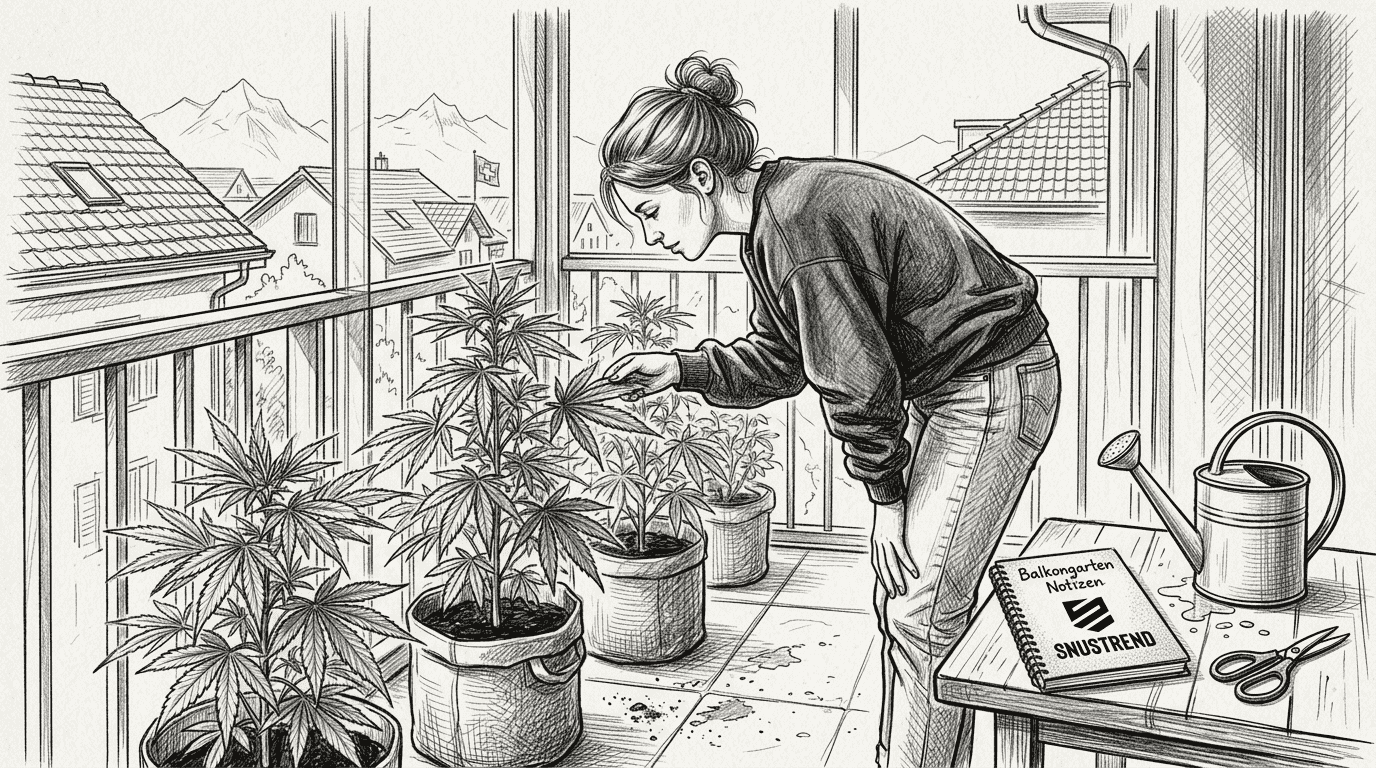
A central aspect is the maximum THC limit of approximately 25% to regulate particularly potent products. The CanPG Switzerland draft law also includes an incentive tax that makes lower-risk forms of consumption, such as low-dose products, cheaper. Advertising for cannabis products remains largely prohibited to minimize incentives for new consumers.
Youth protection is at the heart of the regulation. Outlets must rigorously enforce youth protection and age verification, similar to alcohol and tobacco. Prevention programs in schools are intended to educate about risks. Pregnant women, individuals with pre-existing mental health conditions, and young people are considered particularly vulnerable.
Key regulations at a glance:
- Legal possession of up to 10g and cultivation of 4 to 6 plants for adults
- Sale only through licensed, mandatory-counseling outlets
- THC limit of approximately 25% for risk minimization
- Advertising ban and incentive tax for health-conscious consumption
- Strict age control and prevention measures
| Aspect | Current Situation | Planned Regulation |
|---|---|---|
| Possession | Decriminalized up to 10g | Legal up to 10g for adults |
| Cultivation | Illegal | 4 to 6 plants allowed |
| Sale | Black market | Licensed specialty stores |
| THC content | Uncontrolled | Maximum 25% |
| Youth protection | Incomplete | Strict controls |
Pro tip: Keep yourself regularly informed about the legislative process, as political delays or adjustments are possible. Follow official sources from the Federal Office of Public Health for reliable updates.
Results and significance of the pilot projects since 2023
Since 2023, scientifically monitored pilot projects have been running in several Swiss cities, providing important data on controlled cannabis distribution. Over 10,000 registered participants in Zurich, Basel, Lausanne, and other cities receive legal access to quality-tested cannabis. These projects serve as a test laboratory for future regulation and provide empirical evidence for political decisions.
The pilot projects show no increase in consumption, positive health effects, and a shift away from the black market, as initial evaluations confirm. Participants report lower pressure to consume and better control over their habits. The mental health of many subjects has stabilized or improved, particularly among those who use cannabis for therapeutic reasons.
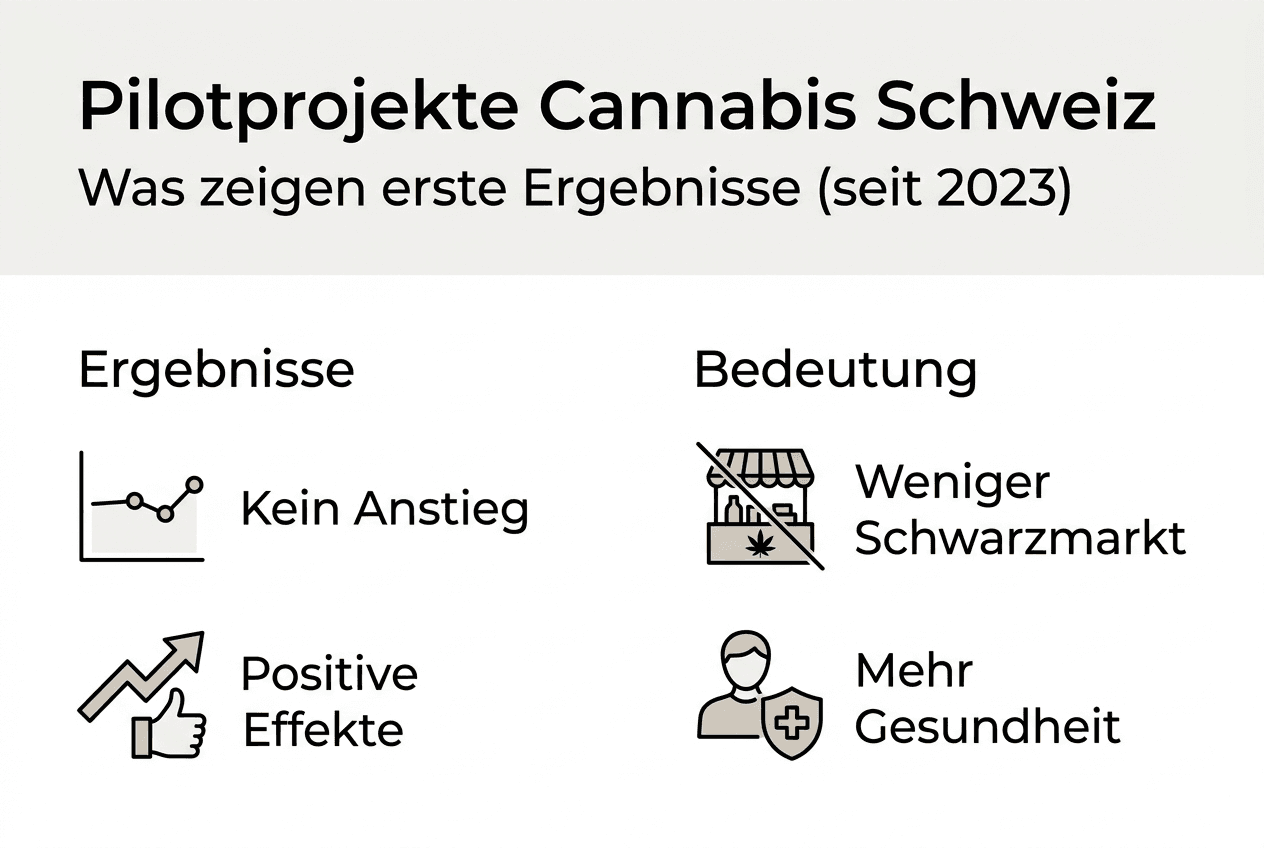
A central finding is the significant shift from the black market to regulated products. Participants appreciate the transparency regarding ingredients, THC and CBD levels, as well as the professional advice provided. Quality controls prevent contamination and unknown additives that are common on the illegal market. This information on consumption accessories helps users develop safe practices.
Scientific monitoring records consumption patterns, health changes, and social impacts. Researchers observe that problematic consumption does not increase when adults have legal access. On the contrary: many participants reduce their frequency of consumption or switch to less risky methods like vaporizers instead of joints.
| Indicator | Result | Significance |
|---|---|---|
| Consumption frequency | Stable or slightly declining | No increase due to legal access |
| Black market purchases | Decline by 70-80% | Successful market regulation |
| Health status | Improvement in 60% | Positive effects through quality |
| Satisfaction | 85% very satisfied | High acceptance of the model |
The pilot project results also show that counseling offers are well-received. Participants use the expertise of professional staff to make their consumption more conscious. This supports the assumption that education and regulation are more effective than prohibition.
Key findings:
- No increase in problematic consumption with legal access
- Significant shift from the black market to controlled products
- Positive effects on mental health and quality of life
- High satisfaction with quality and counseling offers
- Model suitable as a blueprint for national regulation
Pro tip: If you would like to participate in a pilot project, check with your local city administration about ongoing or planned programs. Participation is usually tied to residency and being of legal age.
Controversial views and expert assessments on legalization
The planned legalization is polarizing politics, science, and society. Supporters argue for easing the burden on the judiciary, improved consumer protection, and economic opportunities through a regulated market. Critics fear bureaucratic hurdles, risks for young people, and potential negative impacts on the mental health of vulnerable groups.
Pros: harm reduction and combating the black market; Cons: psychosis risks and youth protection concerns characterize the debate. Proponents point to experiences from Canada and several US states, where legalization did not lead to dramatic increases in consumption. Tax revenues there fund prevention and treatment programs.
Critics warn against downplaying the risks. They emphasize that high-potency cannabis products can increase the risk of psychosis and addiction, especially in young adults and individuals with a genetic predisposition. The long-term consequences of regular consumption on cognitive functions and motivation have not yet been fully researched. Youth protection must be the absolute priority.
Experts in medicine and addiction research advocate for an evidence-based middle ground. They recommend strict regulation with a focus on prevention, education, and low-threshold support services. Quality control and limiting THC content are seen as important measures for risk reduction. Legal discussions and criticism continue to accompany the process.
Political delays are likely. Elections, disagreements between parties, and federal complexity can influence the timeline. Some cantons could introduce stricter local regulations, which further complicates implementation.
Key perspectives:
- Supporters: Combating the black market, tax revenues, individual freedom, easing the burden on the judiciary
- Critics: Health risks, unclear long-term consequences, bureaucratic effort, possible normalization
- Experts: Evidence-based regulation, strong youth protection, continuous evaluation
- Politics: Search for compromise between liberalization and control
“Switzerland has the chance to learn from international experiences and create a model that balances health protection and personal freedom. Crucial is the consistent implementation of youth protection and prevention.” – Expert in addiction research
Expert opinions on legalization emphasize the need for long-term accompanying research. Only in this way can undesirable developments be identified and corrected early. A flexible regulatory framework that allows for adjustments is considered a prerequisite for success.
Practical recommendations for adult consumers in Switzerland
When the Cannabis Products Act comes into force, as an adult consumer, you should pay attention to several important points. Purchase exclusively from licensed outlets to ensure quality and legality. Black market products remain illegal and pose health risks due to a lack of controls.
Pay attention to the THC content and start with low-dose products, especially if you have little experience. Health benefits through quality control and counseling, and noting risks for vulnerable groups are central to safe consumption. High-potency products increase the risk of adverse effects such as anxiety, paranoia, or circulatory problems.
Choose lower-risk forms of consumption. Vaporizers are gentler on the lungs than joints because no combustion products are created. Edible products act with a delay but last longer, which makes overdosage more difficult. Inform yourself about safe consumption of vaporizers and correct dosage.
Step-by-step toward responsible consumption:
- Inform yourself thoroughly about effects, risks, and legal frameworks
- Choose licensed outlets and seek advice
- Start with low doses and increase slowly if necessary
- Prefer products with a balanced THC/CBD ratio
- Never consume before driving or at work
- Avoid mixing with alcohol or other substances
- Pay attention to your well-being and reduce intake if negative effects occur
Particularly important: Do not consume cannabis if you are pregnant, have cardiovascular diseases, or are under 18 years old. If you have pre-existing mental health conditions such as depression, anxiety disorders, or schizophrenia, you should seek medical advice. Cannabis can worsen existing symptoms.
After consumption, you are not fit to drive. THC impairs reaction time, coordination, and judgment for several hours. Plan for safe transportation alternatives. The legal consequences of driving under the influence are significant and can lead to the revocation of your driver's license.
Use the counseling services offered by sales outlets and consumer information on cannabis to deepen your knowledge. Reputable providers offer information materials and answer questions. The better informed you are, the safer you can make your consumption.
Pro-tip: Keep a consumption diary to identify patterns and reflect consciously on your usage. Note the dose, form of consumption, effect, and how you feel. This helps you find the right dosage for your needs and identify problematic developments early on.
Discover quality products and compliant vapes at Snustrend
Do you value quality, legality, and a wide product selection? As an established e-commerce platform, Snustrend offers you exactly that for vapes, snus, and snuff products in Switzerland. All items comply with current legal regulations and are delivered directly to you with fast shipping.

For adult consumers dealing with upcoming THC regulations, Snustrend offers legal alternatives and supplements. Discover high-quality vapes such as the OS Tobacco Bliss Vape or traditional snuff tobaccos like Pöschl’s Schmalzler Südfrucht and Pöschl’s Schmalzler D. The platform guarantees age verification and secure checkout, so you can shop with peace of mind. Benefit from regular special offers and a user-friendly website that makes it easy to keep track of the product variety and new arrivals.
Frequently asked questions about THC legalization in Switzerland
What is currently legal regarding THC in Switzerland?
Possession of up to 10g of cannabis containing THC is decriminalized and results in a 100 CHF fine, not a criminal record. Medical cannabis has been legally prescribable since 2022. CBD products with less than 1% THC can be sold freely. However, cultivation, sale, and trade remain illegal, maintaining a black market without quality controls.
When is the Cannabis Products Act expected to come into force?
The Cannabis Products Act is currently going through the parliamentary process. If handled expeditiously, it could come into effect in 2027 or 2028. Political delays due to elections, disagreements, or referendums are possible. Follow official announcements from the Federal Office of Public Health for the latest information on the schedule.
How do pilot projects protect against risks?
Pilot projects offer only adult, registered participants access to quality-tested cannabis with known THC and CBD content. Specialized staff provide advice on safe forms of consumption and dosage. Scientific monitoring tracks health developments. Participants with pre-existing mental health conditions or risk factors receive special support or are excluded to minimize harm.
What amounts are permitted for private possession?
Currently, possession of up to 10g is decriminalized. The planned Cannabis Products Act aims to fully legalize this possession for adults. Additionally, 4 to 6 plants are expected to be permitted for home cultivation. Larger amounts remain illegal and will be prosecuted to prevent trade and distribution.
What applies when driving under the influence of THC?
Driving under the influence of THC remains strictly prohibited and is penalized as driving under the influence of drugs. This can lead to license suspension, heavy fines, and criminal consequences. THC impairs reaction time and judgment for several hours after consumption. Always plan safe transport alternatives such as public transit or ride services.
Are there differences in implementation between cantons?
Yes, enforcement practices currently vary significantly between cantons. Some follow a more liberal approach, while others sanction more strictly. The new Cannabis Products Act aims to create a uniform regulation across Switzerland, although cantons may potentially issue additional local regulations, such as on the location of sales points or opening hours.
Recommendation
- Snus Legal Situation in Switzerland 2026: Legal Overview – Snustrend - Snus, Vapes & Snuff
- Ban on Disposable Vapes in Switzerland: Changes, Background, and International Comparisons – Snustrend - Snus, Vapes & Snuff
- Age Verification for Online Purchases of Tobacco Products in Switzerland – Snustrend - Snus, Vapes & Snuff
- Vape Beginner's Guide Switzerland 2026: Start Safely – Snustrend - Snus, Vapes & Snuff






Share:
Significance of nicotine content: effects and risks 2026
Elf Bar NX7000: Everything for Swiss vapers 2026