


In short:
- Nicotine causes permanent damage to the adolescent brain by disrupting its developmental process.
- Modern nicotine products like e-cigarettes and nicotine pouches are often viewed as harmless, but they are highly addictive.
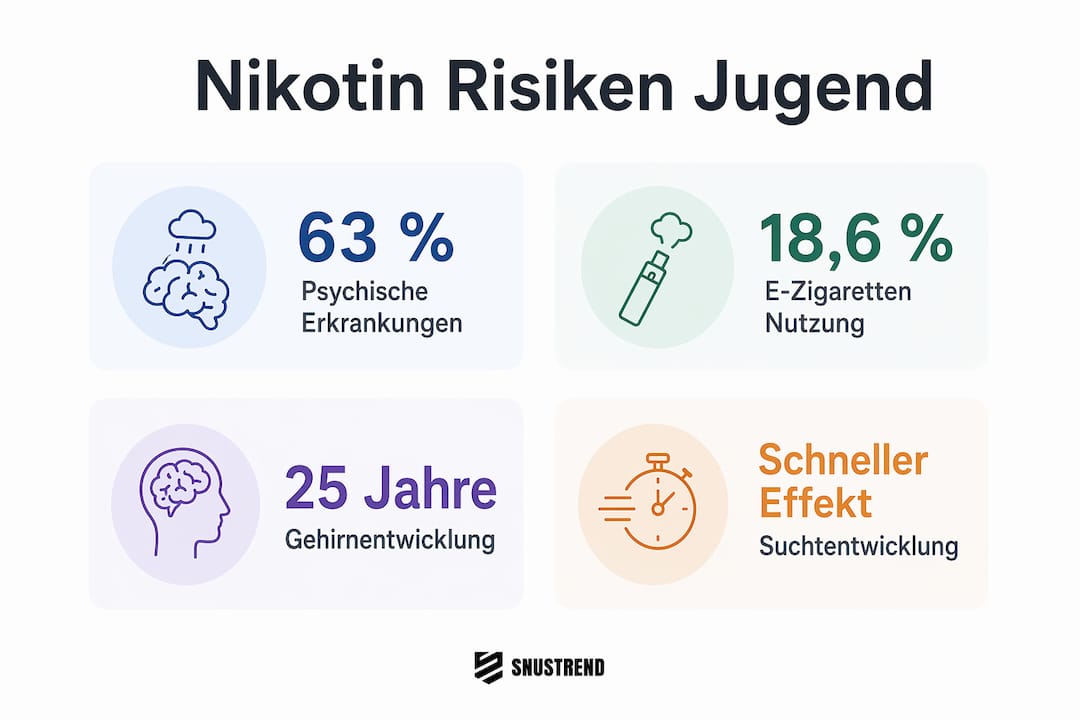
Nicotine is a highly addictive neurotoxin that causes lasting damage to the adolescent brain. What nicotine does to teenagers differs fundamentally from its effects on adults, as the brain is still developing until about the age of 25. It is precisely during this phase that nicotine interferes with critical developmental processes. The proportion of adolescents aged 12 to 17 who smoke has risen from 6.1% in 2021 to 9.6% in 2026, marking the first significant increase in 25 years. For parents, this means: the issue is more urgent than ever before.
How does nicotine impair the physical and neurological development of adolescents?
Nicotine directly interferes with the brain's reward system. It binds to so-called acetylcholine receptors and triggers a strong release of dopamine. Dopamine is the neurotransmitter that signals pleasure and reward. In teenagers, this happens faster and more intensely than in adults because the brain is still malleable.
A single puff on an e-cigarette can trigger an intense neurochemical reaction that significantly accelerates the development of addiction. In doing so, the brain learns: nicotine equals reward. This learning effect is deeply ingrained and difficult to reverse.
The physical consequences are just as tangible:
- Cardiovascular strain: Nicotine increases blood pressure and narrows blood vessels. This forces a teenager's heart to work harder on a permanent basis.
- Lung development: The lungs continue to grow into early adulthood. Nicotine and the toxic substances in smoke measurably hinder this growth.
- Brain areas for impulse control: The prefrontal cortex, responsible for decision-making and self-control, is the last area to mature. Nicotine disrupts this very area, making adolescents more prone to impulsive actions.
- General organ development: The liver, kidneys, and immune system are still maturing in teenagers. Nicotine places additional stress on these systems.
Pro Tip: When talking to your child, don't just focus on lungs and cancer. The message "nicotine permanently changes your brain" often hits teenagers harder because it concerns their identity and self-determination.
Snustrend explains more about the physical risks for adolescents in a separate article.
What are the psychological consequences of nicotine consumption in adolescence?
Nicotine and mental health issues are closely linked. Up to 63% of patients in youth psychiatry consume nicotine, compared to about 38% in the general population with mental health disorders. This is no coincidence. Nicotine alters the brain's mood regulation, which exacerbates existing mental health problems and promotes new ones.
Many teenagers turn to cigarettes or vapes because they believe it helps them relieve stress. Experts warn that this perceived stress reduction is a trap, because the adolescent brain is particularly susceptible to addiction reprogramming. What feels like relaxation is actually the short-term relief of withdrawal symptoms.
The development of addiction follows a clear pattern:
- Initial consumption: The brain registers the dopamine release as pleasant.
- Repetition: The body gets used to the nicotine level and demands more.
- Withdrawal symptoms: Without nicotine, irritability, concentration problems, and sleep disturbances occur.
- Relapse: The pressure to end withdrawal symptoms is stronger in teenagers than in adults because the brain does not yet have mature control mechanisms.
The speed is particularly insidious. Absorption through the oral mucosa with nicotine pouches occurs even faster than through inhalation. As a result, the addiction potential for modern products like pouches is particularly high.
Pro Tip: If your child says they only smoke to relax, ask specific questions: How does it feel when they don't have access to it for a while? Irritability and restlessness after just a few hours are clear signs of the onset of dependence.
Snustrend describes in detail how nicotine addiction develops and what lies behind it in a separate article.
How do e-cigarettes and nicotine pouches affect adolescents?
Many teenagers consider modern nicotine products to be harmless. This is a dangerous misconception. E-cigarettes strain the cardiovascular system, narrow blood vessels, and contain carcinogenic flavorings that are particularly dangerous for young people. Prof. Dr. Hendrik Streeck expressly warns against downplaying e-cigarettes as lifestyle products.
18.6% of adolescents between 12 and 17 years old have already tried e-cigarettes. This shows how widespread these products have become in this age group.
A key reason for this is marketing. Flavoring and colorful designs lower the threshold and make it easier to get started. Dr. Marion Charlotte Renneberg emphasizes that flavors like bubblegum or cola are not just promotional tools, but can also contain potentially carcinogenic substances.
| Product Type | Nicotine Absorption | Visibility to Parents | Special Risk |
|---|---|---|---|
| Cigarette | Via lungs, medium speed | Smoke, smell | Tar, carbon monoxide |
| E-cigarette (Vape) | Via lungs, fast | Vapor, smell possible | Flavorings, heavy metals |
| Nicotine pouch | Via oral mucosa, very fast | Hardly visible | High addiction potential, no smoke |
| Snuff tobacco | Via nasal mucosa | Hardly visible | Carcinogenic substances |
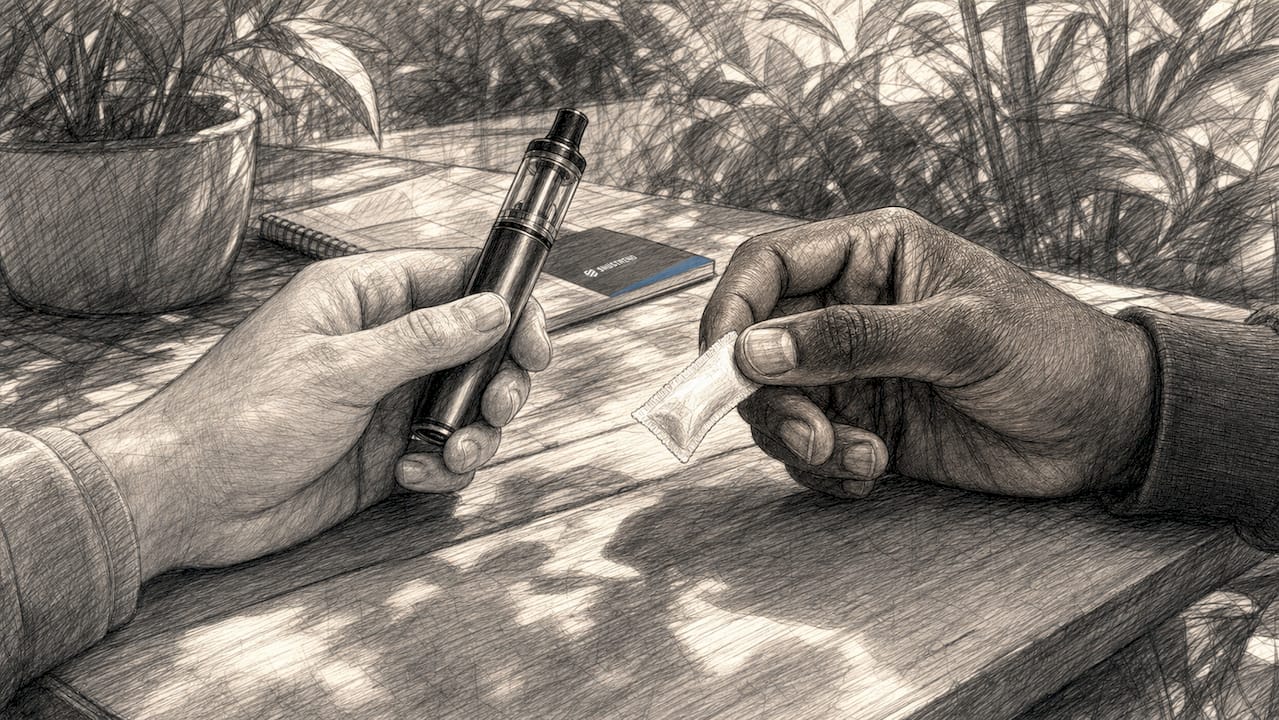
Nicotine pouches are particularly difficult for parents to detect. They leave no smell, produce no smoke, and fit into any pocket. Snustrend explains all the facts about nicotine pouches in a separate article.
- No smoke does not mean no risk. Pouches and vapes bypass classic warning signals.
- High nicotine concentrations in some products significantly exceed the amount found in a regular cigarette.
- Online availability makes age restrictions harder to enforce. Many teenagers order nicotine products online without direct age verification.
What measures help parents protect adolescents?
Prevention begins with conversations, not bans. Teenagers who can talk openly with their parents about nicotine are less likely to try cigarettes or vapes for the first time. This does not mean downplaying the subject. It means taking it seriously and addressing it explicitly.
- Educate early: Parents should address the topic of nicotine from the age of 10, before social pressure in school begins.
- Know the risk factors: Adolescents with pre-existing mental health conditions, stress at school, or an environment with peers who smoke are more at risk.
- Recognize the signs: Unexplained irritability, frequent breaks outdoors, the smell of vapor, or the hiding of items can be indicators.
- Do not stigmatize: Those who shame their child lose the thread of communication. A calm, factual conversation is more effective than accusations.
- Involve specialists: Child and adolescent psychiatrists, addiction counseling centers, and general practitioners know proven paths out of dependency.
Nicotine replacement therapies are often the only way to avoid relapses for adolescents with an existing dependence. Many parents reject these therapies because they replace nicotine with nicotine. Medically, however, this is the safer path, as controlled withdrawal under medical supervision is significantly more effective than going "cold turkey" alone.
Pro Tip: Don't ask "Do you smoke?", but rather "What do you know about vapes and pouches?" Open questions invite conversation; closed questions invite lying.
Key takeaways
Nicotine permanently damages the adolescent brain, accelerates the development of addiction, and increases the risk of mental health disorders, especially due to modern products like e-cigarettes and nicotine pouches.
| Topic | Details |
|---|---|
| Brain development and nicotine | Nicotine disrupts the prefrontal cortex and permanently alters the reward system. |
| Addiction development in teens | Even a few experiences with consumption are enough to trigger physical dependence. |
| Modern products underestimated | E-cigarettes and pouches are not harmless; they contain carcinogenic substances and have high addiction potential. |
| Psychological consequences | Up to 63% of youth psychiatric patients use nicotine, indicating a strong correlation. |
| Prevention through conversation | Open communication and early education are more effective than bans alone. |
What I have learned after years of dealing with this topic
I have been observing how parents react to the topic of nicotine among adolescents for years. The most common reaction is shock, followed by bans. Both are understandable. But both are not enough.
What really concerns me: many parents still know cigarettes as the main problem. Pouches and vapes are uncharted territory for them. And that is exactly what manufacturers exploit. Colorful packaging, fruit flavors, no smoke, no smell. This is no coincidence; it is calculation. Colorful designs and flavors specifically mask the bitter nicotine taste and reduce the body's natural warning response. Teenagers don't even realize they are already addicted.
What I believe is more effective than any ban: parents who are informed themselves. Someone who knows what a nicotine pouch looks like, who knows the difference between a vape and a regular e-cigarette, can conduct a conversation as equals. And teenagers are more likely to talk to someone who knows the topic than to someone who demonizes it.
My honest advice: stop treating nicotine as a purely moral problem. It is a neurobiological problem. And that can be explained without scaring or shaming.
— Lukas
Snustrend informs: Choose nicotine products for adults responsibly
Snustrend is aimed exclusively at adult consumers and values transparent product information. Adults looking for tested alternatives to traditional tobacco products will find a wide selection at Snustrend with clear information on ingredients and nicotine content.

For parents who want to understand what products are on the market and how they work, Snustrend offers well-founded information. Traditional products like Pöschl Schmalzler Südfrucht snuff are listed alongside modern alternatives. All products are exclusively for adults of legal age. Youth protection is Snustrend's top priority.
FAQ
At what age is nicotine most damaging to the brain?
The brain is developing until about the age of 25. Nicotine is harmful during this entire phase, but especially during adolescence between 12 and 17, when the maturation of the prefrontal cortex is in full swing.
Are nicotine pouches less harmful than cigarettes for teenagers?
No. Nicotine pouches do not contain combustion products, but the addiction potential is particularly high due to rapid absorption through the oral mucosa. For teenagers, they are at least as dangerous as traditional cigarettes.
How do I recognize if my child is dependent on nicotine?
Irritability, concentration problems, and restlessness after a few hours without nicotine are clear signs. Frequent short breaks outdoors or the hiding of small objects can also be indicators.
What should I do if my child is already dependent?
Seek a conversation without accusations and contact a pediatrician or an addiction counseling center. Nicotine replacement products are considered important support for dependent adolescents to ease withdrawal and avoid relapses.
Why is nicotine consumption among adolescents rising again?
The increase is directly related to e-cigarettes and nicotine pouches. These products are considered modern and harmless, are easily available, and are particularly attractive to young people due to their flavors.
Recommendation
- Nicotine consumption among adolescents: Risks clearly explained – Snustrend - Snus, Vapes & Snuff
- Nicotine replacement trends in Switzerland: What's important in 2026 – Snustrend - Snus, Vapes & Snuff
- Nicotine addiction: How it develops and what's behind it – Snustrend - Snus, Vapes & Snuff
- Importance of nicotine content: Effects and risks in 2026 – Snustrend - Snus, Vapes & Snuff






Share:
Top 5 vapestub.ch alternatives 2026
Finding Elfbar deals: A guide for Switzerland 2026