


In short:
- The Swiss vape community is an active network of vapers that shares knowledge and experience. It significantly influences trends such as reusable devices and nicotine-free e-liquids. Legal requirements for imports require careful attention to avoid problems.
The Swiss vape community is an active network of vapers that bundles knowledge, experience sharing, and local nuances regarding vaping. According to the Federal Office of Public Health, around 14 percent of adults in Switzerland vape occasionally or regularly. This shows that vaping is no longer a fringe phenomenon. As a vaper in Switzerland, you benefit from networking with others because the community explains new products, legal frameworks, and import rules that you won't find in any package insert. Platforms like Snustrend and authorities like the FOPH shape the flow of information.
Which platforms shape the Swiss vape community?
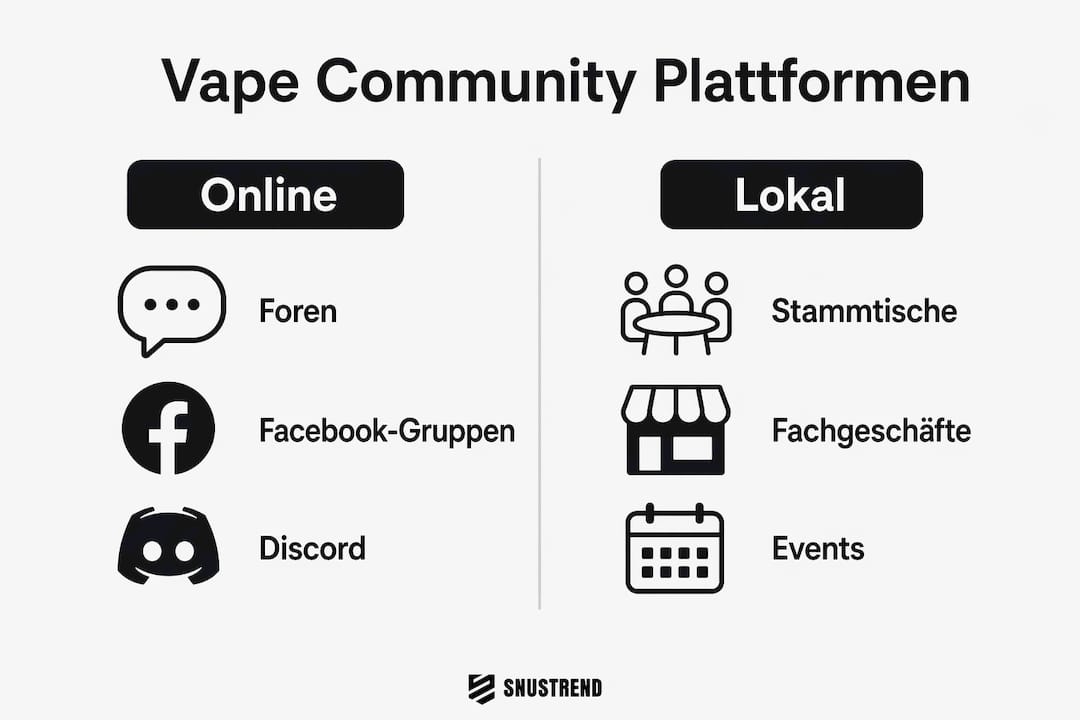
Online forums and local groups are the backbone of the Swiss vape community. Today, exchange takes place on several levels: in specialized forums, on social networks, and via the blogs of Swiss online shops. Each platform has its own character and strengths.
Swiss vaping forums differ from international communities primarily in their focus on local laws, Swiss sources of supply, and experience sharing regarding products that are legally available in this country. Anyone asking in a German forum often gets answers that simply do not apply to Switzerland. That is a real difference.
The most important hubs at a glance:
- Swiss Vaping Forums: Specialized forums with sub-forums on devices, e-liquids, legal matters, and DIY. Here, experienced vapers discuss concrete product experiences.
- Facebook Groups: Regional groups for cantons or cities where meetings are organized and products are exchanged.
- Reddit (r/vaping_ch): English-speaking, but with strong Swiss participation. Good for quick questions and the latest news.
- Online Shop Blogs: Swiss online shops offer buying guides, product reviews, and community features such as comment sections and user ratings.
- Local Vape Shops: Physical stores in Zurich, Bern, or Basel act as informal meeting points where vapers can test devices and ask questions.
The advantage of local networking is obvious. Anyone who knows which products pass through Swiss customs without issues and which e-liquids are currently trending saves time and money. Added to this are organized events like "vape meets," where new devices are presented and experiences are shared directly.
Pro Tip: Join a Swiss Facebook group for your region and ask your first question there. The answers are often more concrete and up-to-date than any blog article.
How do Swiss regulations affect vape imports?
Vape imports into Switzerland follow clear rules that many vapers underestimate. Anyone ordering products from abroad must know both customs and tax regulations, otherwise, they risk confiscations or unexpected additional payments.
The most important legal framework conditions:
- Nicotine Limit: Switzerland has adapted its nicotine limits from 2024 to the EU standard of a maximum of 20 mg/ml. Products with higher concentrations are held at the border.
- Import Exemption Limit: Shipments worth more than around CHF 65 are subject to import VAT of 8.1% or 2.6% plus customs duties. Anyone who regularly orders from the EU quickly exceeds this limit.
- Youth Protection: The sale of vaping products to persons under 18 is prohibited. The same principle applies to imports.
- Product Labeling: Despite the alignment on nicotine limits, there are differences in packaging sizes and labeling requirements between Switzerland and the EU. A product legally sold in Germany does not automatically comply with regulations in Switzerland.
- Tobacco Products Act (TabPG): The Swiss Tobacco Products Act regulates the advertising, sale, and labeling of e-cigarettes. Violations can lead to fines.
Important: Legal experts emphasize personal responsibility when importing. Anyone who imports products without labeling or with excessive nicotine concentration bears the risk themselves.
For retailers and consumers who import regularly, it is worth knowing about effective customs clearance solutions. Professional customs processing reduces delays and prevents packages from disappearing in customs warehouses. The easiest way, however, remains: order directly from a Swiss provider that has already handled the customs clearance.
Which vape trends dominate the Swiss vaping scene in 2026?
The Swiss vape scene is developing rapidly. Two trends are particularly strong in 2026: sustainability and the demand for high-quality nicotine-free e-liquids.
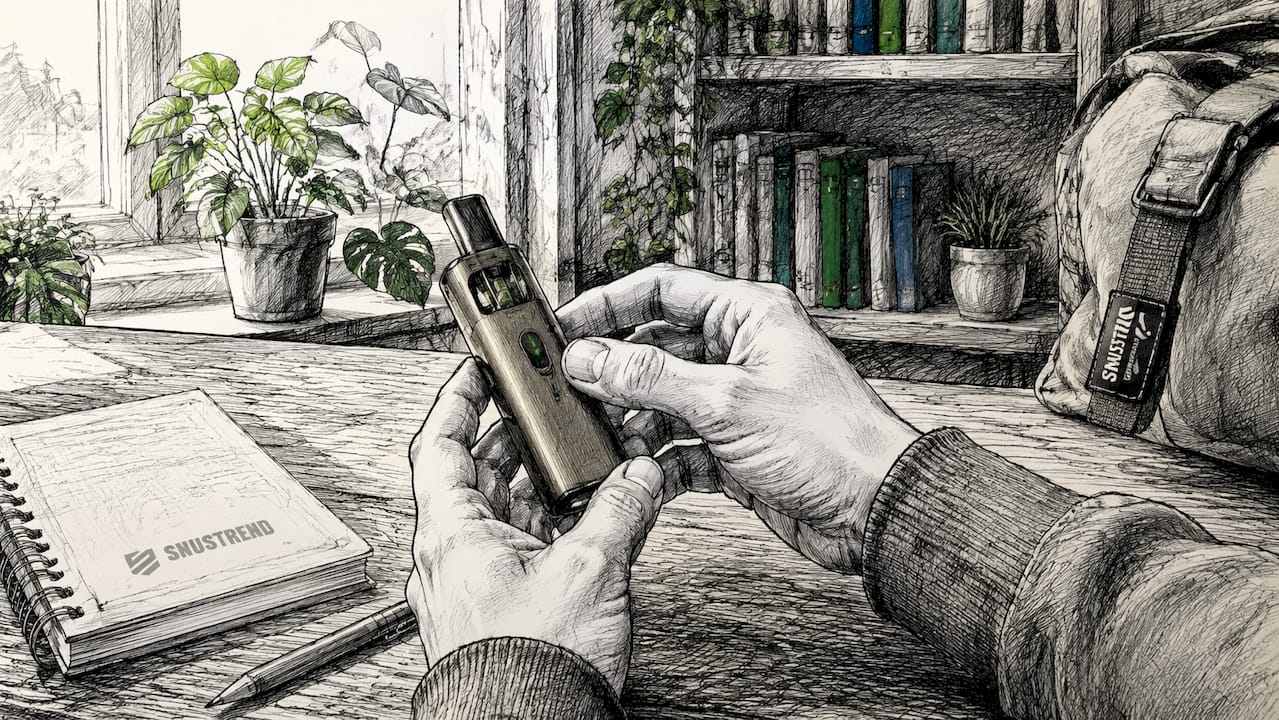
New tax regulations in Switzerland are actively promoting reusable systems and sustainable vape products. Specifically, this means that disposable devices are disadvantaged in terms of taxation, while rechargeable pod systems and devices with replaceable pods are becoming more attractive. The Swiss vape community is actively promoting this shift by preferring reusable vapes and recommending corresponding products in forums.
| Trend | Description | Relevance for vapers |
|---|---|---|
| Reusable systems | Rechargeable devices with pods | Cheaper in the long run, tax-advantaged |
| Nicotine-free liquids | High-quality flavors without nicotine | Strong growth among casual vapers |
| Pod systems | Compact, simple devices | Ideal for beginners and on the go |
| Sustainable packaging | Recyclable materials | Increasingly a purchase criterion in the community |
| Mesh coil technology | More uniform vapor profile | Standard for high-end devices |
The community plays an active role in these trends. Product reviews in forums and on online shops influence which devices catch on. Those who want to know which vape trends for 2026 really count in Switzerland will find more honest answers in the community than in manufacturer brochures.
Pro Tip: When buying a reusable system, check the availability of replacement pods in Switzerland. A cheap device is of little use if the pods can only be ordered from abroad and get stuck in customs.
How do vapers benefit from the community in everyday life?
The practical benefit of the Swiss vape community is most evident in everyday life. Anyone starting out with vaping is faced with a flood of devices, liquids, and terms. The community significantly shortens this learning curve.
Concrete benefits at a glance:
- Beginner help: Experienced vapers explain the difference between pod systems, box mods, and disposable devices to beginners. If you ask directly, you get honest recommendations instead of sales pitches.
- Switching from smoking: The community offers specific tips for smokers who want to switch to vaping, including recommendations on the right nicotine strength and device choice.
- Legal guidance: Questions about Swiss regulations are often answered faster in forums than by official bodies. Experienced members know the current regulations and share them.
- Product recommendations: Instead of buying blindly, vapers read experience reports on specific devices and liquids. This saves money and frustration.
- Regional meetings: Vape meets in Zurich, Basel, or Geneva offer the opportunity to try out devices before you buy. Such events almost exclusively arise through community channels.
- Technical help: Anyone having problems with their device often finds a solution faster in the community than from the manufacturer. Coil problems, leaks, or battery questions are discussed there daily.
The exchange works both ways. Anyone who shares their own experiences strengthens the community and receives support in return when they need it. This isn't automatic; it is the result of active participation.
Key takeaways
The Swiss vape community is the most effective tool for vapers who want to remain legally compliant, informed, and up to date.
| Topic | Details |
|---|---|
| Vaping prevalence | Around 14% of Swiss adults vape, creating an active community base. |
| Import rules | Shipments over CHF 65 trigger customs and tax, so purchasing from Swiss providers is worthwhile. |
| Nicotine limit | Since 2024, the EU limit of a maximum of 20 mg/ml nicotine applies in Switzerland. |
| Reusable system trend | Tax incentives and community preference are shifting the market away from disposables. |
| Active participation | Forums, local groups, and events provide more up-to-date information than manufacturer sites. |
My assessment of the Swiss vape community
What really surprised me about the Swiss vape community: It is significantly more pragmatic than communities in other countries. While people elsewhere talk a lot about technology and vapor clouds, the Swiss exchange often revolves around very concrete questions. Which product clears customs? Which shop delivers reliably? What does the TabPG say about this?
There is a good reason for this. Switzerland has its own rules that differ from the EU, even if the nicotine limits have now been aligned. Anyone who ignores that pays the price. Literally.
What also bothers me, however, is that many vapers only participate passively. They read, ask, accept recommendations, but never share their own experiences. A community thrives on give and take. If you have tested a device, you should share your experience, even if it is negative. Critical reviews are often more valuable to other vapers than hymns of praise.
My appeal: Participate actively. Ask questions, but also answer some. The community will become stronger because of it, and in the long run, you will get back more than you give.
— Lukas
Snustrend: Products and information for Swiss vapers
Snustrend is a Swiss platform that offers vapes, snus, and snuff products with fast shipping and clear product information. The range includes brands like Elfbar and Vozol as well as a wide selection of flavors for beginners and experienced vapers. The blog regularly provides up-to-date buying advice and explains trends and regulations in an understandable way.

Anyone looking for tested vape products that comply with Swiss regulations will find a direct point of contact at Snustrend without any customs surprises. In addition to vapes, there is also snuff tobacco for those who want to expand their range. All products are clearly described, prices are transparently displayed, and shipping within Switzerland is uncomplicated.
FAQ
What is the Swiss vape community?
The Swiss vape community is a network of vapers who exchange information online and offline about products, trends, and regulations regarding vaping in Switzerland. It includes forums, social media groups, and local meetings.
How many adults in Switzerland vape?
According to the Federal Office of Public Health, around 14% of adults in Switzerland vape occasionally or regularly (as of 2024).
Which nicotine limit applies to vape imports to Switzerland?
Since 2024, the EU limit of a maximum of 20 mg/ml nicotine in e-liquids has applied in Switzerland. Products with higher concentrations are held at the border.
When do customs duties apply to imports?
Shipments worth more than around CHF 65 are subject to import VAT of 8.1% or 2.6% plus customs duties. Buying directly from a Swiss provider avoids these costs.
Why are reusable systems trending in Switzerland?
New Swiss tax regulations favor reusable systems over disposable devices. Additionally, there is a growing demand for sustainable products within the Swiss vape community.
Recommendation
- The most important vape trends: What counts in Switzerland in 2026 – Snustrend - Snus, Vapes & Snuff
- Vape Buying Guide 2026: The Swiss Guide – Snustrend - Snus, Vapes & Snuff
- List of popular vape devices: Swiss Buying Guide 2026 – Snustrend - Snus, Vapes & Snuff
- Vaping gadgets overview: The Swiss comparison 2026 – Snustrend - Snus, Vapes & Snuff






Share:
Flavoured vapes in Switzerland: What is permitted in 2026
Nicotine addiction: how it develops and what lies behind it