


In short:
- Non-combustion nicotine products such as pouches, vapes, and tobacco heaters significantly reduce harmful substances compared to smoking. They offer adults a less harmful alternative, but are still associated with risks. In Switzerland, these products are legally available as long as they meet legal requirements.
Smokeless nicotine consumption refers to the enjoyment of nicotine via products that do not require combustion or smoke, including nicotine pouches, e-cigarettes, and tobacco heaters. This product category is becoming increasingly popular in Switzerland because adults are looking for an alternative to classic smoking without giving up nicotine. The crucial difference lies in the lack of combustion. No tobacco burns, no tar is produced, and no smoke burdens the lungs. The main argument for smoke-free nicotine alternatives is the significantly reduced exposure to harmful substances compared to cigarettes.
What types of smoke-free nicotine consumption are there?
Smoke-free nicotine consumption, also known in technical jargon as Tobacco Harm Reduction, currently includes three clearly distinguishable product groups. Each works differently, and each has its own target group.
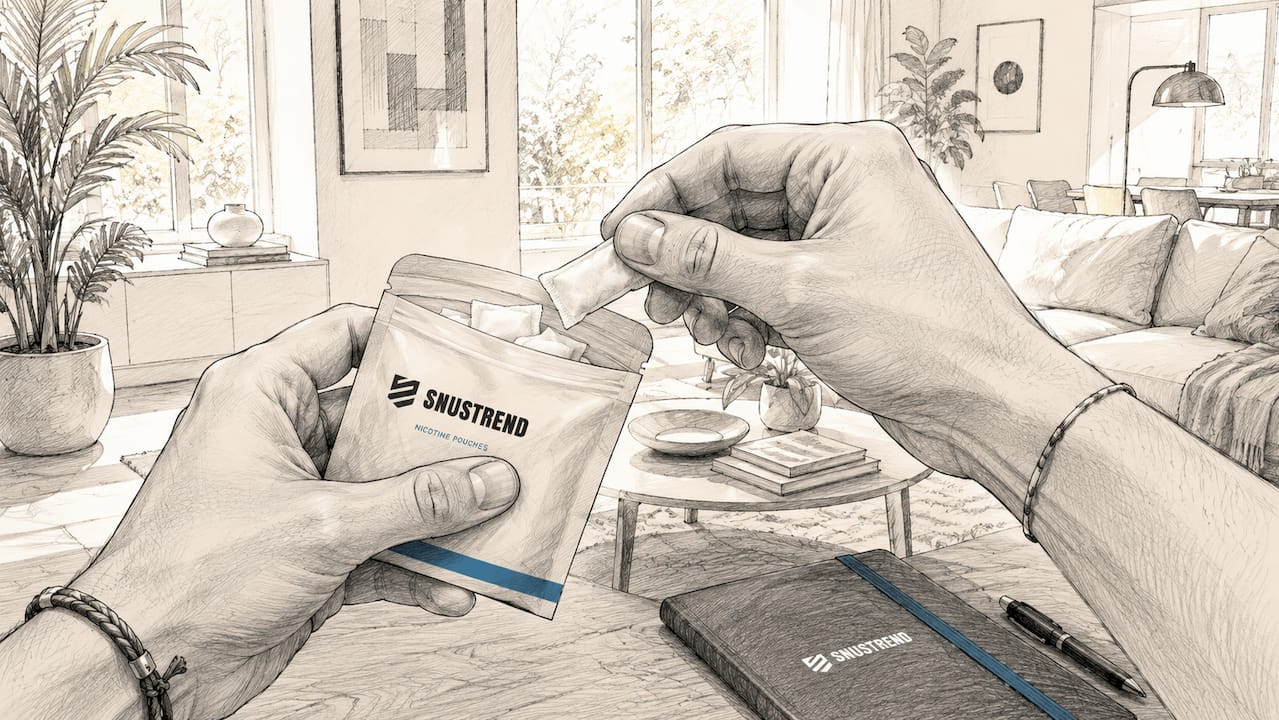
Nicotine pouches: Nicotine via the oral mucosa
Nicotine pouches are small, tobacco-free portion pouches that are placed under the upper lip. The nicotine is slowly absorbed through the oral mucosa without smoking or vaping. Because the absorption is more moderate than with smoking, the addictive potential is considered somewhat lower. Nevertheless, oral side effects such as gum recession can occur. Brands like Velo or Siberia offer nicotine pouches in various strengths and flavors.
E-cigarettes: Vapor instead of smoke
E-cigarettes, also called vapes, heat a nicotine-containing liquid until it evaporates. Vapor is produced, not smoke. Many liquids contain nicotine salts, which allow for faster and more pleasant nicotine absorption than classic freebase nicotine. Products like Elfbar or Vozol are among the best-selling disposable vapes in Switzerland. Smoke-free vaping is thus the most widespread form of nicotine consumption without combustion.
Tobacco heaters: Heating instead of burning
Tobacco heaters like IQOS heat real tobacco to around 350 °C instead of 900 °C, as is the case with normal smoking. As a result, the tobacco does not burn completely. An aerosol is produced instead of smoke, which significantly reduces the formation of tar and carbon monoxide. Tobacco heaters are not free of harmful substances, but the pollutant profile is significantly more favorable compared to classic cigarettes.
Overview of the three product groups:
- Nicotine pouches: Tobacco-free, used orally, discreet, no vapor, no odor
- E-cigarettes (vapes): Liquid-based, vapor instead of smoke, many flavors, disposable or rechargeable
- Tobacco heaters: Real tobacco but no combustion, aerosol instead of smoke, for smokers who prefer tobacco
How high are the health risks compared to smoking?
Smoke-free nicotine products are not risk-free. But the difference compared to smoking is significant.
Active smokers who switch to nicotine pouches can reduce their toxic load from dangerous chemicals by 42–96%. This is a range that comes close to quitting smoking entirely. Furthermore, nicotine pouches contain hardly any carcinogenic nitrosamines, which occur in significantly higher concentrations in cigarettes and classic snus. They are therefore considered to be at the lower end of the toxicity risk continuum.
Nicotine itself remains an addictive substance with cardiovascular effects. As little as 8 mg of nicotine leads to a measurable increase in heart rate; with high-dose nicotine pouches, the heart rate can rise by up to 25 beats per minute. This is relevant for people with heart conditions. Many consumers underestimate this side effect because the product does not produce smoke.
| Criterion | Cigarette | Nicotine pouch | E-cigarette | Tobacco heater |
|---|---|---|---|---|
| Combustion | Yes | No | No | No |
| Tar | Yes | No | No | Very low |
| Carcinogens | High | Very low | Low | Reduced |
| Heart rate effect | Yes | Yes | Yes | Yes |
| Long-term studies | Available | Missing | Limited | Limited |
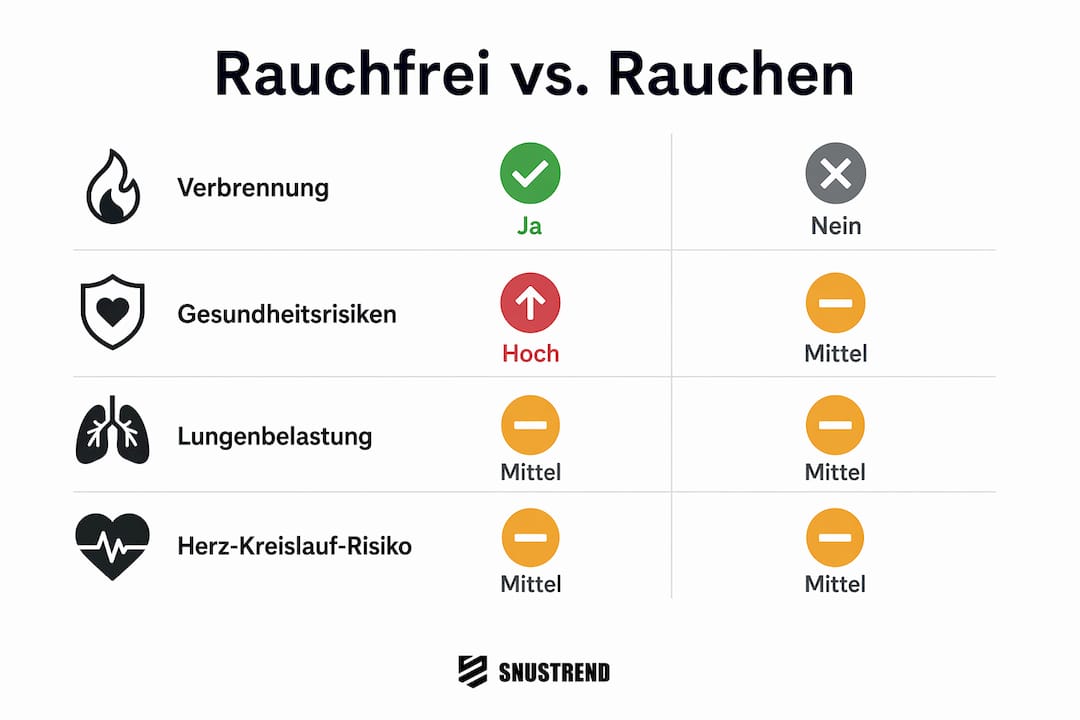
Long-term studies on nicotine pouches are still largely missing. The risk of oral mucosal irritation and gum problems during long-term use is documented, but significantly lower than the lung burden caused by smoking. For adults who cannot give up nicotine entirely, smoke-free alternatives offer significant potential for harm reduction. In this context, smoke-free nicotine products act similarly to seatbelts in a car: they do not eliminate the risk, but they drastically reduce it.
Pro tip: Those switching from cigarettes to nicotine pouches or vapes should start with a low nicotine strength and adjust the dosage gradually, rather than choosing the strongest products right away.
What should you look out for when buying and using them?
The product selection determines safety and effectiveness. Those who buy uncontrolled products risk more than necessary.
Estimate nicotine content correctly
According to the BfR, nicotine pouches can contain up to 47.5 mg of nicotine per pouch, with the average being around 9.48 mg. This range is enormous. A beginner who accidentally chooses a high-dose product will experience dizziness, nausea, and a sharp increase in heart rate. The overview of nicotine content helps in finding the right strength.
Step-by-step to the correct use:
- Choose nicotine strength: For beginners, products with 4–6 mg of nicotine per pouch are suitable. Experienced consumers can choose higher strengths but should not exceed 20 mg.
- Place nicotine pouch correctly: Slide the pouch under the upper lip, do not chew. The effect starts after 5–10 minutes and lasts for 20–45 minutes.
- Use vapes with MTL technique: When vaping, the so-called MTL (Mouth-to-Lung) draw is recommended. The vapor is drawn into the mouth first, then into the lungs. This mimics the smoking sensation and produces less visible vapor.
- Buy tested products: Only buy products from verified retailers. Untested nicotine pouches from the black market contain uncontrolled ingredients and unclear nicotine levels.
- Limit usage time: Do not leave nicotine pouches in the mouth for longer than 60 minutes. Longer use increases the risk of oral mucosal irritation.
When vaping, the following applies: an overly strong draw increases consumption and creates visible clouds of vapor, which impairs discretion. Controlled draw technique with MTL devices is clearly superior to the uncontrolled lung-draw method, especially for beginners.
Pro tip: Nicotine salt liquids with 10–20 mg/ml offer a more pleasant nicotine absorption than highly concentrated freebase liquids and produce less vapor, which improves discretion.
What is the legal status of smoke-free nicotine products in Switzerland?
The legal situation in Switzerland differs from the EU and is relevant for consumers.
Important legal points at a glance:
- Nicotine pouches: In Switzerland, the possession and consumption of nicotine pouches is permitted for adults. Sales are subject to the Tobacco Products Act (TabPG), which has also covered nicotine-containing products without tobacco since 2024.
- E-cigarettes: Nicotine-containing liquids may be sold in Switzerland, but are subject to labeling requirements and age restrictions. Sales to persons under 18 years are prohibited.
- Tobacco heaters: These are considered tobacco products and are regulated accordingly. Sales and possession are legal for adults.
- Black market products: Products without Swiss approval or labeling are legally problematic and pose health risks. Swiss consumers should rely on verified suppliers.
- Age restriction: All nicotine-containing products in Switzerland may only be sold to persons 18 years and older.
Swiss regulation is stricter than in some EU countries, but more pragmatic than in Germany, where the sale of nicotine pouches remained in a gray area for a long time. Pragmatic regulation and clear risk communication are crucial for smoke-free products to make their contribution to harm reduction. Those buying in Switzerland should order exclusively from retailers who comply with Swiss law and offer products with complete labeling.
Key findings
Smoke-free nicotine consumption significantly reduces the harmful substance burden compared to smoking, but it does not replace medical advice and remains associated with nicotine-related risks.
| Topic | Details |
|---|---|
| Harm reduction | Switching to nicotine pouches lowers toxic burden by 42–96% compared to cigarettes. |
| Note nicotine content | Nicotine pouches vary greatly: average 9.48 mg, maximum 47.5 mg per pouch. |
| Heart rate effect | Nicotine measurably increases heart rate, by up to 25 beats per minute at high dosages. |
| Product quality | Only buy tested products from verified retailers, avoid black market goods. |
| Legal status in Switzerland | Nicotine pouches, vapes, and tobacco heaters are legally available for adults 18+. |
My assessment after years with smoke-free nicotine products
I have tried and compared nicotine pouches, vapes, and tobacco heaters over several years. What surprised me the most: most consumers do not switch because of health, but because of discretion. No odor, no smoke, no ashtray. Only later do many realize that they also feel better physically.
But what I also learned: those who simply buy the strongest nicotine pouches because they are “smoke-free” are making a mistake. The heart rate effects at 20 mg or more are real and uncomfortable. I advise everyone to start with low strengths and feel their way forward slowly.
The biggest misconception in the public discussion is equating “smoke-free” with “harmless.” Smoke-free means: significantly fewer harmful substances. It does not mean: no risk. Those who understand this make better decisions. And those who want to delve deeper into nicotine pouches and their risks will find honest information there without sugarcoating.
My personal conclusion: For adults who do not want to or cannot quit, smoke-free alternatives are a sensible choice. But be informed, not blind.
— Lukas
Smoke-free nicotine products at Snustrend
Snustrend carries a wide range of tested nicotine products for the Swiss market, from nicotine pouches of well-known brands to disposable vapes from Elfbar and Vozol. All products are listed with complete labeling and clear nicotine information so that consumers can make informed choices.

Those looking for a fruity entry into smoke-free nicotine consumption will find a tested product with clear dosage in Pöschl Schmalzler Südfrucht. Snustrend delivers quickly to Switzerland and regularly offers special deals on the entire assortment. For a complete overview of all smoke-free alternatives, it is worth taking a look at Nicotine pouches at Snustrend.
FAQ
What exactly is smoke-free nicotine consumption?
Smoke-free nicotine consumption refers to the intake of nicotine via products that work without combustion, including nicotine pouches, e-cigarettes, and tobacco heaters. No smoke is produced, only vapor or aerosol, which significantly lowers the burden of harmful substances.
Are nicotine pouches legal in Switzerland?
Yes. Nicotine pouches are legally available in Switzerland for adults 18 and older and have been subject to the Tobacco Products Act since 2024. Buying from verified retailers is recommended to avoid black market products.
How much nicotine is in a nicotine pouch?
According to the BfR, the average nicotine content is about 9.48 mg per pouch; the maximum value can be up to 47.5 mg. Beginners should choose products with 4–6 mg.
Is vaping really less harmful than smoking?
E-cigarettes do not produce tar and do not burn tobacco, which significantly reduces the burden of harmful substances compared to cigarettes. Long-term studies are still missing, but the current picture shows a significantly lower risk profile than with smoking.
What are the side effects of smoke-free nicotine products?
Nicotine measurably increases the heart rate and can cause dizziness and nausea at high dosages. For nicotine pouches, irritation of the oral mucosa and gum problems during long-term use are additionally documented.
Recommendation
- Tips for tobacco alternatives: high-quality options – Snustrend - Snus, Vapes & Snuff
- Choosing nicotine alternatives: 70% of beginners use moderate values – Snustrend - Snus, Vapes & Snuff
- Nicotine pouches: Benefits, effects, and use 2026 – Snustrend - Snus, Vapes & Snuff
- IQOS TEREA vs. nicotine pouches & snus: The big comparison (technology, risks, use) | Snustrend Switzerland – Snustrend - Snus, Vapes & Snuff






Share:
Vaping myths at a glance: 10 misconceptions cleared up
Vaping myths debunked: Facts instead of misinformation